If you’re buying a treadmill to walk on, you’re shopping for a different machine than a lot of other treadmill buyers are.
Motor horsepower and top speed stop mattering as much.
What matters more is whether you can reach the controls without leaning forward, whether the belt starts slowly enough to step onto safely, how far you have to step up to get on, and whether the machine feels rock solid under you.
And Sole is a great treadmill brand for both walkers and runners alike.
Most of what separates Sole’s models from each other – bigger motors, wider decks, faster top speeds – is aimed at runners. But spending more doesn’t automatically get a senior a safer machine.
I’ve had a lot of experience with Sole treadmills over the years, both as a user and a physical therapist working with owners.
In this guide, I’ll go over what I think senior walkers should look for when deciding on a Sole treadmill.
Disclosure: Senior Stride Academy is a Sole Fitness affiliate. If you purchase through links on this page, we may earn a commission at no extra cost to you. It never changes which machine we recommend.
Quick Picks
Best for most walkers: Sole F63 (~$1,199.99). Simple LED display, dial controls built into the handrails, lightest of the bunch, and the lowest price. For walking, you’re not giving up anything that matters.
If you weigh over 300 lbs: Sole F65 (~$1,399.99). Same simple console, but 350 lbs of capacity instead of 325.
If you want a screen: Sole F80 (~$1,599.99). A 10.1″ touchscreen for streaming, plus a year more coverage on parts.
First: Is a Treadmill the Right Machine for You?
I want to get this out of the way before we talk about models, because no spec sheet will answer it for you.
A treadmill is a moving surface you have to stand on – that’s a different safety picture than a bike or a cross trainer.
A treadmill is usually fine if: you walk around your home and community without a device, you haven’t fallen in the past year, and you don’t get dizzy when you turn your head or change direction. Not sure whether you can safely use a treadmill? See our full article discussing seniors and treadmill safety.
I’d steer you toward a seated machine if: you use a walker or cane indoors, you’ve had a fall in the past year, you have vertigo or significant balance problems, or you have neuropathy severe enough that you can’t feel your feet well.
None of that is a reason to give up on cardio.
It’s a reason to choose a machine you can’t fall off of.
See my guide to treadmill alternatives for seniors or my recumbent bike roundup for additional options.
If you’re in the first group, keep reading.
What Actually Matters in a Walking Treadmill
1. Easy access
This is where Sole’s current lineup shines, and it’s the spec I’d check first.
All three main folding models put speed and incline controls in the handrails. The F63 uses dial knobs; the F65 and F80 use rollers.
Why this matters: if the controls are only on the console, you have to let go of the rail and lean forward to change speed while the belt is moving.
That’s the moment people stumble. Being able to adjust with your hand already on the rail is a real safety feature.
2. Deck cushioning
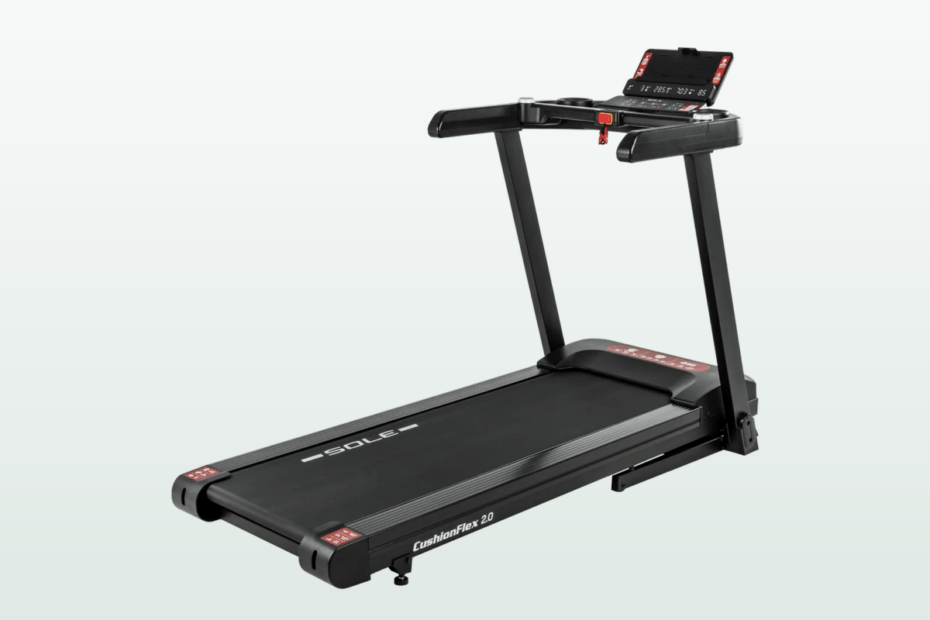
All the Sole folding models use an 18 mm cushioned deck, and the F80 uses Sole’s CushionFlex 2.0 version.
For walking, cushioning matters less than it does for running, but it still takes some load off arthritic knees and hips compared with walking on concrete.
3. Weight capacity with room to spare
Stay 20 to 50 lbs under the rating. The frame stays more stable, and the machine lasts longer.
The F63 is rated to 325 lbs. The F65, F80, and F85 are all rated to 350 lbs.
4. Belt width
All three of Sole’s main models use a 20″ x 60″ belt. The step-up F85 widens that to 22″.
Twenty inches is plenty for most walkers. If your gait is wide or a bit unsteady side-to-side, the extra two inches on the F85 gives you more margin.
5. Step-up height
This is the height of the deck off the floor, and it decides how big a step you have to take to get on.
Sole doesn’t publish step-up height for these models, but home treadmills are usually around 7 to 8 inches, about the height of a stair step.
So before you buy anything, make sure you can comfortably step up on a surface this high (if you don’t have any problem going up stairs, stepping on a treadmill won’t be an issue).
Sole Treadmill Comparison for Walkers
| Feature | Sole F63 | Sole F65 | Sole F80 |
|---|---|---|---|
| Full Price | $1,199.99 | $1,399.99 | $1,599.99 |
| Motor | 3.0 HP brushless | 3.25 HP brushless | 3.25 HP brushless |
| Speed range | 0.5–12 mph | 0.5–12 mph | 0.5–12 mph |
| Belt size | 20″ x 60″ | 20″ x 60″ | 20″ x 60″ |
| Weight capacity | 325 lbs | 350 lbs | 350 lbs |
| Handrail controls | Dial knobs | Rollers | Rollers |
| Display | White LED | White LED | 10.1″ touchscreen |
| Incline | 0–15 levels | 0–15 levels | 0–15 levels |
| Warranty | Lifetime frame & motor, 2-yr parts, 1-yr labor | Lifetime frame & motor, 2-yr parts, 1-yr labor | Lifetime frame & motor, 3-yr parts, 1-yr labor |
Sole F63: Best for Most Walkers
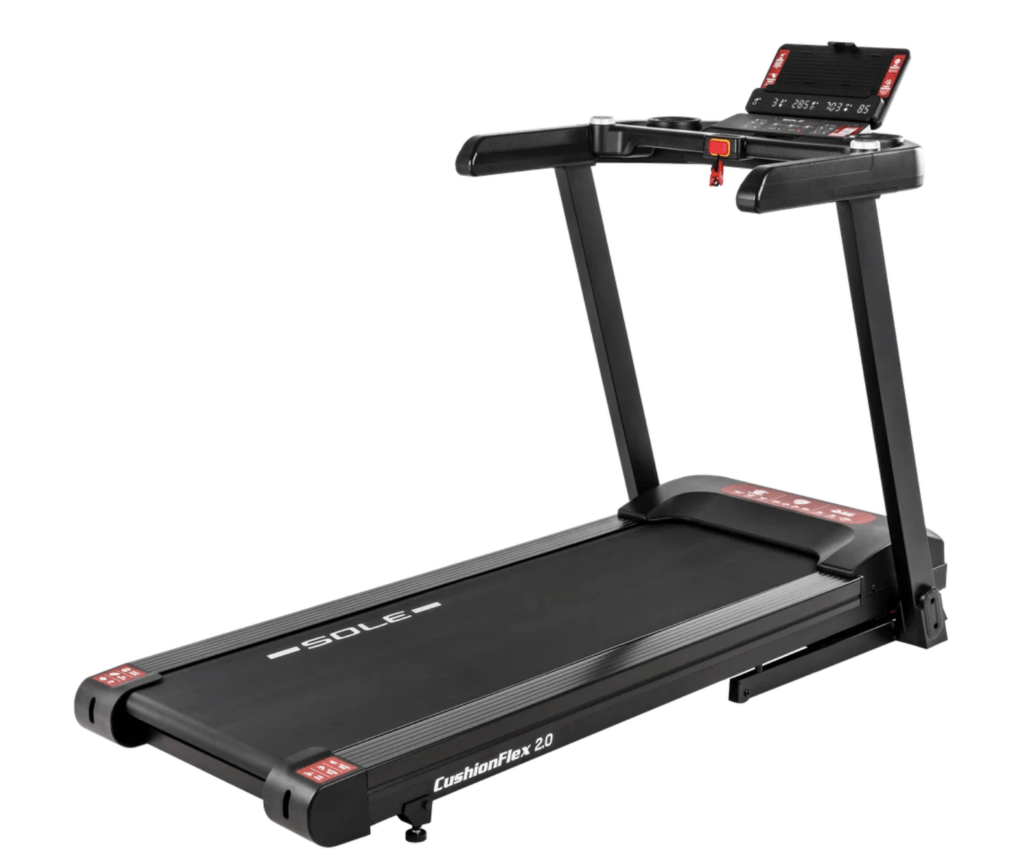
At around $1,199.99, the F63 is the one I’d point most older adults toward.
For walking, the 3.0 HP brushless motor is more than enough. Motor size matters more when you’re running at 8 mph for an hour, not when you’re walking at 2.5 mph.
But regardless, a 3.0 HP motor is plenty strong to offer a smooth experience.
What you get that actually matters: the same 0.5 mph starting speed as every other model, dial-style speed and incline controls in the handgrips, a plain white LED display that shows your numbers in big digits, and the same 20″ x 60″ belt as the F65 and F80.
It’s also the lightest at 187 lbs, which matters if you’ll ever need to fold it and roll it out of the way.
The tradeoffs: 325 lbs of capacity instead of 350, and two years on parts instead of three.
Sole F65: Step Up for Capacity
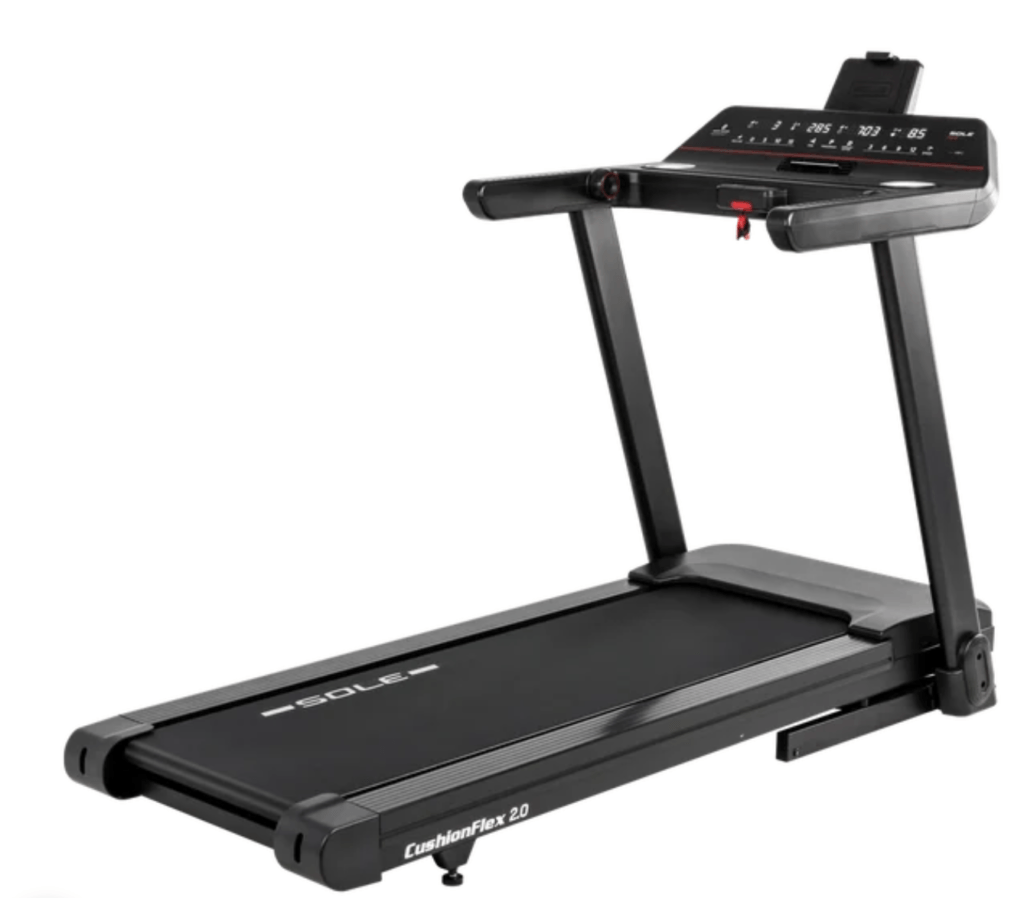
The F65 is $1,399.99 and gives you a 3.25 HP motor and 350 lbs of capacity.
If you weigh over 300 lbs, this is where I’d start instead of the F63. That extra 25 lbs of rating keeps you in the safe margin I mentioned earlier.
Otherwise, the F65 is a lot like the F63 for walking purposes.
Same belt, same speed range, same simple LED display, same lifetime frame and motor warranty.
The controls are rollers rather than dials, which is a preference thing more than a better-or-worse thing.
If you’re under 300 lbs and only walking, I’d save the $300.
Sole F80: If You Want a Screen
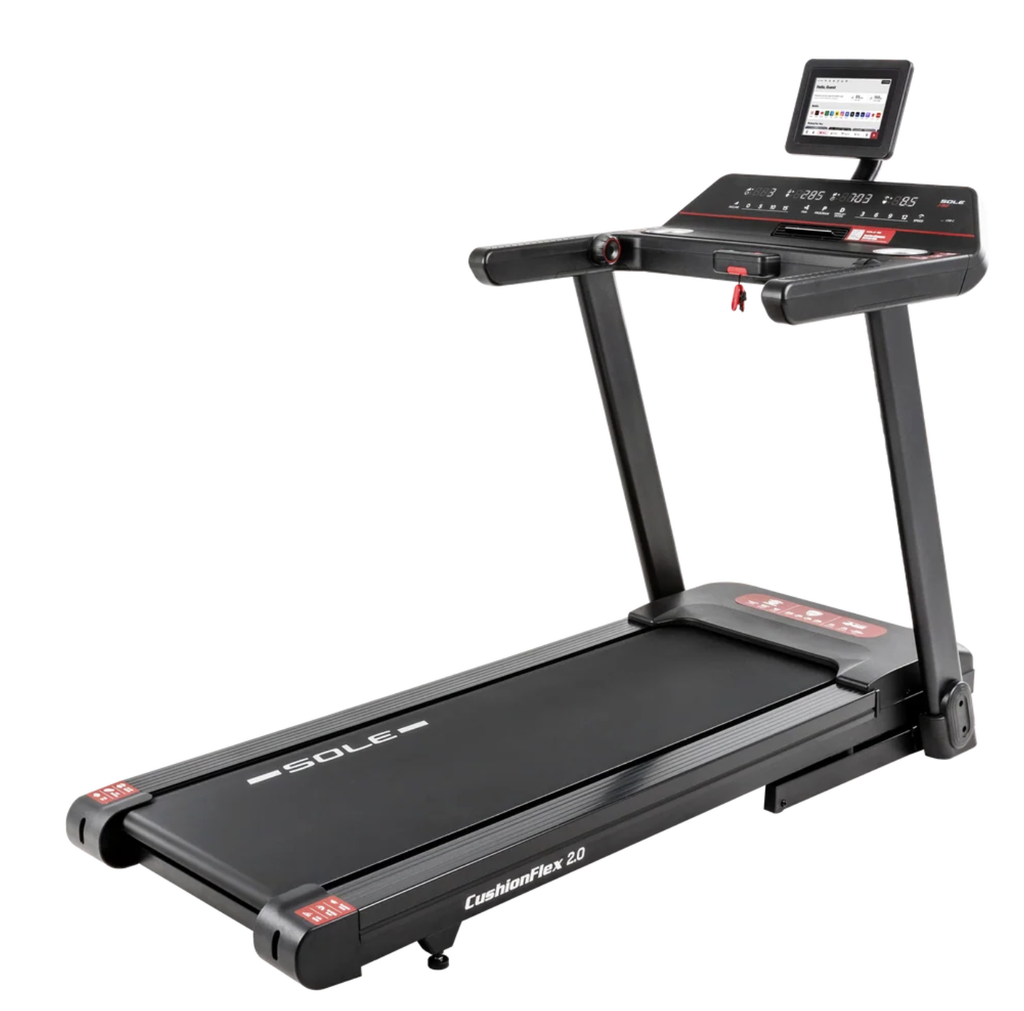
The F80 is $1,599.99 and adds a 10.1″ touchscreen that tilts and swivels, built-in WiFi, and screen mirroring, so you can stream shows or classes without propping up a tablet.
It also comes with three years on parts and electronics instead of two, which is the most practical reason to spend up.
Two cautions though.
A touchscreen isn’t automatically better if you have arthritis in your hands, a tremor, or low vision.
Physical buttons and dials are often easier. And the F80’s 218 lbs makes it noticeably heavier to move than the F63.
The good news is that the F80 keeps roller controls in the handrails, so you’re never forced to use the touchscreen mid-walk.
What About the F85 and Up?
The F85 (~$2,199.99) widens the belt to 22″ and steps up to a 3.5 HP motor and a 15.6″ touchscreen.
The wider belt is the only upgrade here that genuinely helps a walker, and it’s worth considering if your gait is unsteady side-to-side or if you’ll share the machine with a runner.
Above that, the TT8 and ST90 are built for heavy daily running.
For walking, you’d be paying thousands for motor and deck capability you won’t need.
What About Heart Rate Monitoring?
None of the current folding models have pulse grips. Sole lists heart rate as chest strap or armband only.
This is interesting because the older models used to come with grip heart rate monitoring as well.
Now to be honest, these grip heart rate monitors were notoriously unreliable, which is why I’m guessing Sole decided to get rid of them altogether with their newer models.
If your cardiologist or cardiac rehab team gave you a target heart rate range, budget for a Bluetooth chest strap or armband monitor on top of the treadmill price.
Chest straps are more accurate than pulse grips anyway, but they’re one more thing to put on.
Again, this is a change worth knowing about, since older Sole treadmills did have pulse grips.
PT Tips for Walking Safely on a Treadmill
Straddle the belt when you start. Stand with a foot on each side rail, start the belt at 0.5 mph, watch it move, then step on. Never start with your feet already on the belt.
Clip the safety key to your shirt every single time.
Touch the rails, don’t grip them. A light fingertip touch keeps you steady without hunching you over the console. White-knuckling the rails changes your posture and your walking pattern, which defeats part of the point.
For more tips, see our full senior safety guide for treadmills.
Other Options to Consider
If a treadmill feels like too much machine, see my treadmill alternatives guide.
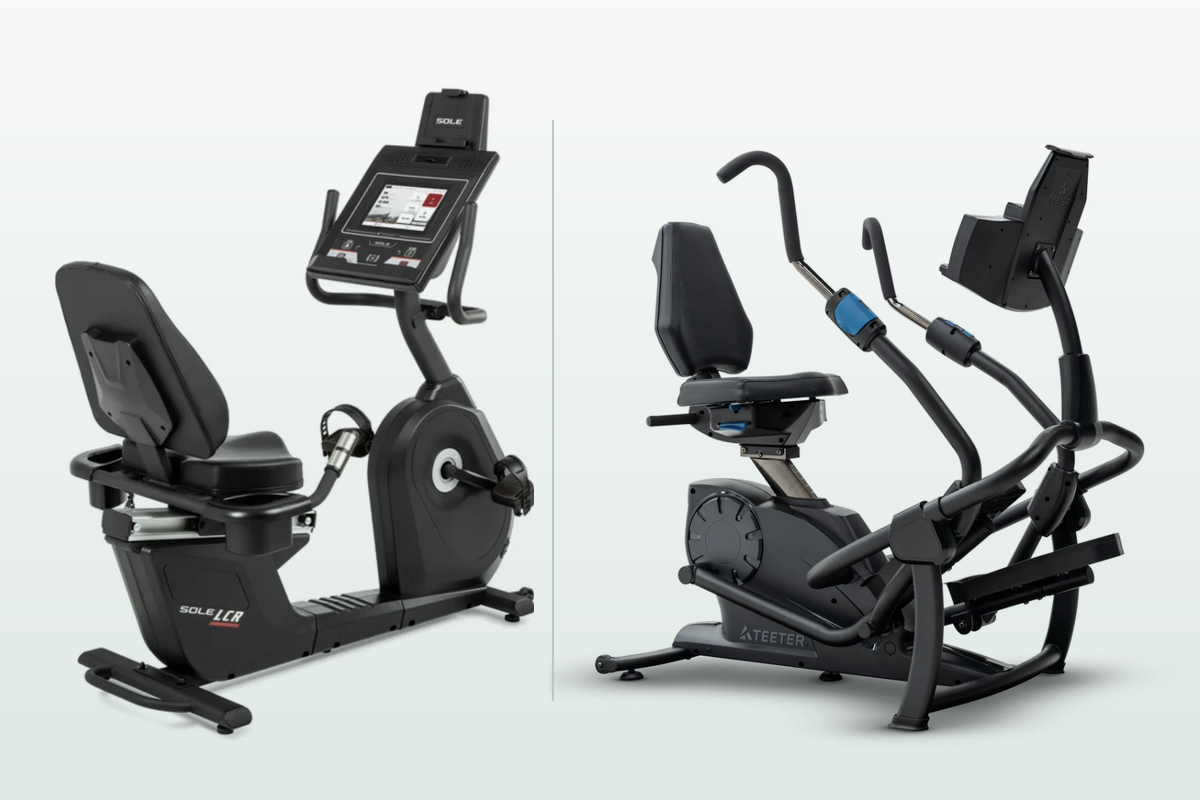
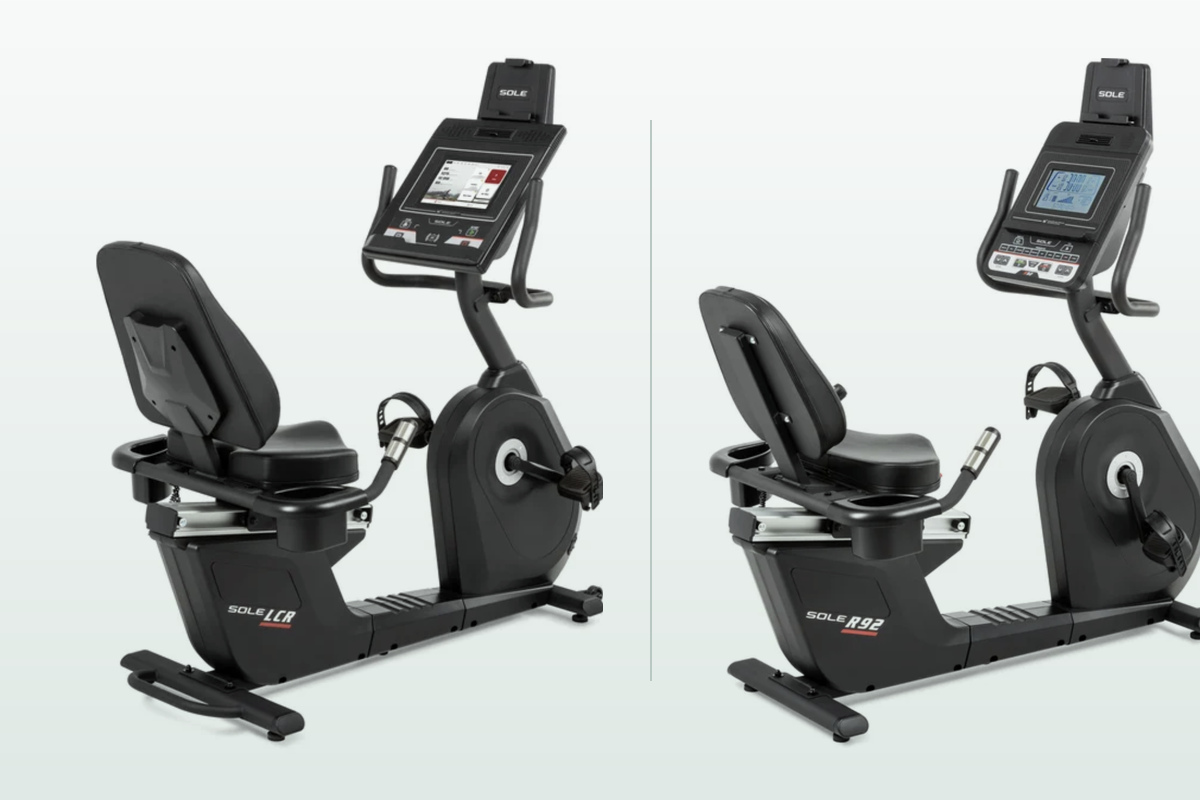
If you want to stay seated, see Sole LCR vs R92 and Sole LCR vs Teeter FreeStep LT7.
If you want the full picture on walking as exercise, see Walking Better After 60.
Final Thoughts
For most older adults who plan to walk, the Sole F63 is the right buy.
It has the same slow start speed, same belt, same cushioned deck, and same handrail controls as the more expensive models, and it costs the least.
Step up to the F65 if you weigh over 300 lbs, the F80 if you want a streaming screen and an extra year of parts coverage, or the F85 if you want the wider 22″ belt.
And if anything in the safety section above sounded like you, buy a seated machine instead.
The best cardio equipment is the one you’ll still be using safely in five years.
Frequently Asked Questions
What is the best Sole treadmill for walking?
The Sole F63. For walking, it has everything the pricier models have that matters: a 0.5 mph starting speed, a 20″ x 60″ cushioned deck, and speed and incline controls built into the handrails. It’s also the lightest and the cheapest.
Do I need a big motor if I only walk?
No. Motor size matters for sustained running. The 3.0 HP motor in the F63 handles walking easily. Put the money toward capacity or a longer warranty instead.
How slow do Sole treadmills go?
All of the current models start at 0.5 mph, which is slower than a normal stroll. That makes them easier to get started on than treadmills that begin at 1 mph.
Do Sole treadmills have handrail controls?
Yes. The F63 has dial knobs in the handgrips, and the F65 and F80 use rollers. This lets you change speed without letting go of the rail and reaching for the console.
Do Sole treadmills have pulse grips?
Not on the 2026 folding models. Heart rate is tracked through a Bluetooth chest strap or armband, which is sold separately.
Is a treadmill safe for seniors with balance problems?
Often not. A treadmill is a moving surface, and it asks more of your balance than a seated machine does. If you use a cane or walker indoors, have fallen in the past year, or get dizzy easily, a recumbent bike or recumbent cross trainer is the safer choice.
Can I use HSA or FSA funds on a Sole treadmill?
Sole says yes, and lists its machines as HSA/FSA eligible. Rules vary by plan, and some require a letter of medical necessity from your doctor. Check with your plan administrator first.