
As a home health physical therapist, I get asked about treadmills all the time.
And when Horizon comes up, my answer surprises people: the cheaper models are usually the better pick for seniors.
Horizon’s Studio Series lineup is great (I own the 7.8 AT myself), but it’s designed for runners.
And most of my patients aren’t running. They simply want to walk safely at home, every day, without worrying about ice, heat or a busy sidewalk.
So I went through Horizon’s whole lineup with one question in mind: which of these would I feel good about putting in a patient’s living room?
Long story short, here’s where I landed:
- Best overall for most seniors: Horizon T101
- Best for taller walkers: Horizon T202
- Best for incline training: Horizon 7.0 AT
- Best for a wider belt or longer warranty: Horizon 7.4 AT
Before we get into each one, a quick note. If you’re not sure a treadmill is safe for you at all, start with my guide on whether treadmills are safe for seniors. It walks through who should hold off and who’s a great fit.
This post contains affiliate links. If you buy through them, I may earn a small commission at no extra cost to you.
My Quick Picks
| Model | Best for | Price | Speed | Incline | Belt size | Max user weight | Step-up height |
|---|---|---|---|---|---|---|---|
| Horizon T101 | Most seniors | ~$699 | 0.5–10 mph | 0–10% | 20″ x 55″ | 300 lbs | 7.1″ |
| Horizon T202 | Taller walkers | ~$899 | 0.5–12 mph | 0–12% | 20″ x 60″ | 325 lbs | 7.25″ |
| Horizon 7.0 AT | Incline training | ~$1,099 | 0.5–12 mph | 0–15% | 20″ x 60″ | 325 lbs | 8.63″ |
| Horizon 7.4 AT | Heavier users, wider belt | ~$1,799 | 0.5–12 mph | 0–15% | 22″ x 60″ | 350 lbs | 8.75″ |
What I Look for in a Treadmill for Seniors
Most treadmill reviews are written for runners.
They talk about top speed, motor horsepower and streaming classes. Those things are certainly important, but matter very little for a 75-year-old who wants to walk 20 minutes a day.
Here’s what I actually check for my senior patients:
A low step-up height
This is how high you have to step up to get on the treadmill and it’s important for safe access.
Every extra inch is a little harder for someone with weak hips, a new joint or poor balance. I like to see 8 inches or less.
The T101 and T202 both come in around 7 inches, which is about the height of a standard stair step.
Handrails you can actually hold
Side handrails should run along the belt and be easy to grip without leaning forward.
Your posture should stay upright. If you have to bend at the waist to reach the rails, that’s a problem.
The right belt size
A 20-inch-wide belt is the standard for nice home treadmills, and it’s plenty for walking.
Length matters more.
A 55-inch belt is fine for most people at a normal pace, but if you’re tall (well over 6 feet) or take long strides, I’d go with 60 inches so you’re not worried about stepping off the back.
A safety key
The clip attaches to your clothing and stops the belt if you drift back.
Most treadmills (and all Horizon models) have one these days, but still something to confirm.
And make sure you use it every time, no exceptions.
Simple controls
Big, clear buttons and dials beat a fancy touchscreen for most of my patients.
And I love that Horizon’s dial controls on the handrails let you change speed without letting go to reach the console.
Very convenient and safe to use.
Things that matter less than you think
- Motor size. Walkers don’t need a big motor. Any treadmill with at least 2.0 CHP under the hood will get the job done. Any of Horizon’s treadmills will handle daily walking without any problems.
- Top speed. You’ll never use 12 mph. Don’t pay extra for it.
- Built-in classes and apps. Nice to have, not a reason to spend more. Most seniors won’t use these.
The Best Horizon Treadmills for Seniors
1. Horizon T101: Best Overall
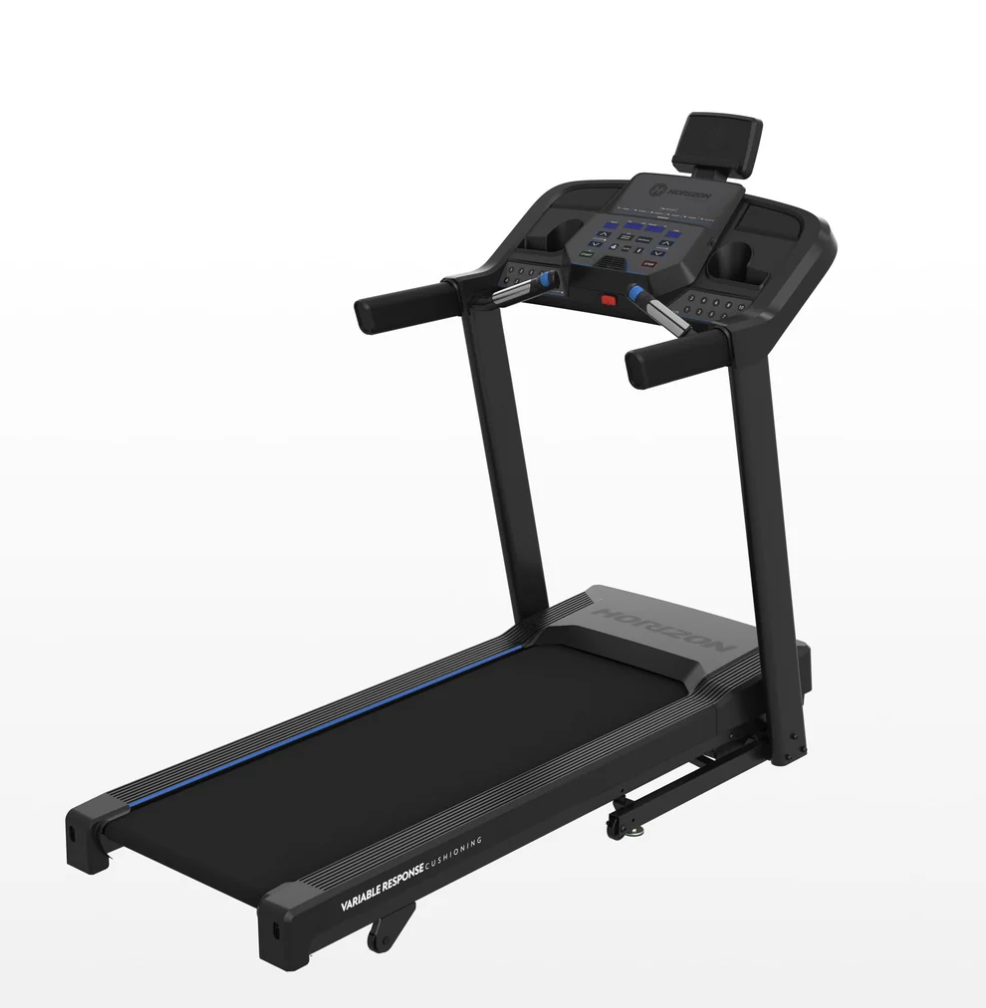
If you just want a simple walking treadmill that’s easy to use and won’t break the bank, this is the one I’d point you to.
The T101 is Horizon’s most affordable treadmill, and for most of my patients it’s honestly all they need.
It has a low 7.1-inch step-up height, about the height of a standard stair step. It holds up to 300 lbs, and the 55-inch belt is plenty for walking at a normal pace.
And the speed and incline dials are right on the handrails.
You can make small changes without letting go and reaching for the console. For someone with balance concerns, that’s a real safety win.
There are a few trade-offs.
As a budget-friendly treadmill, the frame isn’t as heavy as some more expensive machines, so don’t expect this to feel the same as the treadmill you’ve used at the local commercial gym.
And only a year on the parts warranty is pretty short.
But overall, a great walking treadmill for seniors looking for an affordable option that’ll work great.
Pros
- Lowest price in the lineup
- Low 7.1″ step-up height
- Speed and incline dials on the handrails
- Smaller folded footprint
- Everything most walkers need, nothing they don’t
Cons
- Shorter 55″ belt, not ideal if you’re tall
- 1 year on parts
- Folding feels less sturdy than pricier models
Who it’s for: Most seniors who want to walk daily at home. If you’re on the fence, a good place to start.
FYI, the T101 often sells out due to popularity – you can always wait until supply returns or upgrade to the T202 if time is of the essence.
2. Horizon T202: Best for Taller Walkers
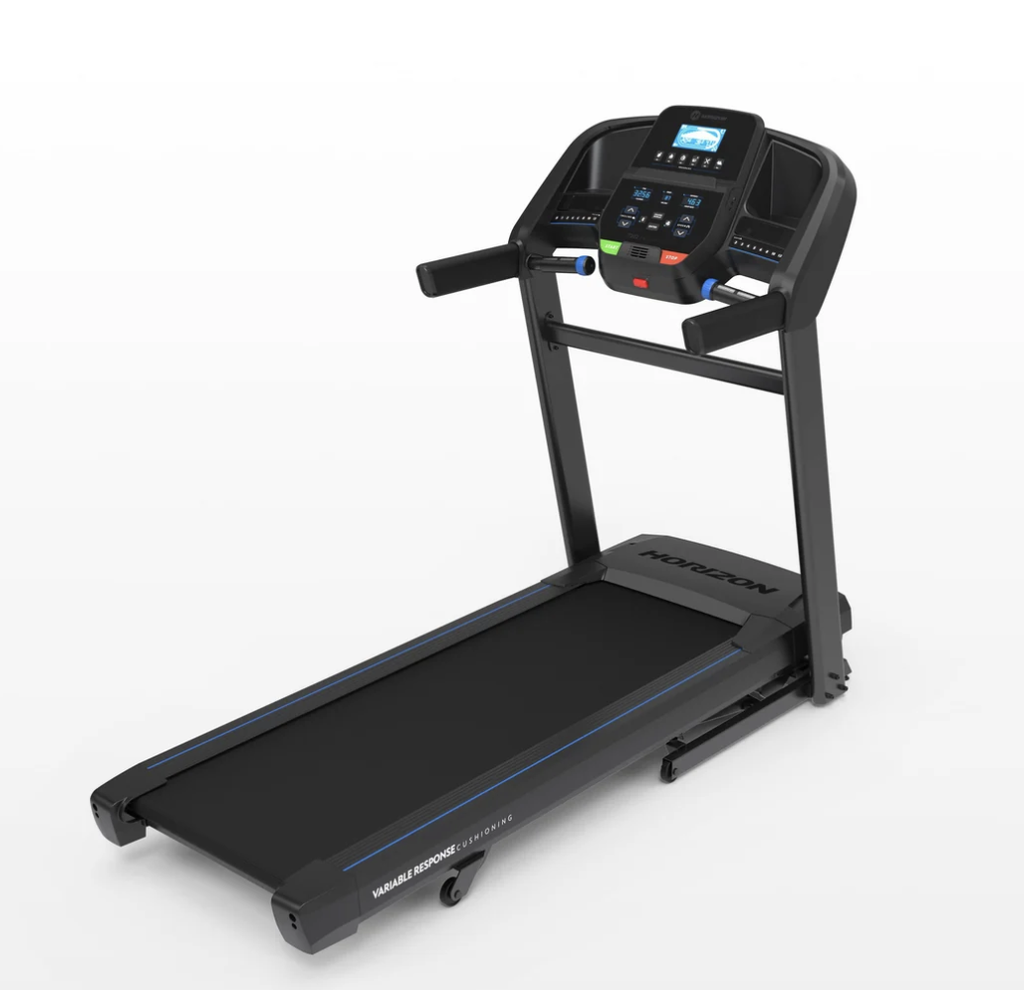
The T202 is a step up from the T101, and the biggest difference is the belt. It’s a full 60 inches long, so taller walkers and long striders have plenty of room front to back.
It also holds more weight (up to 325 lbs) and goes up to 12% incline.
The step-on height is still low at 7.25 inches, and the speed and incline dials are on the handrails like the T101.
It folds with a hydraulic assist, so lowering the deck doesn’t take much strength.
Pros
- Full 60″ belt for longer strides
- Higher 325 lb weight limit
- Low 7.25″ step-on height
- Speed and incline dials on the handrails
- Hydraulic folding
Cons
- 1-year parts and labor warranty is still short
- $200 more than T101
Who it’s for: Taller walkers, people who take long strides, or anyone who wants a little more weight capacity than the T101.
3. Horizon 7.0 AT: Best for Incline Training
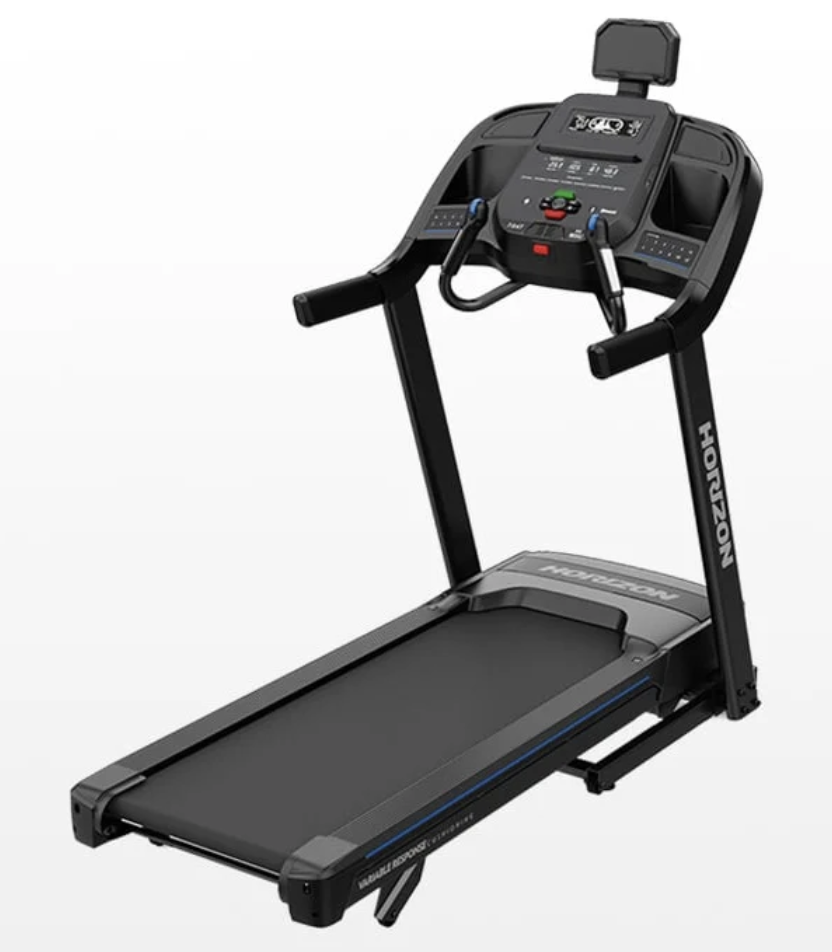
The 7.0 AT is the entry point to Horizon’s Studio Series. It’s built more for runners, but it can make sense for active seniors who want more incline.
It goes up to 15% incline, compared to 12% on the T202.
Walking uphill at a slow speed is a great way to build leg strength and get your heart rate up without impact.
It also has a 60-inch belt, a 325 lb weight limit and Bluetooth for apps if you like following along with a class.
The downside is size.
It weighs about 253 lbs and takes up more room.
And with a slightly bigger step-up height (8.63″), seniors with mobility issues could have a hard time getting on it.
But again, if you’re looking for a more powerful treadmill with higher inclines, the 7.0 AT is a great option.
Pros
- Up to 15% incline
- 60″ belt
- QuickDial speed and incline controls
- Works with fitness apps like Peloton and Zwift
Cons
- More than most walkers need
- Higher step-up height
Who it’s for: Active, steady walkers who want incline workouts or like using fitness apps.
4. Horizon 7.4 AT: Best for a Wider Belt/Better Warranty
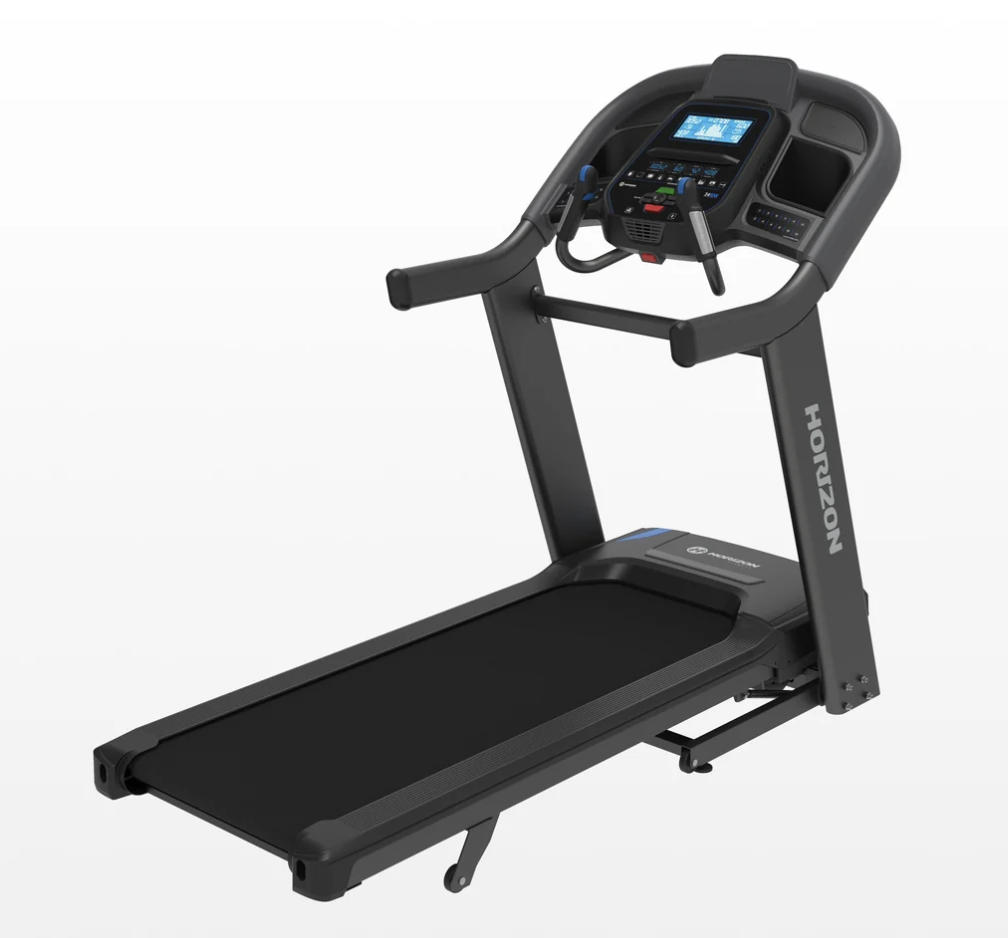
The 7.4 AT is the one I’d consider if weight capacity or belt width is the deciding factor.
It holds up to 350 lbs, and the belt is 22 inches wide instead of 20.
Those extra 2 inches give you more room side to side. That helps if you walk with a wider base, which is common with balance problems or neuropathy.
It also has a longer parts warranty than the 7.0 AT, which is always great.
The trade-off, of course, is price.
It costs quite a bit more and it’s even heavier (which is great when using, but makes it more difficult to move around).
Pros
- 350 lb weight limit
- Wider 22″ belt
- Up to 15% incline
- 5 year parts warranty
Cons
- Expensive for a walking treadmill
- Very heavy, hard to move
- Large footprint
Who it’s for: Heavier users or anyone who walks with a wide base and wants more room on the belt (or a longer warranty).
What about the Horizon 7.8 AT?
The 7.8 AT is a great treadmill and I actually own it myself (and love it), but I left it off this list on purpose.
Mostly because it’s more treadmill than most seniors need.
It’s Horizon’s top running treadmill, and it’s overkill for most homes.
With a 4.0 CHP motor and even heavier-duty frame, you’d just be paying for running features you won’t use.
That said, if there are any seniors out there looking for a great running treadmill, I would certainly recommend this model.
I’ve owned this treadmill for several years at the time of writing this and have had zero complaints (knock on wood).
When a Horizon Treadmill Isn’t the Right Fit
Horizon’s a great brand, but a treadmill isn’t for everyone – here’s when I’d steer you somewhere else.
Standing balance is a real concern. If you’ve fallen recently or need a walker most of the day, I’d start with a seated machine. The Teeter FreeStep lets you get a full-body workout while sitting down. Read my comparison of the FreeStep LT1 vs LT3.
Your knees or hips hurt with walking. An elliptical takes some pressure off. My guide to ellipticals vs. treadmills for seniors breaks down the trade-offs.
You’re recovering from a joint replacement. Talk to your surgeon or PT before you buy anything. My lists of equipment after knee replacement and after hip replacement can help you plan.
Getting Started Safely on Your Treadmill
Whichever model you pick, these habits make a big difference.
- Clip on the safety key every time. It stops the belt if you drift too far back.
- Straddle the belt to start. Stand with a foot on each side rail, start the belt at 0.5 mph, then step on while holding the handrails.
- Start slow and short. Five to ten minutes at an easy pace is plenty for the first week. Add a few minutes at a time.
- Look ahead, not down. Watching your feet throws off your balance. Keep your eyes forward.
- Hold the rails lightly. Use them for balance, not to hang on. A death grip changes how you walk.
- Leave room behind the treadmill. Treadmill makers recommend open space behind the deck in case you step off the back. Check your owner’s manual for the exact clearance. Keep that area clear of furniture and rugs.
- Wear real shoes. No socks or slippers. See my guide to footwear for seniors for what to look for.
- Slow down before you stop. Bring the speed back down to 0.5 mph before stepping off.
If you’d like a plan to follow, my treadmill workouts for seniors start at a gentle pace and build up.
Final Thoughts
I’m a big fan of Horizon and their treadmills.
But for most seniors, Horizon’s T101 is the sweet spot. It’s simple, affordable, has a low step and gives you everything you need for daily walking without paying for running features.
If you’re tall or want a longer belt, go with the T202.
And if you want more incline or a wider belt, the 7.0 AT or 7.4 AT are worth a look.
Whatever you choose, start slow, use the safety key and check with your doctor or PT if you have a heart condition, recent surgery or a history of falls.
Frequently Asked Questions
Is a Horizon treadmill good for seniors?
Yes, especially the T101 and T202. Both have step-up heights around 7 inches, put the speed and incline controls on the handrails, and keep things simple. Those are the features that matter most for older walkers.
What’s the difference between the Horizon T101 and T202?
The T202 has a longer 60-inch belt (vs. 55 inches), a higher 325 lb weight limit (vs. 300 lbs) and a little more incline. If you’re tall or want more room, the T202 is worth the extra money.
What is the slowest speed on a Horizon treadmill?
All the models in this article start at 0.5 mph, like nearly every home treadmill. That’s slow enough for most people just getting started or returning from an injury.
Can I use my HSA or FSA to buy a Horizon treadmill?
Possibly. Some retailers accept HSA/FSA cards for treadmills, but you may need a letter of medical necessity from your doctor. Check with your plan first. My guide to HSA/FSA eligible expenses explains more.
Does Medicare pay for a treadmill?
No, Medicare generally doesn’t cover home exercise equipment. I go into the details in Does Medicare Cover Exercise Equipment?
Is walking on a treadmill as good as walking outside?
For most seniors, it’s a great substitute and often safer. You don’t have to worry about curbs, uneven sidewalks or weather. I compare the two in outdoor walking vs. treadmills.