Disclosure: Senior Stride Academy is a Teeter affiliate. If you purchase through links on this page, we may earn a commission at no extra cost to you. We only recommend equipment we genuinely believe serves older adults well.
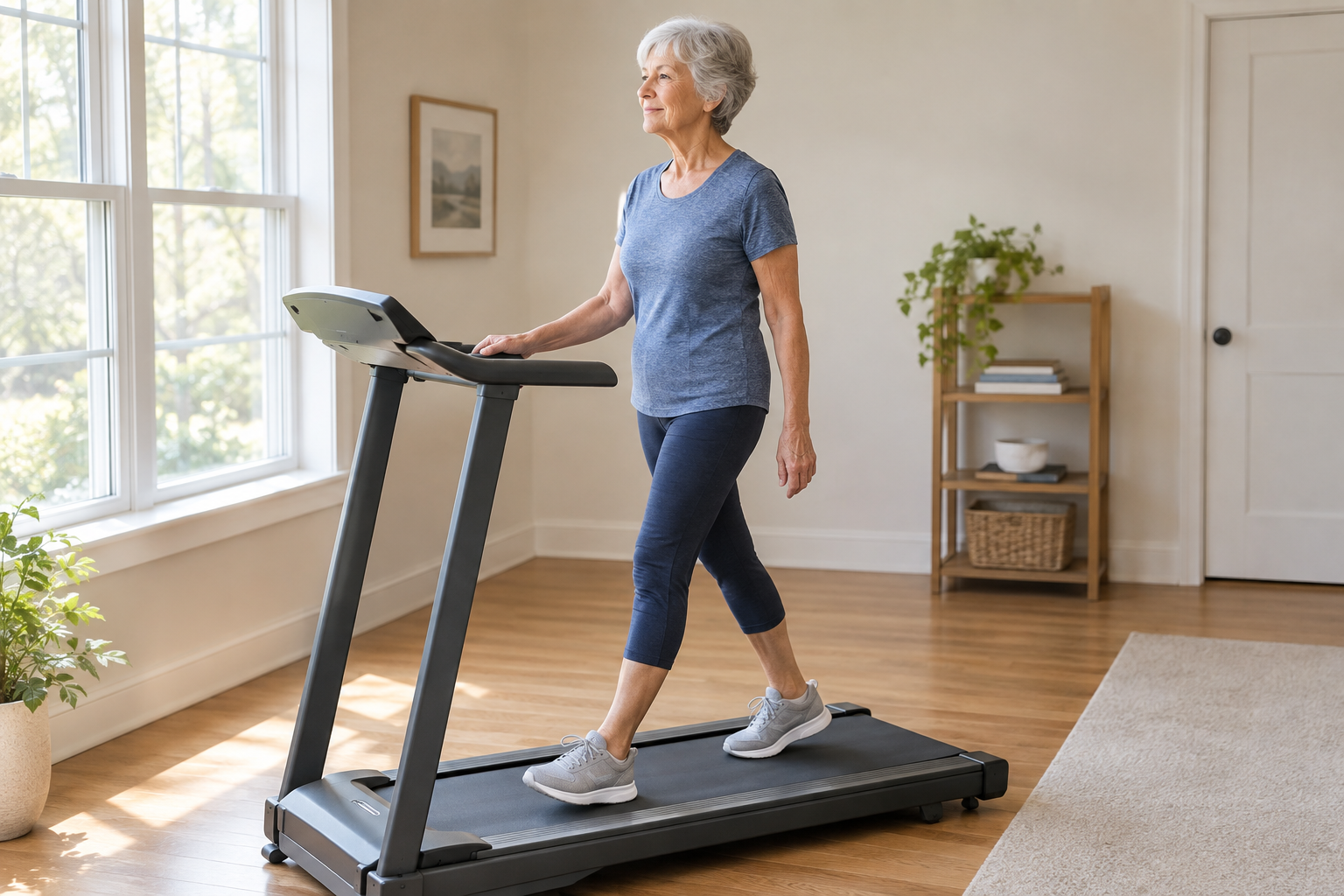
Treadmills are the best-selling piece of home fitness equipment in America – and for many seniors, they’re also one of the riskiest.
Emergency rooms treat thousands of treadmill-related injuries every year, and older adults face the greatest danger: a moving belt punishes any lapse in balance, and the repetitive pounding is hard on aging knees, hips, and lower backs.
The good news? You don’t need a treadmill to get an excellent cardio workout at home.
In fact, several treadmill alternatives deliver the same heart-health benefits with far less impact and far less fall risk.
In this guide, we’ll walk through the five best treadmill alternatives for seniors — including our top overall pick, the Teeter FreeStep Recumbent Cross Trainer.
Why Seniors Should Consider a Treadmill Alternative
Before we get to the list, it helps to understand exactly what makes treadmills a poor fit for many older adults, because the best alternative for you depends on which of these problems you’re trying to solve.
Fall risk. A treadmill belt keeps moving whether you do or not. For anyone with balance concerns, neuropathy, dizziness from medications, or slower reaction times, that’s a genuine hazard. The CDC reports that falls are the leading cause of injury among adults 65 and older, so choosing equipment that removes the fall risk entirely is one of the smartest moves you can make.
Joint impact. Every stride on a treadmill sends force through your ankles, knees, hips, and spine. If you have arthritis, a joint replacement, spinal stenosis, or chronic knee pain, that repeated impact can leave you sorer after exercise than before it.
Getting on and off. Stepping onto a raised deck and straddling a moving belt requires coordination and confidence that not everyone has, especially early in recovery from surgery or injury.
Sustainability. The best exercise machine is the one you’ll actually use several times a week. If workouts hurt or feel precarious, most people quietly stop. Comfort isn’t a luxury for seniors — it’s what makes consistency possible.
With those criteria in mind — low impact, low fall risk, easy entry, and comfortable enough to use daily — here are the best options.
1. Recumbent Cross Trainer — Best Overall (Our Pick: Teeter FreeStep)
If we could only recommend one treadmill alternative for seniors, it would be a recumbent cross trainer, and specifically the Teeter FreeStep.
It’s the machine we point readers to most often, and the reasons stack up quickly.
A recumbent cross trainer combines the seated stability of a recumbent bike with the full-body motion of an elliptical.
You sit in a supportive reclined seat, place your feet on large pedals, grip a pair of moving handles, and stride — legs pressing, arms pulling and pushing.
Recumbent cross trainers are the lowest-impact of all cardio machines, so if joint-friendliness is a primary concern, this is something to consider.
This is why you see recumbent cross trainers in most rehab facilities, physical therapy clinics, and senior living facilities.
It’s also why, as a physical therapist myself, I recommend them to any patient of mine looking for a safe and reliable cardio machine for home use.
Why the Teeter FreeStep Stands Out
NuStep is the gold standard for recumbent cross trainers (I actually believe they invented them) and if you want to mimic the rehab clinic feel at home, investing in one is a smart move.
The only problem of course is the price – they come with a steep price tag (~$5000).
Teeter, on the other hand, offers significantly more affordable options, making them more approachable for home use.
FreeStep, like most recumbent trainers, uses a linear stepping path that aligns the joints for better muscle engagement with less stress on the hips, knees, and ankles.
If you’ve done physical therapy after a knee or hip replacement, the motion will feel familiar.
A few things we especially like for seniors:
It’s genuinely easy on the body but still a real workout. Because the work is spread across your whole body, no single muscle group burns out, so exercise simply feels easier — which means you’ll do more of it.
It’s very quiet. The magnetic resistance is quiet enough to exercise while watching TV or listening to music, which matters more than you’d think for sticking with a daily habit.
Easy on and off. There’s no high step-over. The open, step-through design lets you sit down sideways and swing your legs in — and the top-tier LT7 model even includes a Step Lock feature that keeps the pedals and handles still while you get on or off the machine.
It adjusts to almost anyone. The reclining seat, adjustable height, and multi-grip handles accommodate users from 4’11” to 6’6″, and you can work arms only, legs only, or both together — useful on days when one part of your body needs a rest.
Real-world results from real seniors. The reviews tell the story better than the spec sheet. One 70+ year old reviewer described building up to an hour of daily use at her own pace, shifting between leg power and arm power to rest and recover as she went. Another purchased one after her neurosurgeon-recommended physical therapy clinic had her use a FreeStep — she sold her treadmill to make room for it and credits it with helping her lumbar stenosis pain.
Which FreeStep Model Should You Choose?
Teeter makes three FreeStep models. All share the same patented stride; the differences come down to comfort upgrades and console features.
| Feature | LT1 | LT3 | LT7 |
|---|---|---|---|
| Resistance | 13-level dial | 13-level dial | 20-level electronic quick-key |
| Console | Basic large-print display | Basic large-print display | 9″ color LCD, 21 programs, Bluetooth HR |
| Seat | 3-position recline | ComfortSelect™ (thicker, more adjustable) | ComfortMax™ (35% larger, recline + depth) |
| Weight capacity | 300 lb | 300 lb | 350 lb |
| Step Lock for entry/exit | — | — | Yes |
| Frame warranty | 2 years | 3 years | 3 years |
Our take: the LT3 is the sweet spot for most seniors — it adds SoftStep pedals, smoother UltraGlide bearings, grippier handles, an upgraded seat, and a longer warranty over the LT1 for a modest price difference.
If you want the most supportive seat, the highest weight capacity, or the extra security of the Step Lock feature for getting on and off, the LT7 is worth the upgrade — it’s the model we’d choose for anyone with significant mobility or stability concerns.
For more details, check out full comparison between the FreeStep LT3 and LT7.

If you’re interested in learning more, check out our full guide on the best recumbent cross trainers for seniors.
2. Recumbent Exercise Bikes
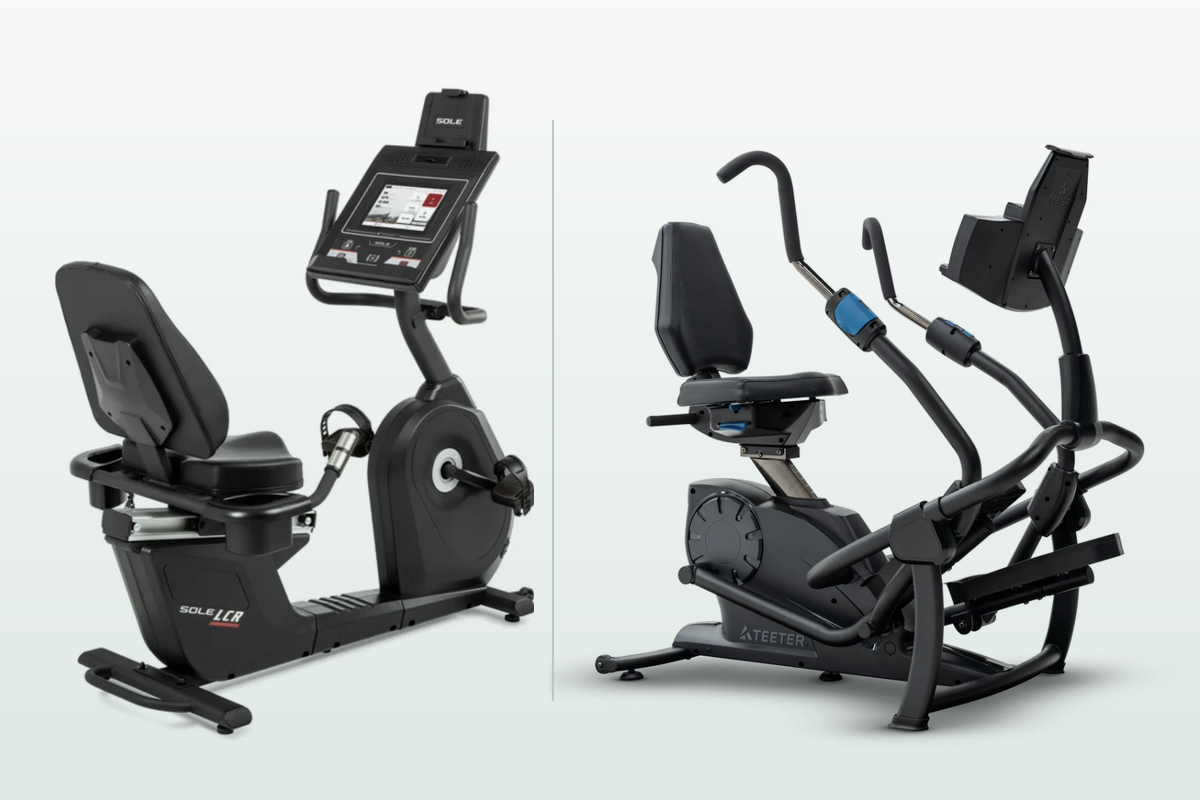
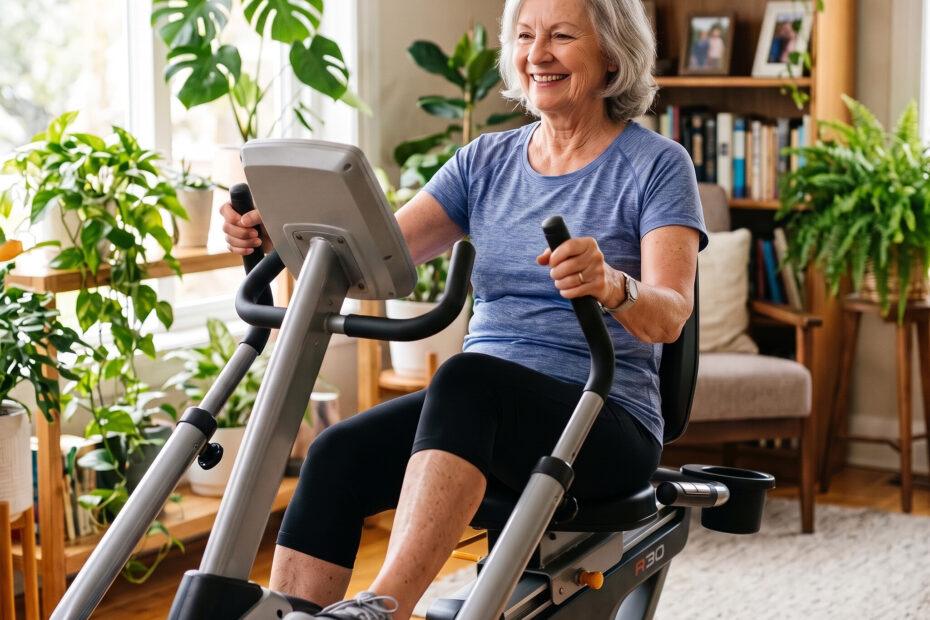
The classic recumbent bike remains a solid choice as well: a supported seat with a backrest, pedals out in front, and no balance required.
It’s widely available, often cheaper than a cross trainer, and gentle on the knees compared to an upright bike.
The trade-off is that a recumbent bike works your legs only, and the circular pedaling motion can still aggravate some knee conditions at the top of the pedal stroke.
But most seniors with arthritis can still use a recumbent bike comfortably.
There are plenty of great recumbent bikes that work well and don’t cost a fortune – top brands include Spirit Fitness, Sole, and Schwinn.
If budget is the deciding factor, a recumbent bike is a fine entry point; if you can stretch a little further, the full-body engagement of a recumbent cross trainer like the FreeStep delivers a little more benefit per minute of exercise.
For more information on recumbent bikes, check out our full guide on the best recumbent bikes for seniors.
3. Standing Elliptical — Best for Active Seniors With Good Balance
For seniors who are steady on their feet and want a workout closer to walking or jogging, a traditional elliptical removes the impact of a treadmill while keeping you upright and weight-bearing (which is good for bone density).
Your feet never leave the pedals, so there’s no pounding – this makes ellipticals surprisingly low-impact.
And since you can get your arms working, ellipticals are able to provide a full body workout.
The caution: you’re still standing on moving platforms, so ellipticals are best reserved for older adults with confident balance and no dizziness issues.
If you have any fall concerns at all, a seated machine is the safer call.
Check out our guide on the best elliptical machines for seniors for more info.
4. Under-Desk Pedal Exercisers — Best for Small Spaces and Very Limited Mobility
These compact pedal units sit on the floor in front of your favorite chair.
They’re inexpensive, portable, and let you pedal while reading or watching television.
For seniors recovering from illness, managing severe arthritis, or simply starting from a very low fitness level, a pedal exerciser is a wonderful way to reintroduce daily movement.
Just set expectations accordingly: resistance is light and the cardio benefit is modest.
As a physical therapist, I tell my patients that these little pedalers are better than nothing, but they’re no where near as beneficial as an exercise bike or recumbent trainer.
Honestly, these devices are best served for seniors who can’t physically get on a recumbent bike (or for seniors who can’t afford anything else).
And if you’re going to choose an under desk pedaler, please opt for one that doesn’t automatically move your feet for you – that defeats most of the purpose.
5. Water Walking or Aqua Aerobics
Not every treadmill alternative is a machine.
Walking laps in a pool gives you buoyancy-supported, nearly zero-impact exercise with natural resistance in every direction, and community pools often run senior aqua-fitness classes that add a valuable social element.
The downsides are practical: you need pool access, transportation, and a schedule — which is exactly why a home machine you can hop on any time of day remains the consistency winner for most people.
But if you do have access to a pool, swimming, water aerobics, or simply walking in the water are great forms of exercise for seniors.
How to Choose the Right Treadmill Alternative for You
Ask yourself three questions.
How is your balance? If you have any history of falls, dizziness, neuropathy, or unsteadiness, choose a seated machine — a recumbent cross trainer or recumbent bike. Standing options like ellipticals should be off the table.
How are your joints? For arthritis, joint replacements, or chronic knee, hip, or back pain, prioritize low-impact motion. This is where recumbent bikes or trainers make a lot of sense.
Will you actually use it? Be honest about comfort, noise, and convenience. A machine that lets you exercise in front of your TV, at any hour, at your own pace, is the machine that gets used four or five days a week — and consistency beats intensity every time for senior fitness.
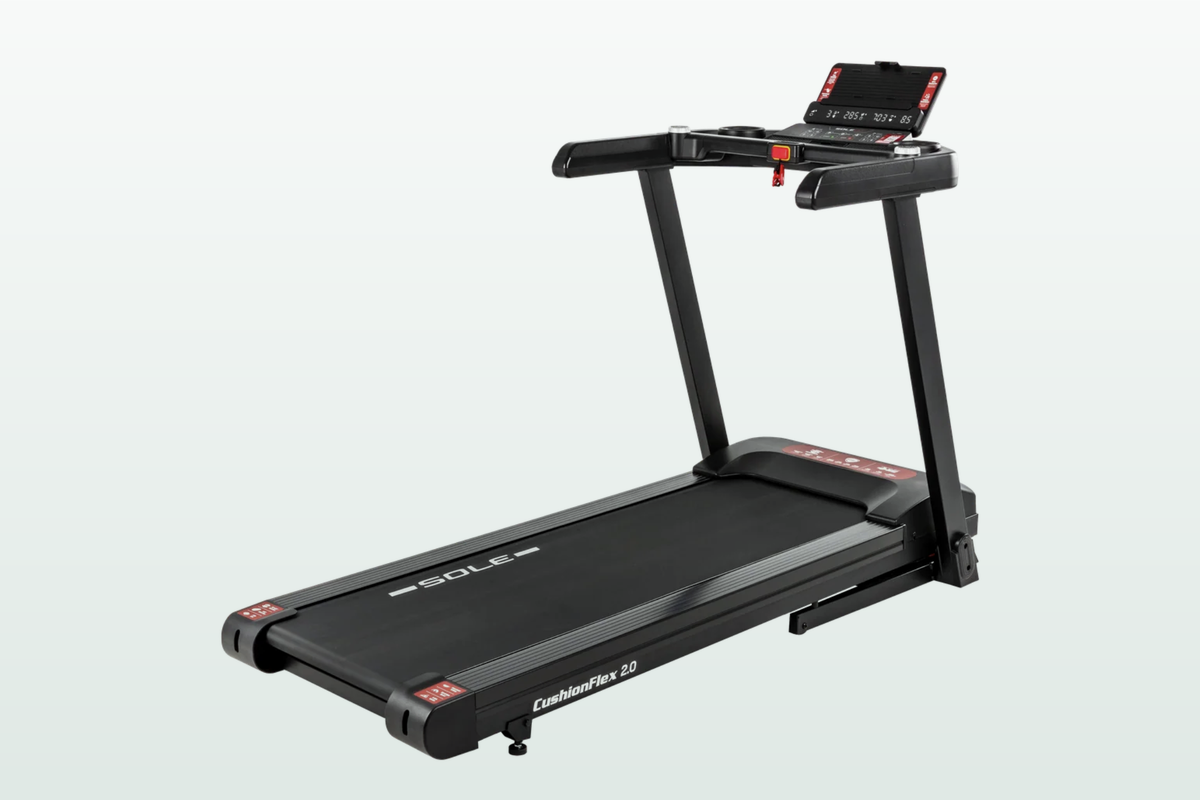
And if all three answers came back fine? Then a treadmill isn’t off the table for you. If you walk around your home and community without a cane or walker, haven’t fallen in the past year, and don’t get dizzy when you turn your head, the fall risk I described earlier is much smaller, and a treadmill is still one of the best ways to keep walking through bad weather.
The trick is buying one set up for walking rather than running (and Sole makes some of the best options for this). Here’s my guide to choosing a Sole treadmill for walking.
Final Thoughts
You don’t have to choose between staying active and staying safe.
Treadmill alternatives like recumbent cross trainers, recumbent bikes, and pedal exercisers let seniors build heart health, strength, and stamina without the impact and fall risk of a moving belt.
The right choice comes down to your body and your habits.
If balance is a concern, stay seated.
If your joints ache, go zero-impact.
And whichever machine you choose, pick the one you can see yourself using comfortably four or five days a week — because when it comes to fitness after 60, showing up consistently matters far more than any single feature on a spec sheet.
Start slow, check with your doctor, and give yourself a few weeks to build the habit.
Your heart, joints, and energy levels will thank you.
Frequently Asked Questions
What is the safest cardio machine for seniors?
Seated, zero-impact machines are the safest category because they eliminate fall risk entirely. Among them, recumbent cross trainers like the Teeter FreeStep offer the best combination of safety and workout quality, since they engage the whole body without stressing the joints.
How long should a senior exercise on a recumbent cross trainer?
Guidelines for older adults call for about 150 minutes of moderate aerobic activity per week — roughly 30 minutes, five days a week. Beginners should start with 5–10 minute sessions at light resistance and build gradually. One advantage of a machine like the FreeStep is that you can shift effort between your arms and legs mid-workout, which makes longer sessions feel easier.
Can you lose weight using a treadmill alternative?
Yes. Weight loss comes down to consistent calorie burn, and full-body seated machines can be surprisingly effective.
This article is for informational purposes only and is not medical advice. Talk with your doctor before beginning any new exercise program, especially if you have heart conditions, joint replacements, or balance concerns.