
by Will, PT
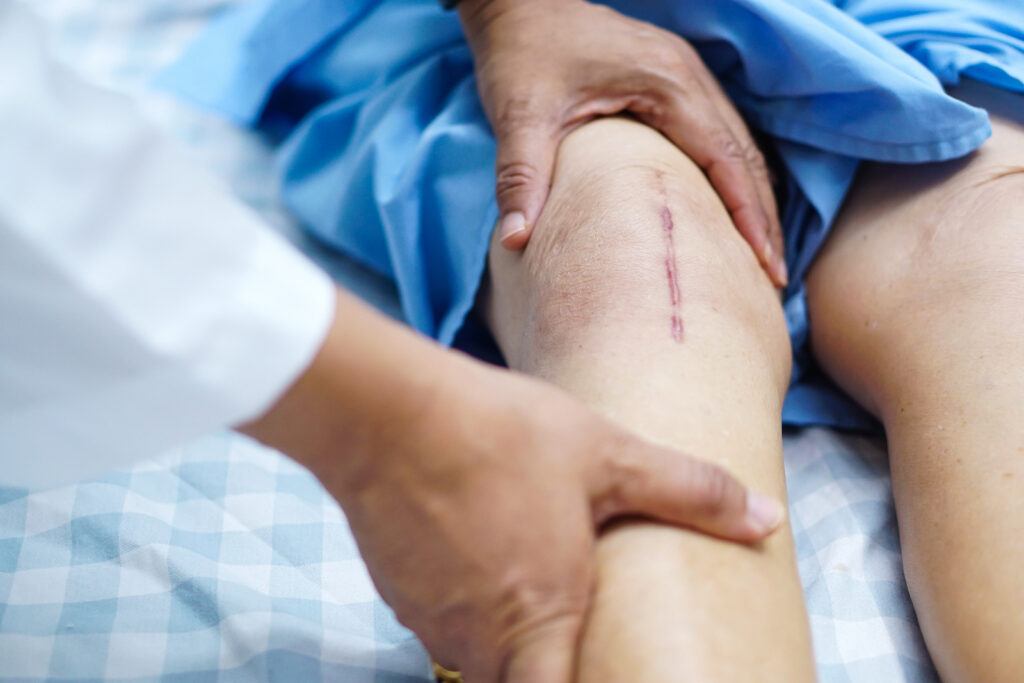
Almost nothing about knee replacement recovery runs on a calendar.
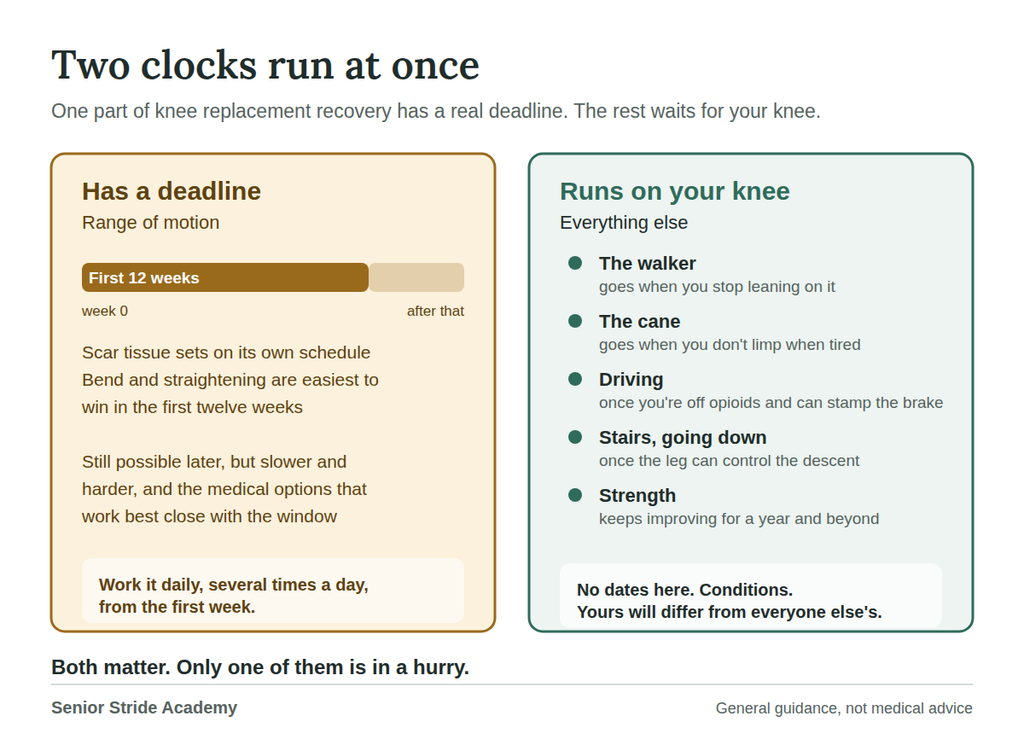
When you put the walker away depends on your strength. When you drive again depends on whether you can stamp a brake pedal. When you stop limping depends on a quad that has to be coaxed back into working.
None of those have a date. They have conditions, and the conditions are different for everyone.
There is one exception, and it’s the reason so much early advice sounds urgent.
Scar tissue sets on its own schedule.
The first twelve weeks are when your knee’s range of motion is easiest to win, and a knee that spends those weeks propped on a pillow in a comfortable bent position can take months to talk back out of it.
So this guide is built around that split: the motion work that genuinely can’t wait, and everything else, which arrives when your knee is ready rather than when the calendar says so.
Before Surgery
The weeks before surgery are the only ones where you can set things up calmly, and they’re the ones most people spend worrying instead.
I do home physical therapy visits for a living, and I can usually tell in the first minute or so how the next six weeks are going to go – not from the knee, but from the living room.
A firm chair with arms or a deep couch. A clear path to the bathroom or a rug and a phone cord. Four ice packs in the freezer or one bag of frozen peas.
Prepping for a knee replacement is easy and none of it is expensive. It just has to happen before surgery, because nobody feels like rearranging furniture on day two.
→ Preparing Your Home for Knee Replacement The room-by-room walkthrough: which chair to pick, what to buy, what to skip, and the two things about recliners and toilet seats that are different for knees than for hips.
The First Weeks: Motion Is the Clock
This is the part with a real deadline.
Two numbers follow you to every therapy appointment: how far the knee bends, and how close it gets to straight. Everyone asks about the first, but the second causes more trouble when it’s missing.
The work itself is not complicated, but it’s uncomfortable, it’s repetitive, and it has to happen several times a day while you’re in the worst of the swelling and the pain.
That’s the difficult part.
What helps is knowing what you’re aiming at, and knowing which exercises belong at your stage rather than doing the same three you came home with for three months.
→ Knee Replacement Range of Motion: How Far Your Knee Should Bend and Straighten What the numbers actually mean in daily life, the checkpoints surgeons watch for, why straightening comes first, and why the pillow under your knee is costing you.
→ Knee Replacement Exercises by Phase A program organized by what your knee can do rather than by week, with the signs you’ve outgrown one phase and the standing work that belongs earlier than most people think.
Getting Moving Again
Once the early motion battle is underway, the questions change.
How long am I on this walker? When can I drive? When can I go up and down stairs “normally” again?
This stretch is harder to navigate than the first two weeks, because progress is real but slow enough to be invisible from the inside.
It’s also where formal therapy usually ends, which is driven by insurance authorization and functional milestones rather than by whether you’ve finished recovering.
Two things go wrong here reliably.
People hold onto a walking aid past the point of needing it, which keeps the leg from being asked to work. And people buy the wrong equipment, usually something motorized, when the thing that would actually help costs less and gets used more.
→ Knee Replacement Recovery Timeline: Walker, Cane, and Beyond What the timeline usually looks like, the checks that tell you when you’re ready to drop each device, when driving comes back, and which hand the cane goes in.
→ Best Exercise Equipment After Knee Replacement What’s worth buying at each stage, what to skip entirely, why a bike beats everything else, and why the treadmill in your basement should wait a while.
When Progress Stalls
Somewhere around month three or four, most people expect to be finished.
But a good number aren’t.
The knee still won’t bend far enough to get out of the car without thinking about it. Stairs are still one at a time going down. And the therapy you were discharged from months ago didn’t fix it.
This is the loneliest stretch of the whole recovery, because everyone else has stopped asking about your knee.
It’s also the point where people go quiet, keep working away at home, and arrive at the one-year mark having missed every option that was open to them at four months.
A plateau is information, not a verdict, and there is more left to try than most people are told.
→ Knee Still Stiff Months After Replacement? How to tell scar tissue from weakness, what still works at home after the window closes, the bracing option most people have never heard of, and the full ladder of medical options in order.
Not Sure Where to Start?
You have a surgery date and nothing set up. Start with the home preparation guide, and do it two or three weeks out rather than the night before.
You just got home and you’re overwhelmed. Start with the range of motion guide. In the first two weeks, the motion work and the swelling control are the whole job. Everything else can wait.
You’re doing the exercises but don’t know if they’re the right ones. Start with the exercises guide and find the phase that matches how far your knee currently bends.
You’re wondering when you can drive, or when the walker goes away. Start with the timeline article and run the readiness checks.
Someone wants to buy you something and you don’t know what to ask for. Start with the equipment guide. The short answer is ice packs now and something to pedal by week two.
You’re past three months and something still isn’t right. Start with the stiffness article, then make an appointment with your surgeon rather than waiting it out.
You’re helping someone else through this. The home preparation guide is the most useful one to read first, because it’s the part where a second pair of hands makes the biggest difference.
Recovery from a knee replacement takes longer than most people are told to expect, and a knee that still swells and stiffens at three months is usually following the normal course rather than a sign that something went wrong. This guide is educational and doesn’t replace individual assessment. Your surgeon’s instructions always take priority over general guidance. If you have calf pain or swelling, chest pain or shortness of breath, a fever, or drainage from the incision, contact your surgeon right away rather than working through it.
Having the other joint done? See our companion guide to hip replacement recovery. And if your interest is walking mechanics more generally, see walking better after 60.