
One of the most common things I hear from patients with arthritis is, ‘I stopped walking because it hurts.’ Then six months later, everything hurts more.”
Joint pain that lasts for months or years teaches many people to treat every ache as a stop sign.
That instinct is understandable, but it often leads to less movement, weaker muscles, and stiffer joints, which can make the pain worse over time.
A better approach in chronic joint pain management for seniors starts with one question: is this hurt, or is this harm?
The two feel different and call for different responses.
In this guide, we’ll discuss how to tell them apart, how to check your joint’s response the next day, and how to keep records that make your first physical therapy visit more useful.
Why a painful joint is not always a damaged joint
Pain is an alarm produced by the nervous system – it’s not a direct measurement of tissue damage.
In a joint with arthritis, the alarm can be set very sensitive, so a movement that is perfectly safe can still feel sore, stiff, or achy.
This is why pain and imaging don’t always match.
Some people have X-rays showing significant wear and feel manageable discomfort, while others have milder changes and a lot of pain. The picture of the joint tells only part of the story.
It also explains why resting a sore joint can backfire.
Muscles around an unused joint weaken, the joint stiffens, and everyday tasks like standing from a chair or climbing a step feel harder.
Stronger muscles take load off the joint, and regular movement helps keep it lubricated and mobile. For most people with arthritis, a sensitive joint is one that needs the right amount of movement, not none.
“The right amount” is the part that takes judgment – and that’s where the hurt versus harm distinction comes in (and a big part of what your physical therapist gets paid to do).
Pain that warns you versus pain that is just loud
Loud pain is uncomfortable but familiar. Warning pain is a signal to stop and get it checked. The descriptions below separate them in practice.
Pain that is usually loud, not harmful:
- Dull, achy, or stiff, and similar to what you feel on an ordinary day
- Worst at the start of movement, then easing as the joint warms up
- Felt in the same joints that have been arthritic for a long time
- Steady during the activity rather than building
- Settles back to your usual level soon after you stop
Pain that warns you to ease off:
- Sharp, stabbing, or electric, especially if it appeared suddenly
- New pain in a place that was not sore before
- Pain that keeps climbing the longer you continue
- A catching, locking, or giving-way feeling in the joint
- Visible swelling, heat, or redness that was not there before
- A change in how you walk or move to avoid the pain
Many physical therapists also use a simple number rule. Rate your pain from 0 (none) to 10 (worst imaginable) before you move.
During activity, a modest rise is often acceptable, commonly staying at or under about 3 or 4 out of 10 and no more than a couple of points above where you started.
If it climbs past your ceiling, slow down, shorten the movement, or stop. Treat that as a general rule of thumb.
Your own therapist can set a ceiling that fits your joints and your diagnosis.
The 24-hour check: how your joint answers after you move
Pain during activity is only half the information. The other half arrives later, because a joint that has been overloaded often shows it hours afterward, not in the moment.
This is why the next-morning check is so useful.
The day after an activity session, compare how the joint feels with how it felt on a normal day before you started.
- Same or better than usual: The amount you did was fine. You can repeat it, and later increase it slightly.
- A little stiffer or sorer, but back to your usual level within a day: This is usually an acceptable response, and it means you are near the upper end of what the joint can handle right now. Repeat the same amount before adding more.
- Clearly worse than usual, still elevated at 24 hours, or with new swelling or night pain: You did too much. Cut back next time by shortening the time or lowering the repetitions, then build up gradually.
Two cautions apply.
First, people with arthritis often have morning stiffness that has nothing to do with yesterday’s activity, so compare with your own usual mornings.
Second, change only one thing at a time, such as duration, number of repetitions, or the type of movement. If you change three things and the joint flares, you will not know which one caused it.
What a physical therapist actually does for chronic joint pain
A first visit is mostly about gathering information.
The therapist asks about your history, which activities are difficult, what makes the pain better or worse, and what you want to be able to do.
Then they test how the joints move and how the muscles around them perform.
Typical parts of an evaluation include:
- Range of motion in the affected joints
- Strength of the surrounding muscles
- Balance and walking pattern
- Functional tests such as standing up from a chair or climbing a step
- Assessing for soft tissue issues that could be increasing pain level (tight muscles, etc)
From there, treatment for chronic joint pain usually centers on a graded exercise program: a set of movements that start at a level your joints tolerate and increase gradually.
The therapist teaches you how to pace activity, how to judge pain using the kind of rules above, and how to adjust on a bad day.
Hands-on techniques, heat, and guidance on walking aids may be part of the plan as well. If footwear is contributing to knee or hip discomfort, the therapist can advise on that too, and my guide on footwear for seniors covers what to look for.
A good program also gives you home exercises, because the work that changes a joint happens between visits.
The therapist’s role is to set the dose, watch how you respond, and adjust the plan as you improve.
Gentle ways to start moving when everything hurts
When most movements feel uncomfortable, start small and pick the position where your joints are best supported. Seated and lying-down exercises put less load on the joints while you build tolerance.
A few starting points many therapists use, to be confirmed with your own clinician:
- Warm up first. A warm shower or a heating pad on the stiff joint for several minutes can make the first movements easier.
- Ankle pumps and seated marching. These keep the legs moving with little joint stress.
- Seated knee extensions. Sit in a sturdy chair and slowly straighten one knee, hold briefly, and lower it.
- Heel slides. Lying on your back, slide one heel toward your buttock and back, bending the knee gently.
- Shoulder pendulums. Lean on a table with one hand and let the other arm hang and swing in small circles.
- Sit-to-stand from a chair. Use armrests or a countertop for support, and repeat a few times. This builds the leg strength you use every day.
- Short, flat walks. Several short walks across the day often feel better than one long one.
Begin with a few minutes and a few repetitions. Use the 0 to 10 scale during the session and the 24-hour check afterward.
If the response is good, add a small amount the next time. Progress that feels almost too slow is usually the kind that lasts.
Low-Impact Machines That Are Easier on Painful Joints
Once the basic exercises above feel manageable, a lot of my patients with arthritis want something they can do a little longer, especially on days when walking outside isn’t an option.
A low-impact machine can be a great next step.
The best machines for painful joints have a few things in common: they keep your feet supported the whole time, they let you start at very low resistance, and they move your joints through a smooth, controlled range.
Recumbent cross trainer (seated stepper)
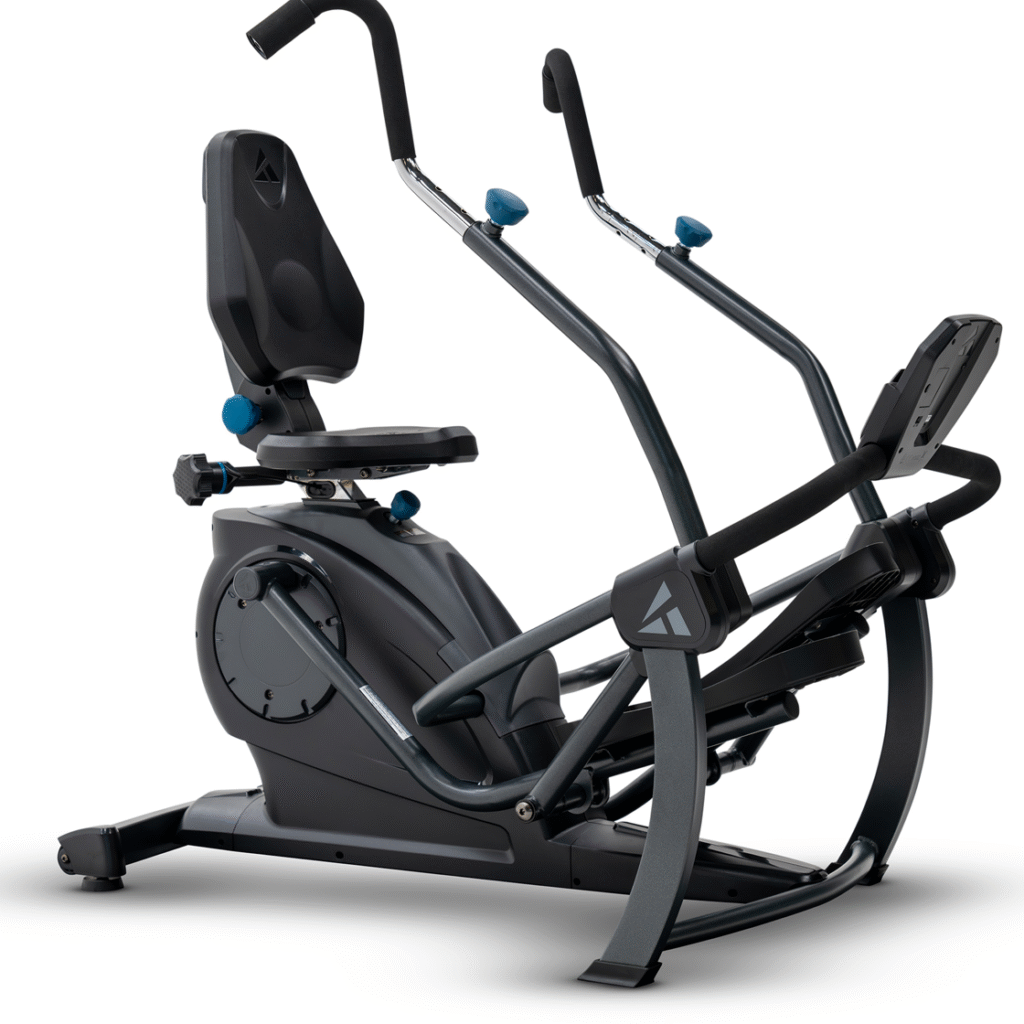
This is the one I recommend most often for people with knee or hip arthritis. You sit in a supported seat and step with your legs while pushing and pulling with your arms.
Unlike a bike, your knees move in a straight line instead of a big circle, which many of my patients find more comfortable. And because you’re seated, there’s no fall risk. The Teeter FreeStep is my favorite home option.
More info: Best Recumbent Cross Trainers
Recumbent bike

A bike is a classic for knee arthritis. Pedaling gently moves the knee through its range without pounding, and you can start with almost no resistance.
A recumbent bike’s backrest also supports your lower back.
More info: Best Recumbent Exercise Bikes for Seniors
Elliptical (if your balance is good)
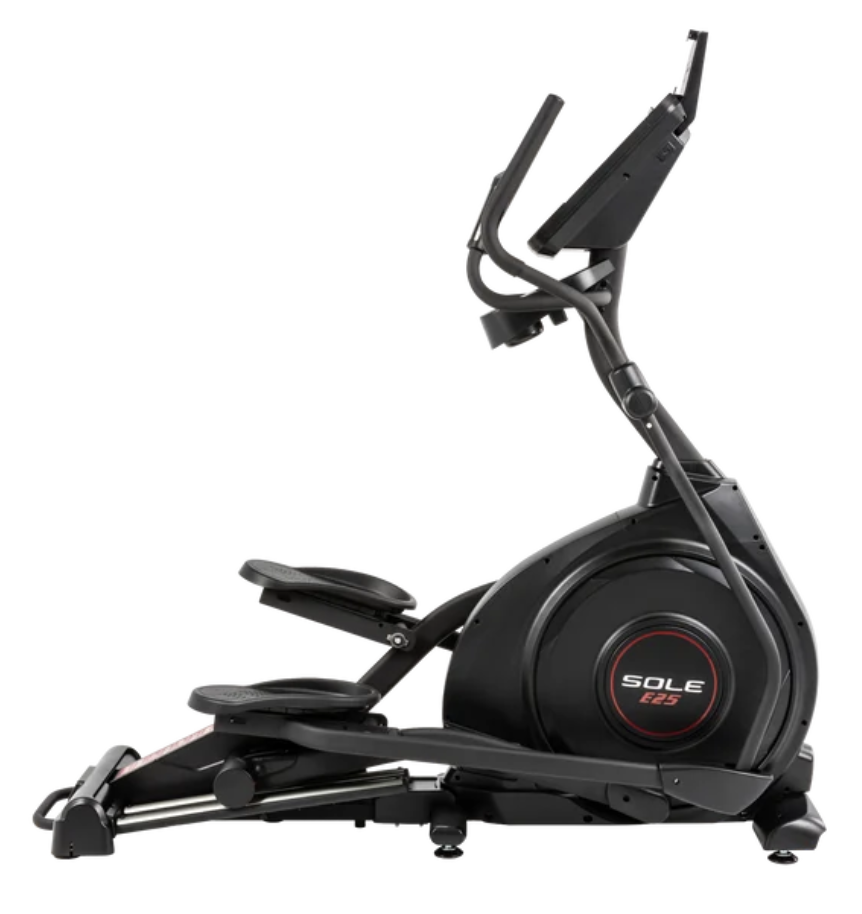
An elliptical lets you exercise standing up without the impact of walking, because your feet never leave the pedals.
It’s a good fit if you’re steady on your feet and want a weight-bearing workout that’s easier on your knees and hips.
More info: Best Ellipticals for Seniors
Whatever you choose, use the same rules. Start with 5 to 10 minutes at low resistance. Watch your 0-to-10 pain rating during the session, do your 24-hour check the next morning, and add time before you add resistance. Write it in your pain diary so you and your PT can see how your joints respond.
For a full comparison, see my guide to low-impact exercise machines for seniors.
Red flags that mean call your doctor before your next session
Most chronic joint pain is not an emergency, but certain signs mean the problem may be something other than ordinary arthritis.
Contact your doctor before continuing exercise if you notice any of these:
- A joint that becomes suddenly hot, red, and swollen
- Fever together with joint pain
- Inability to put weight on the leg or use the arm after a fall or injury
- A joint that locks, or gives way repeatedly
- Numbness, tingling, or weakness that is new or spreading
- Constant pain at rest or at night that does not change with position
- Joint pain along with unexplained weight loss
Seek emergency care right away for chest pain, trouble breathing, or a swollen, painful, warm calf, since the last can signal a blood clot. If you are unsure whether a symptom counts, calling your doctor’s office to ask is always reasonable.
How to build a pain diary your PT can use
Pain is hard to describe from memory.
A diary replaces vague recollection with specifics, and it lets your therapist see patterns you cannot see day to day. It only needs about two minutes per entry.
A paper notebook works as well as an app.
Record the following:
- Date and time
- Activity and duration, such as “walked 10 minutes” or “gardening, 30 minutes”
- Pain before, during, and after, each rated 0 to 10
- Next-morning pain (your 24-hour check)
- Swelling, heat, or stiffness, and how long the morning stiffness lasted
- Sleep quality, since poor sleep can make pain feel stronger
- Medications taken, including timing
- Notes, such as a missed step, a long drive, or a change in weather
An example entry might read: “Tuesday. Walked 10 minutes. Knee 3 before, 4 during, 3 after. Next morning 3, stiffness 15 minutes, no swelling.” Over a few weeks, entries like this show which activities your joints tolerate and which ones set them off.
Family members helping with decisions can read the diary too, and it gives everyone the same facts to work from.
Questions to ask at your first PT visit
Come with a short list. The first appointment is your chance to understand the plan, and a good therapist expects questions.
- What do you think is driving my pain, and what does the evaluation show?
- What pain level should I stay under while exercising?
- How will I know if I have done too much, and what should I do if that happens?
- Which activities should I continue, and which should I change or avoid for now?
- How often should I do my home exercises, and how will we increase them?
- How many visits do you expect I will need, and how will we measure progress?
- Is there anything in my medical history that changes how I should exercise?
- When should I call you, and when should I call my doctor?
Write the answers down, or ask a family member to come and take notes.
Take the Next Step
Book an evaluation with a licensed physical therapist near you, and bring your pain diary so your first session starts from real information about your joints.
Not ready to book a visit yet?
Start with the gentle exercises above, track your response, and when you’re ready for more, my Strong & Steady strength program is designed to build leg strength safely at home.
Frequently Asked Questions
Should I exercise if my joints hurt?
For most people with arthritis, yes. Some discomfort during exercise is normal and isn’t a sign of damage. Use the hurt-versus-harm signs and the 24-hour check in this article to find the right amount. If you have any of the red flags above, check with your doctor first.
Is it better to rest or move with arthritis?
Movement usually wins. Resting a sore joint for a day or two during a flare is fine, but long-term rest weakens the muscles that protect the joint and makes stiffness worse. The goal is the right amount of movement, not none.
Does Medicare cover physical therapy for joint pain?
Medicare Part B generally covers outpatient physical therapy when it’s medically necessary, such as for arthritis that limits your daily activities. With Original Medicare, you typically pay 20% of the approved amount after your Part B deductible. There’s no hard yearly limit on therapy. In 2026, once your therapy costs pass $2,480, your therapist adds documentation to show it’s still needed, but that isn’t a cap on your care (CMS). Medicare Advantage plans may have different rules, so check with your plan.
How long does physical therapy take to help joint pain?
It varies, but many people notice changes in strength and confidence within 4 to 6 weeks of consistent home exercise. Long-lasting improvement usually comes from continuing your program after formal therapy ends.
What’s the best exercise for arthritic knees?
A mix of strengthening (like sit-to-stands and seated knee extensions) and low-impact cardio (like a recumbent bike or seated stepper) works well for most people. See my guide to the best exercises for arthritic knees.