A lot of the exercise equipment I see in my patients’ homes was bought by their kids.
It’s a thoughtful gift.
But as a home health physical therapist, I’ve also seen how it can go wrong: a 200-pound box left at the end of the driveway, a treadmill crammed into a dark hallway, or an elliptical that’s never been used because nobody showed Mom how to turn it on.
The machine matters – but how it gets into the house, where it ends up and how your parent learns to use it matter just as much.
This guide covers everything that happens after you pick a machine:
- Before you buy: the conversation, the right machine and measuring the space
- Delivery: what curbside, room of choice and white glove actually mean
- Assembly: when it’s a DIY job and when to pay for help
- Setup: where to put it so it’s safe and actually gets used
- The first session: how to help your parent get started safely
If you’re still deciding what to buy, start with my guide to gifts for aging parents or ellipticals vs. treadmills for seniors.
This post contains affiliate links. If you buy through them, I may earn a small commission at no extra cost to you.
My Top Picks for Parents
These are the machines I recommend most often to my patients’ families. All four are simple to use, and none of them requires an app or a subscription to work.
| Machine | Best for | Why I like it for parents |
|---|---|---|
| Teeter FreeStep LT3 | Balance concerns, arthritis, joint replacement recovery | Seated, so there’s no fall risk. Works arms and legs together. Arrives mostly assembled, with a 90-day trial |
| Horizon T101 | Steady walkers on a budget | Low 7 1/8″ step-up, speed dials on the hand grips and an easy hydraulic fold |
| Sole R92 Recumbent Bike | Knee or hip problems, back pain | Supportive seat with a backrest, smooth and quiet resistance |
| Sole E25 Elliptical | Good balance, wants low-impact standing exercise | Feet never leave the pedals, easy-to-read console |
Before You Buy
1. Talk to your parent first
I know a surprise is tempting, but a machine your parent didn’t ask for is a machine that often becomes a clothes rack.
Ask a few simple questions:
- Would you actually use it? What would make it easier to use?
- Do you prefer to sit or stand when you exercise?
- Where in the house would you want it?
- Has your doctor or physical therapist said anything about exercise or what to avoid?
If they’re unsure, frame it around something they care about: staying independent, keeping up with the grandkids, or not having to drive to the gym in winter.
2. Match the machine to their balance
This is the most important decision, and it’s where I see the most mistakes.
- Steady on their feet, walks without a device: A treadmill or elliptical can work well.
- Some balance concerns or uses a cane: A seated machine is safer. A recumbent cross trainer or recumbent bike lets them work hard without a fall risk.
- Uses a walker or has fallen recently: Stick with a seated machine, and talk with their doctor or PT first.
Not sure? My guide Are Treadmills Safe for Seniors? walks through it, or you can have them try my free 4-stage balance test.
3. Measure the space (and the path to get there)
Most people measure the room. Fewer measure the path from the front door to the room.
- The room: For a treadmill, most require about 8 feet of length so there’s room behind the belt, and at least 4 feet of width. Seated machines need less, but leave room on one side to get on and off.
- The ceiling: Your parent will be standing about 7 to 9 inches higher on a treadmill deck.
- Doorways, hallways and stairs: Treadmill boxes are big and heavy. Measure the narrowest doorway and any tight turns on the way.
- Outlets: Treadmills need a nearby outlet. Many manufacturers say not to use an extension cord, so check the manual for the model you choose.
Delivery Options, Explained
This is where a lot of people get surprised.
Treadmills and ellipticals ship by freight truck, not by UPS, and the box is often over 200 pounds.
For example, the Horizon T101 ships at about 220 lbs, the Sole F63 at about 203 lbs, and the Horizon 7.0 AT at about 332 lbs.
Here’s what the common delivery levels mean:
| Delivery level | What you get | Who it’s for |
|---|---|---|
| Curbside / standard | The box is left at the curb, driveway, garage or front porch. Nobody brings it inside. | Only if you’ll be there with a strong helper and a dolly |
| Room of choice | The crew carries the box into the room you pick, usually including one flight of stairs. You unbox and assemble it. | If you’re comfortable assembling it yourself |
| White glove / room of choice + assembly | The crew brings it in, assembles it and hauls away the packaging. | Most families buying for a parent |
What Some Top Home Brands Offer
| Brand | Curbside | Room of choice | With assembly |
|---|---|---|---|
| Horizon | Standard delivery to the front entrance, porch, garage or driveway | Available, includes one flight of stairs | White glove delivery and assembly available |
| Sole | $49.99 or $99.99, depending on the product | $200, includes one flight of stairs | $350, includes assembly and packaging removal |
| NordicTrack | Standard delivery to the first covered spot, with no stairs | Not offered on its own | White glove delivery and assembly to the room of your choice, with packaging removed |
| Teeter | Ships free, by ground carrier, in one large box | Not offered | Local technician through Teeter’s assembly partner (quote at checkout) |
My recommendation
For a treadmill or elliptical, I’d pay for delivery with assembly in almost every case. For about $350, you avoid:
- Your parent trying to drag a 200+ lb box inside
- An afternoon of assembly with heavy parts and small bolts
- A pile of cardboard and packaging they can’t easily get rid of
- A setup mistake that makes the machine wobble or run wrong
And I speak from experience here.
I have a Horizon 7.8 AT treadmill in my home and I love it – but this machine is a tank and it was very challenging for even the delivery men to get it in my home.
I also decided to assemble myself, which actually wasn’t too bad, but the pieces are just so big and heavy it takes a lot of work to move anything.
So in general, treadmill assembly takes two able-bodied people who are comfortable lifting parts that weigh 50 lb or more (though it depends a lot on the make and model).
The FreeStep though, is different.
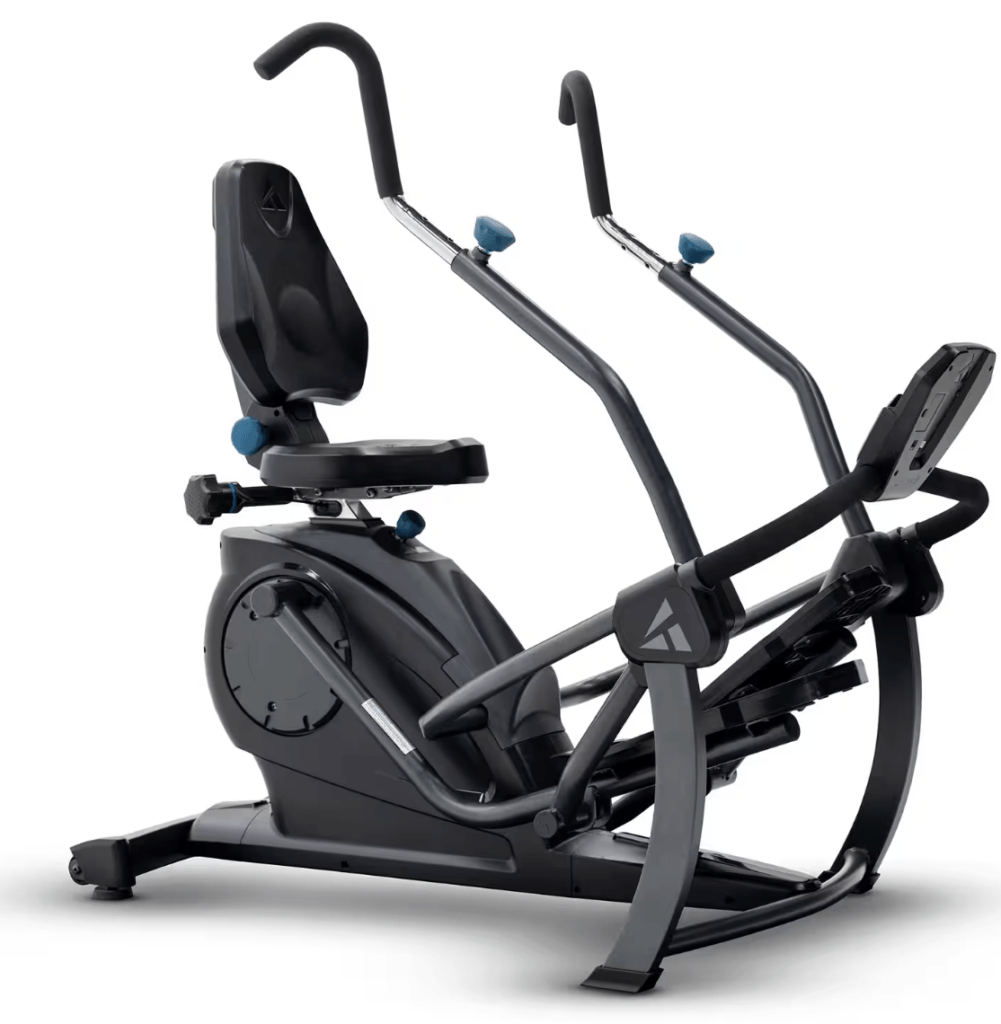
It comes mostly pre-assembled, and Teeter says assembly takes about 30 minutes with two people. If you’ll be there when it arrives, it’s a reasonable DIY job.
Delivery-day tips
- Be there if you can. Freight deliveries need a signature and come in a 4-hour window. If you can’t be there, make sure someone is home with your parent.
- Clear the path. Move rugs, furniture and anything else that’s in the way before the crew arrives.
- Check for damage. Look the box over before signing, and note any damage on the delivery receipt.
- Plan for timing. Freight delivery can take 2 to 3 weeks. If it’s a holiday gift, order early.
- Know the return rules. Returns on large machines can be expensive, and curbside or economy shipping sometimes has stricter return terms. Read the policy before you order.
Assembly: DIY or Hire It Out?
| Machine | DIY difficulty | My advice |
|---|---|---|
| Teeter FreeStep | Easy. Mostly pre-assembled, about 30 minutes with 2 people | DIY is fine if you’re there |
| Recumbent bike | Moderate. Seat, handlebars and console | DIY if you’re handy |
| Folding treadmill | Moderate. Heavy deck, uprights and console wiring | Pay for assembly unless you have two strong people |
| Elliptical | Hard. Many parts and the most steps of any machine | Pay for assembly |
If you assemble it yourself
- Never let your parent do it alone. Even “easy” assembly involves lifting, bending and kneeling. That’s how people get hurt.
- Bring a second person. Most treadmills and ellipticals need two people for the heavy parts.
- Use the video or app instructions. Many brands, including Teeter, offer step-by-step videos or app-based instructions that are easier to follow than the paper manual.
- Double-check every bolt. A loose upright or handrail is a safety problem. Go back and tighten everything at the end.
- Take the packaging with you. Don’t leave a pile of cardboard and plastic for your parent to deal with. It’s also a tripping hazard.
If you hire it out
Use the brand’s own assembly option when you can.
It’s usually done by a crew that knows the machine, and it’s less likely to cause warranty problems.
Ask them to show your parent the basics (the power switch, safety key and how to fold it) before they leave.
Where to Put It: A PT’s Setup Checklist
Where the machine goes affects two things: whether it’s safe and whether it gets used. A treadmill in a cold basement down a flight of stairs usually ends up as storage.
Pick a room they already spend time in. A living room, sunroom or spare bedroom on the main floor is ideal. If they can see the TV or look out a window, even better.
Avoid stairs. If they have to go up or down stairs to reach it, they’ll use it less, and they’ll be tired on the way back.
Check this before you leave:
- Clear space behind a treadmill. A few feet of open space behind the belt, with no furniture, walls or rugs. Check the owner’s manual for the exact clearance.
- Clear space to get on and off. At least 2 feet on the side they’ll step or sit from.
- Firm, level floor. No thick carpet or uneven boards. An equipment mat protects the floor and keeps the machine from shifting.
- No throw rugs nearby. Throw rugs are one of the most common causes of falls I see.
- Good lighting. Bright, even light, with a switch they can reach without crossing the room.
- Outlet close by, cord out of the way. Run the cord along the wall, never across a walkway.
- A sturdy chair nearby. Somewhere to sit before and after a workout, especially if they get lightheaded.
- Water and a phone within reach. A small table next to the machine works well.
- Safety key attached and easy to find. For a treadmill, clip it to the console so it’s always there.
- Kids and pets considered. If grandkids visit, show your parent how to remove the safety key so the treadmill can’t be started.
The First Session: Helping Your Parent Get Started
If you can, be there for the first workout. It’s the single biggest thing you can do to make sure the machine actually gets used.
- Walk through the controls together. Start, stop, speed, resistance and the emergency stop. Let your parent press the buttons, not you.
- Practice getting on and off. Do it a few times with the machine turned off. For a treadmill, have them hold the handrails and step on with the belt stopped.
- Start the belt or pedals slowly. For a treadmill, have them straddle the belt with a foot on each side rail, start it at the slowest speed, then step on while holding the rails.
- Keep it short. Five to ten minutes at an easy pace is plenty for day one. Soreness or exhaustion after the first session is the fastest way to lose them.
- Stand close. Stay next to them, especially on a treadmill or elliptical, so you can help if they lose their balance.
- Write it down. Tape a simple card to the machine: how to start, how to stop and a starting routine (for example, “10 minutes, speed 1.5”).
- Show them how to stop safely. Slow down before stopping, and sit down for a minute before walking away, especially if they take blood pressure medication.
Keep them going
- Schedule a check-in. Call after the first week and ask how it’s going. Small problems (a confusing button, a squeak, a sore knee) are easy to fix early.
- Make it social. Some families walk “together” on the phone, or share step counts.
- Suggest a plan. A simple program helps. My senior-friendly walking program and treadmill workouts for seniors are good places to start.
- Involve their PT. If your parent sees a physical therapist, ask the PT to set a starting routine for the new machine.
Final Thoughts
Buying exercise equipment for a parent is a great way to help them stay strong and independent.
Just remember that the machine is only half of it.
Talk with them first, pick a machine that matches their balance, pay for delivery and assembly when it makes sense, and set it up somewhere they’ll actually use it. If you can, be there for the first workout.
Do those things, and that machine has a much better chance of becoming part of their routine instead of a clothes rack.
Frequently Asked Questions
What’s the best exercise machine to buy for an elderly parent?
It depends on their balance. For most older adults, especially those with balance concerns, I recommend a seated machine like the Teeter FreeStep or a recumbent bike. If they’re steady on their feet, a simple walking treadmill like the Horizon T101 is a great choice.
Can I ship a treadmill directly to my parent’s house?
Yes. Just enter their address as the shipping address and your phone number for scheduling, so the carrier calls you instead of them. Make sure someone will be home for the delivery window.
Is white glove delivery worth it?
For a treadmill or elliptical, almost always. It’s safer for your parent, saves you hours and removes the packaging. For a FreeStep or a light bike, you can usually skip it.
How long does delivery take?
Freight delivery for treadmills and ellipticals often takes 2 to 3 weeks, and longer for upgraded delivery that needs an appointment. Teeter says most FreeStep orders arrive in 4 to 7 business days. Order early if it’s a gift.
What if my parent doesn’t like it?
Check the return policy before buying. Teeter offers a 90-day trial on the FreeStep. Return shipping on large treadmills can be expensive, so talk with your parent before you buy.
Can my parent use HSA or FSA money?
Possibly, with a letter of medical necessity. See my guide to using your HSA or FSA for exercise equipment.