If you have Parkinson’s, you’ve probably heard that exercise is one of the most important things you can do.
As a home health physical therapist, I see it firsthand.
My patients with Parkinson’s who exercise regularly tend to move better, walk more confidently and stay independent longer than those who don’t.
But exercising consistently is hard.
Getting to a gym takes energy and walking outside can feel risky with freezing, shuffling or balance problems.
That’s why a good exercise machine at home can make a real difference.
The tricky part is that not every machine is a good fit. The right one depends on your balance, your symptoms and where you are in your Parkinson’s journey.
My quick picks:
- Best overall for most people with Parkinson’s: Teeter FreeStep (seated stepper)
- Best for higher-intensity cycling: A recumbent exercise bike
- Best for walking and gait training (good balance only): A treadmill with long handrails
- Best for people with good balance who want low impact: An elliptical
Let’s walk through why, starting with what the research actually says.
This post contains affiliate links. If you buy through them, I may earn a small commission at no extra cost to you. This article is for education only. Talk with your neurologist or a physical therapist before starting a new exercise program.
What the Research Says About Exercise and Parkinson’s
Intensity matters
The biggest finding in recent years comes from the SPARX trial, published in 2017.
Researchers followed 128 people with early-stage Parkinson’s who weren’t yet taking medication. They exercised on a treadmill three times a week for six months.
- The high-intensity group (80 to 85% of max heart rate) stayed about the same on a standard symptom scale.
- The moderate-intensity group (60 to 65% of max heart rate) worsened by 1.5 points.
- The group that didn’t exercise worsened by 3 points, a change the researchers called clinically meaningful.
In other words, harder exercise appeared to slow the worsening of motor symptoms over six months (Northwestern University).
A larger follow-up trial, SPARX3, is testing this over 18 months and was still underway as of early 2025 (APDA).
Speed may matter too
Other research has looked at fast-paced cycling.
In a small Cleveland Clinic study, people with Parkinson’s pedaled at a faster cadence (with help from a specialized bike).
Brain scans showed stronger connections in movement-related areas, and the faster the pedaling, the bigger the change.
It was a small study, but it’s one reason cycling is popular in Parkinson’s programs.
The current guidelines
The Parkinson’s Foundation and the American College of Sports Medicine recommend at least 150 minutes a week of moderate-to-vigorous exercise, plus strength, balance and stretching work (Parkinson’s Foundation).
For aerobic exercise, their guidelines suggest:
- At least 30 minutes per session, building up over time
- Starting at moderate intensity (about 3 to 4 on a 0–10 effort scale)
- Working up to vigorous intensity (about 5 to 7 out of 10) over 6 to 8 weeks, if it’s safe for you
What this means for choosing a machine: You want something you can safely push yourself on, that you’ll actually use for 30 minutes or more, three or more times a week. Safety comes first, because you can’t push hard on a machine you’re afraid of falling off.
What I Look for in a Machine for Parkinson’s
When I help a patient with Parkinson’s pick home equipment, here’s what I check.
1. Fall risk. This is the first question. If you freeze, festinate (take quick, shuffling steps), have had falls or rely on a walker, a seated machine is the safest choice. Standing machines like treadmills and ellipticals are better for people whose balance is still good.
2. Easy to get on and off. Getting on and off is when a lot of falls happen. Look for a low step-up, a step-through frame or a seat that swivels or sits at chair height. Rigidity and slowness make awkward transfers harder.
3. Arms and legs together. Parkinson’s often reduces arm swing and makes movements smaller. Machines that move your arms and legs together, like a seated stepper or an elliptical, encourage bigger, coordinated movements.
4. Room to push the intensity. Because the research points to harder exercise, you want a machine with enough resistance or speed to get your heart rate up, not just a light warm-up.
5. Steady rhythm. Rhythmic, repetitive movement is a good fit for Parkinson’s. Pedaling and stepping give you a steady beat to follow, and many people find it easier to keep moving at a steady pace.
6. Simple controls. Tremor and slowness can make small buttons frustrating. Big buttons, dials and easy-to-read screens help.
7. Something you’ll actually use. The best machine is the one you’ll use three or more times a week. Comfort matters more than features.
The Best Exercise Machines for Parkinson’s
1. Teeter FreeStep: Best Overall
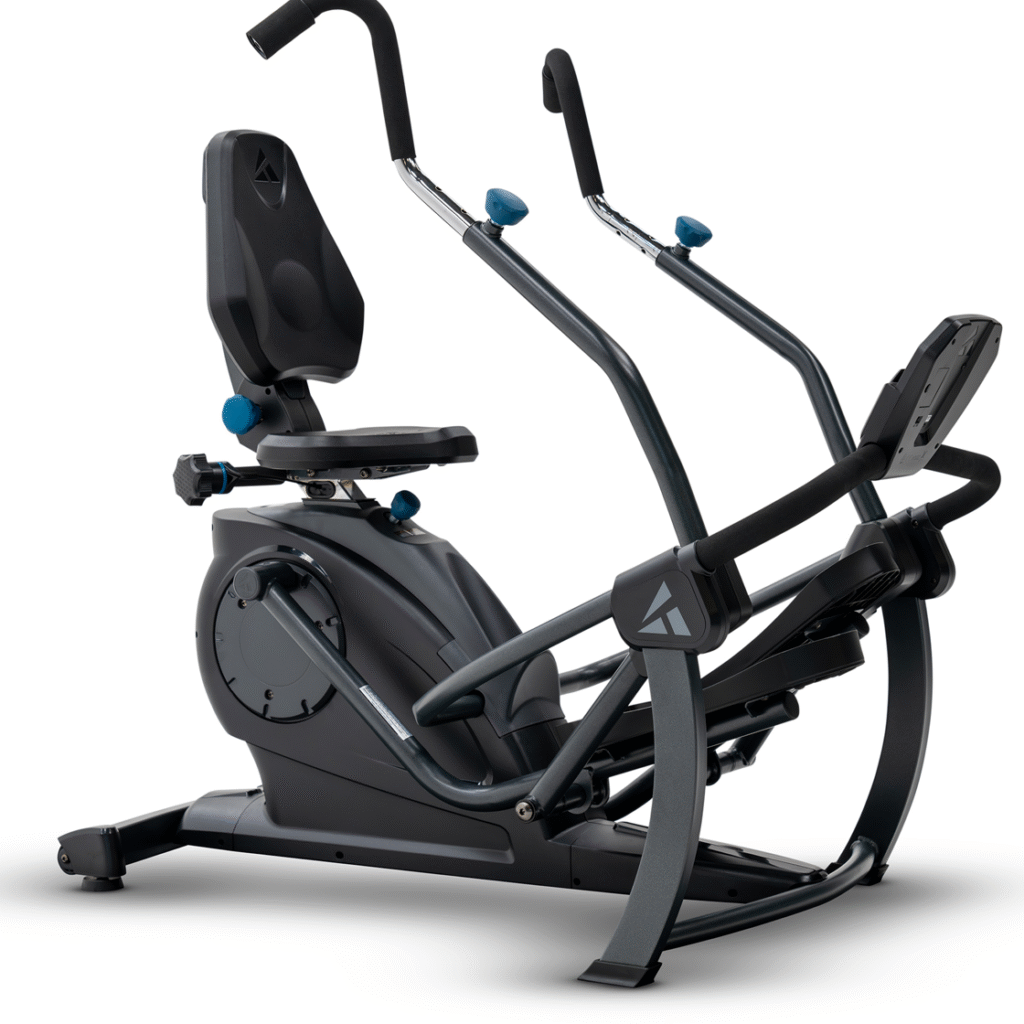
For most of my patients with Parkinson’s, a recumbent cross trainer is the machine I’d recommend first – and the Teeter FreeStep is my favorite home option.
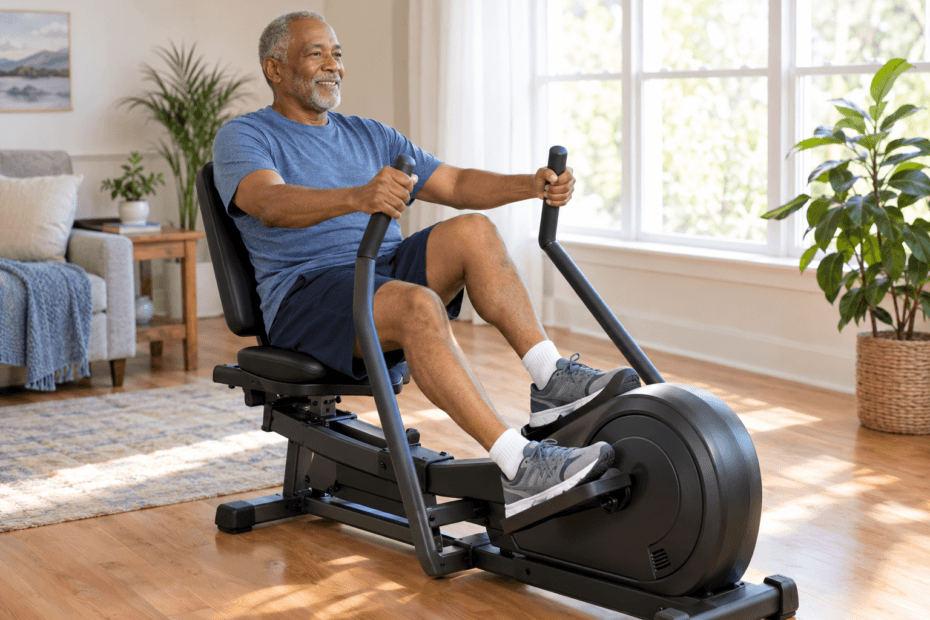
You sit in a supported seat and step with your legs while pushing and pulling the handles with your arms.
That combination checks a lot of boxes for Parkinson’s:
- No fall risk. You’re seated the whole time, so freezing or a loss of balance won’t send you to the floor.
- Arms and legs together. The coordinated stepping and arm motion encourages bigger, rhythmic movements, which is exactly what Parkinson’s tends to take away.
- Room to work hard. You can raise the resistance and speed up to get your heart rate into a higher-intensity range.
- Gentle on joints. The stepping motion is easier on the knees and back than a bike for many people.
Teeter even markets the FreeStep for people with Parkinson’s, MS and arthritis.
Plus, it’s very similar to the recumbent trainers we use in PT clinics, but at a much lower price.
Pros
- Seated, with no risk of falling off a moving belt
- Works arms and legs together
- Easy to get on and off, like sitting in a chair
- Free Teeter Move app with no subscription
- Affordable
Cons
- Doesn’t train walking directly
- Takes up more floor space than a bike
Who it’s for: Almost anyone with Parkinson’s, and especially people with balance problems, freezing or a history of falls. The LT1 is the best value, but the LT3 adds more comfort if you’ll use it daily.
More info: FreeStep vs. NuStep and FreeStep LT1 vs LT3
2. Recumbent Exercise Bike: Best for High-Cadence Cycling

Cycling is one of the most popular exercises in Parkinson’s programs, and a recumbent bike is the safest way to do it at home.
The backrest supports you, and a step-through frame makes getting on and off much easier than an upright bike.
If you want to try the faster-pedaling approach from the research, a bike is the easiest machine to do it on.
Aim for a quick, steady cadence at a resistance you can sustain.
Pros
- Seated and supported
- Easy to pedal at a fast, steady cadence
- Compact compared to most machines
Cons
- Legs only, no arm work
- Some people find it harder on the knees or back than a stepper
Who it’s for: People who like cycling or want to focus on faster pedaling, at any stage.
More info: Best recumbent exercise bikes for seniors and FreeStep vs. recumbent bike
3. Treadmill With Handrails: Best for Walking (Good Balance Only)
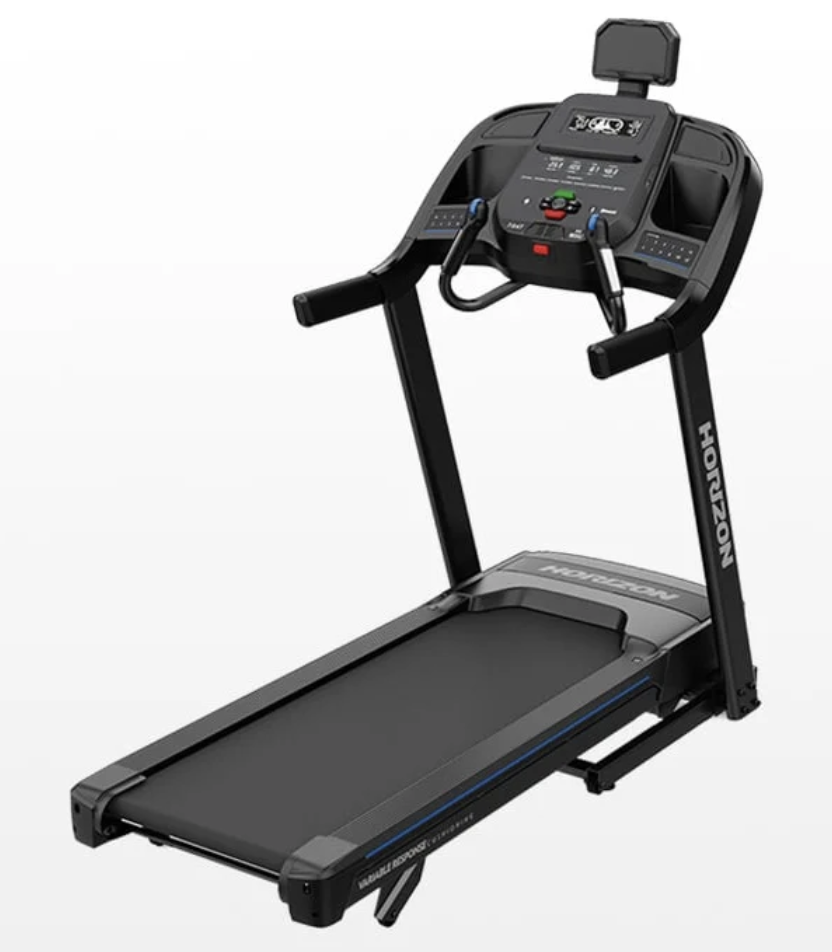
The SPARX trial used treadmills, and walking is the skill most people with Parkinson’s want to protect. A treadmill can be great for practicing longer steps and a steady rhythm.
But I’m careful here.
A treadmill is a moving surface, and freezing or festination on a moving belt can lead to a fall.
I only recommend a home treadmill if your balance is good, you don’t freeze and you’ve practiced on one with a PT first.
If it’s a fit, look for side handrails you can reach without leaning forward, a low step-up height, speed dials on the handrails and a safety key you always wear.
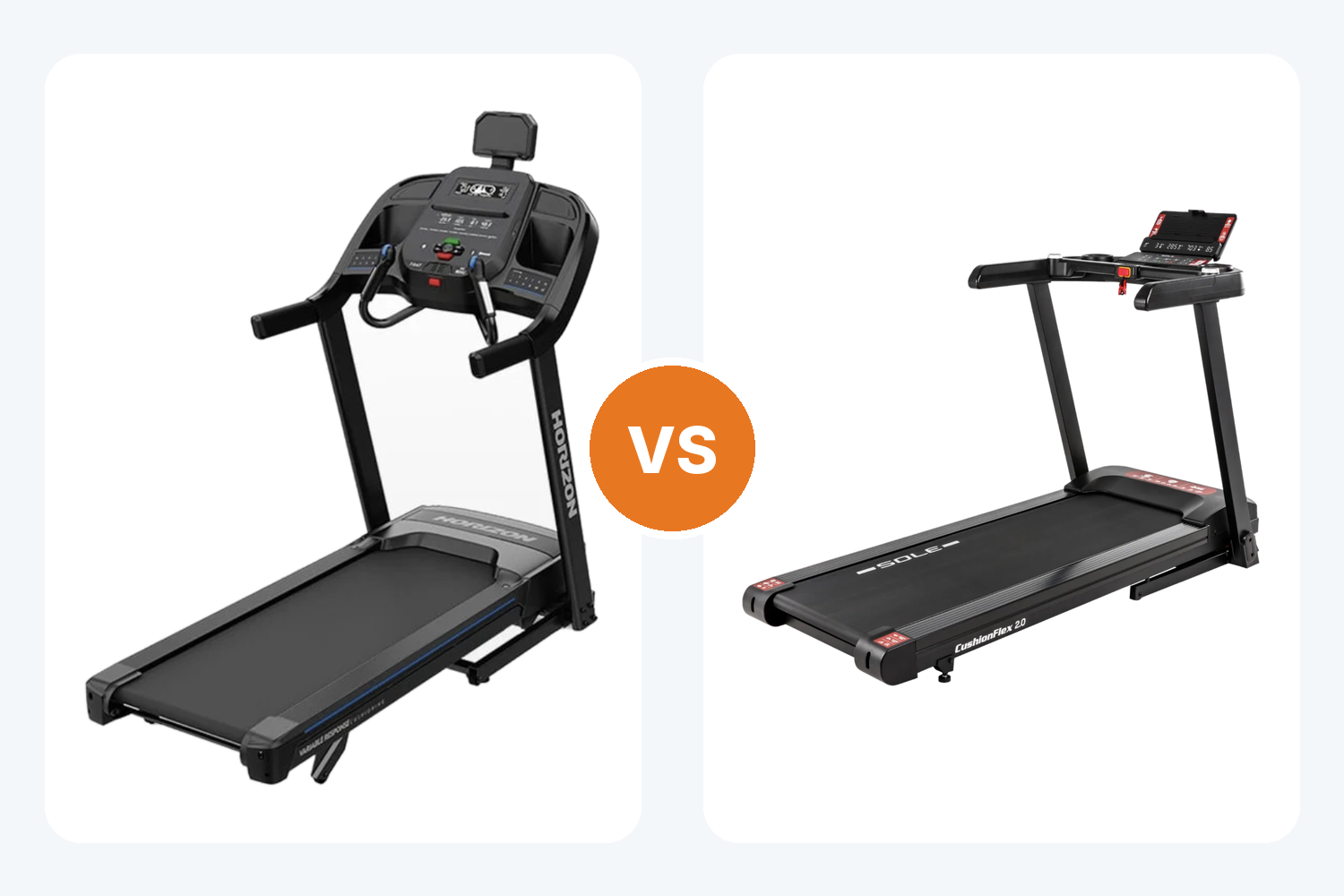
The Horizon 7.0 AT and Sole F63 both have low step-ups and handrail speed controls.
Pros
- Trains walking directly
- Easy to set an exact speed and track progress
- Matches the research on high-intensity exercise
Cons
- Highest fall risk of any machine on this list
- Not safe for people who freeze or festinate
Who it’s for: People in the earlier stages of Parkinson’s with good balance and no freezing.
More info: Are treadmills safe for seniors?
4. Elliptical: Best Low-Impact Standing Option
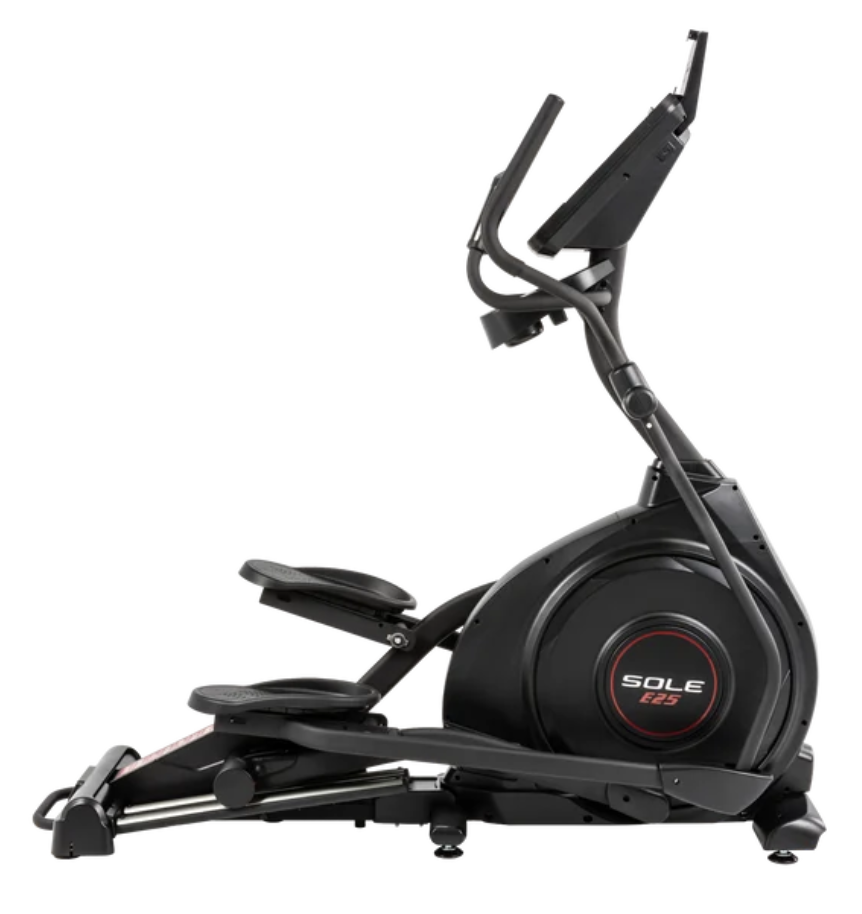
An elliptical works your arms and legs together while you stand, and your feet never leave the pedals.
That makes it a good middle ground for people who want to train standing but find a treadmill too risky.
You still need decent balance to step on and off safely, and some people with Parkinson’s find the motion hard to start smoothly.
If you’re not sure, it’s a good idea to try one in a store or clinic first if you can before purchasing.
Pros
- Standing, weight-bearing exercise with arm involvement
- No moving belt to fall off
- Low impact on the joints
Cons
- Requires good balance to get on and off
- The motion can be hard to start if you have rigidity or freezing
Who it’s for: People with good balance who want a standing workout that’s easier on the joints than a treadmill.
More info: Best Elliptical Machines for Seniors
Quick Comparison
| Machine | Fall risk | Arms + legs | Trains walking | Best for |
|---|---|---|---|---|
| Recumbent cross trainer | Very low | Yes | No | Most people, especially with balance problems or freezing |
| Recumbent bike | Very low | No | No | Fast-cadence cycling, any stage |
| Elliptical | Moderate | Yes | Partly | Good balance, want a standing workout |
| Treadmill | Highest | No | Yes | Early stage, good balance, no freezing |
My rule of thumb: If you’re not sure, start seated. You can always add standing work with your PT, and a seated machine lets you push your intensity without worrying about a fall.
How to Start Safely
- Get a PT evaluation first. The Parkinson’s Foundation recommends seeing a physical therapist at diagnosis and about every six months. A PT can check your balance, recommend the right machine and help you find a safe intensity.
- Exercise during your “on” time. Schedule workouts when your medication is working well. You’ll move better and be safer than during “off” periods.
- Use effort, not just heart rate. Some Parkinson’s medications and the disease itself can blunt your heart rate response. Rate your effort from 0 to 10 instead. Start around 3 to 4 (moderate) and work up toward 5 to 7 (hard) over several weeks, if your doctor says it’s safe.
- Watch for dizziness when you stand. Many people with Parkinson’s have orthostatic hypotension, a drop in blood pressure on standing. Stay seated for a minute after your workout, and stand up slowly. See my guide to dizziness when standing up.
- Plan your transfers. Getting on and off is when falls happen. Keep a sturdy chair or grab bar nearby, and don’t rush.
- Warm up and cool down. Spend a few minutes at an easy pace before you push harder, and slow down gradually at the end.
- Stay hydrated. Dehydration makes dizziness worse. Keep water within reach.
- Don’t skip the other pieces. A machine covers your cardio. The guidelines also call for strength, balance and stretching. My Strong & Steady balance program is a good place to start for the balance piece.
Stop and call your doctor if you have chest pain, severe shortness of breath, fainting or near-fainting, or a fall.
Final Thoughts
For most people with Parkinson’s, I’d start with a seated stepper like the Teeter FreeStep.
It’s safe, it works your arms and legs together, and it lets you push your intensity without worrying about falling.
If you love cycling, a recumbent bike is a great choice too.
And if your balance is good and you don’t freeze, a treadmill can help you practice walking – just get a physical therapist’s input first.
Whatever you choose, the most important thing is to keep moving, consistently, at an effort that challenges you.
Frequently Asked Questions
What is the best exercise for Parkinson’s?
There isn’t a single best exercise. The guidelines recommend a mix of aerobic exercise, strength training, balance work and stretching. For aerobic exercise, the research points toward working at a moderate-to-hard effort, at least 30 minutes at a time.
Is a stationary bike good for Parkinson’s?
Yes. Cycling is safe, seated and easy to do at a fast, steady pace. A recumbent bike with a backrest is usually the safest choice for home.
Is a treadmill safe with Parkinson’s?
It can be, if your balance is good and you don’t freeze. Practice with a PT first, use the handrails and always wear the safety key. If you freeze or have had falls, start with a seated machine instead.
How often should someone with Parkinson’s exercise?
The Parkinson’s Foundation recommends at least 150 minutes a week of moderate-to-vigorous exercise. In the SPARX trial, participants exercised three times a week.
Can exercise slow Parkinson’s?
The research is promising. In the SPARX trial, people who exercised at a high intensity for six months didn’t see their motor symptoms worsen, while those who didn’t exercise did. A larger trial is now testing this over a longer period.
Can I use my HSA or FSA for a machine?
Possibly. Parkinson’s is a diagnosis where exercise is a well-established part of treatment, so a letter of medical necessity from your neurologist is often straightforward. See my guide to using your HSA or FSA for exercise equipment.