I walk into homes a day or two after knee replacement surgery for a living, and I can usually tell within a minute how the next six weeks are going to go.
Not from the knee, but from the living room.
Is there a firm chair with arms, or just a deep couch?
Is there a clear path from the bed to the bathroom, or a rug and a phone cord?
Are there ice packs in the freezer, or one bag of frozen peas?
None of that is expensive or complicated. It just has to happen before surgery, because nobody feels like rearranging furniture on day two.
Here’s what to set up, room by room, and what you can skip.
Disclosure: this page contains Amazon affiliate links. If you buy through them, we may earn a small commission at no extra cost to you. It never changes what we recommend.
Start Here: Your Recovery Station
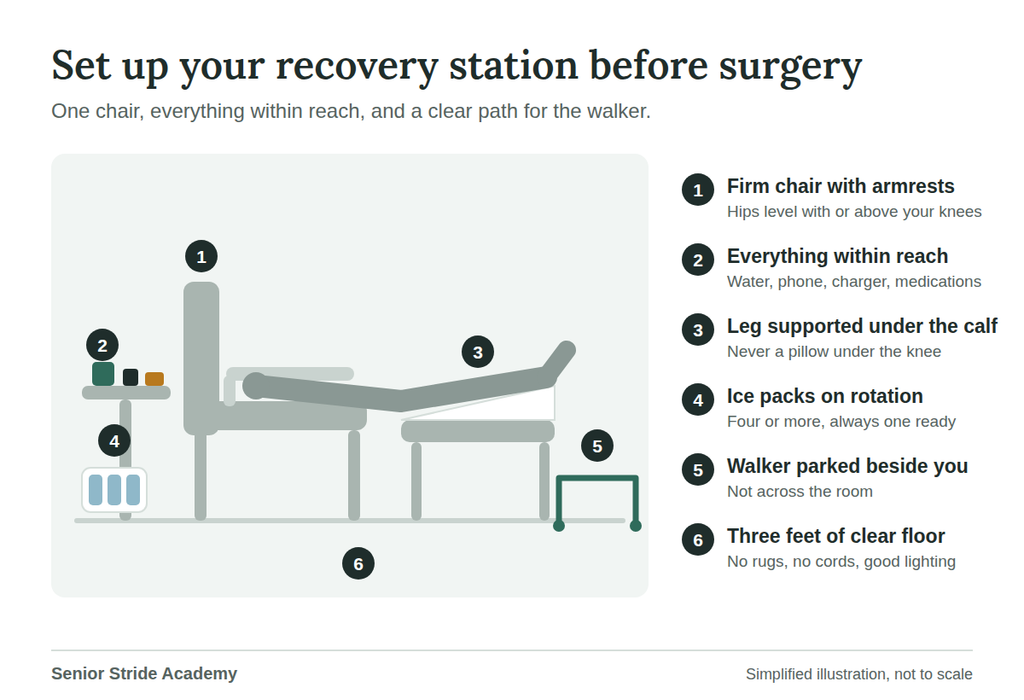
Before anything else, pick the chair you’ll spend the next two weeks in.
It should be firm, with armrests, and tall enough that your hips sit level with or slightly above your knees.
You’ll also need a way to elevate your leg, like a supportive ottoman, during icing.
Armrests matter because you’ll push up with your hands for a while. Height matters because standing up from a low seat asks a lot of a brand new knee.
Then set up around it:
- A small table within arm’s reach for water, phone, remote, and medications
- A phone charger that reaches the chair
- A basket of ice packs nearby, with a rotation going in the freezer
- A firm pillow or two for propping the leg, with the support under the calf and heel
- A rolled towel for heel props
- Clear floor space for your walker to fit beside the chair
One thing about recliners
Recliners are common in many homes and they can work well when it comes to comfort and elevation during knee recovery, but only when used correctly.
The problem is that most recliners support you under the knee, which holds the knee slightly bent.
A few hours a day in that position is how people end up struggling to get the knee fully straight, and straightening is the harder half of recovery to get back.
If you’re going to use a recliner, use it fully reclined with the leg out straight and the support under your calf, not under your knee.
If it won’t do that, a firm chair with an ottoman is better.
Floors and Pathways
This is the cheapest, highest-value prep there is (and it’s the one people skip).
Roll up the throw rugs. All of them, including the one in the bathroom. A walker catches the edge every time.
Tape down or reroute cords. Phone chargers, lamp cords, oxygen tubing if you use it.
Clear a path at least three feet wide between your chair, the bathroom, the bedroom, and the kitchen. Measure it with the walker if you have one already.
Fix the lighting. A lamp you can reach from bed, a night light in the hallway and bathroom, and a light switch you don’t have to cross a dark room to reach. Most falls happen on the way to the bathroom at night.
Plan for pets. A dog who greets you at the door is a genuine hazard for the first couple of weeks. Arrange a gate or a person.
Bathroom
A shower chair or bench. Standing on one leg in a wet shower is not the place to test your new knee. A bench that spans a tub wall is best if you’re getting into a tub-shower.
A handheld shower head, so you can sit down and still rinse off.
Non-slip mats inside and outside the shower.
Grab bars, if you can arrange them. Properly anchored into studs, not suction cup ones. If a bar isn’t realistic before surgery, a bench plus a handheld shower covers most of it.
A taller toilet seat, maybe. Unlike hip replacement, there’s no rule against sitting low after a knee replacement. It’s just hard. If your toilet is low and your quads are weak, a raised seat or a toilet safety frame makes standing up much easier for a few weeks. If your toilet is already a comfort-height model, skip it. In my experience, a 3-in-1 commode usually works best because it’s adjustable, comes with arm rests, and can also be used as a bedside commode when needed.
Move the everyday things to the counter so you’re not bending into a low cabinet.
Bedroom
Sleep where the bathroom is. If your bedroom is upstairs and there’s a bathroom downstairs, consider a temporary setup on the main floor for the first week or two. Plenty of my patients set up a bed in the den and never regret it.
Check your bed height. Sitting on the edge, your feet should reach the floor with your hips level with or above your knees. A bed that’s too low is hard to stand from. A bed that’s too high makes you slide down onto the leg.
Put a firm chair beside the bed for dressing. Trying to get pants over a swollen knee while standing is how people fall.
Set up the elevation gear. Two firm pillows or a foam wedge, with a plan to support the calf and heel rather than the knee. And no pillow under the knee at night, however good it feels.
Put the phone within reach of the bed, charged, with the charger where you can grab it without standing.
Kitchen
Move what you use to waist height. Plates, mugs, coffee, cereal. Nothing important should live below the knee or above the shoulder for a few weeks.
Slide, don’t carry. You can’t carry a plate while using a walker. Slide items along the counter, or get a walker basket or tray for added convenience.
Stock easy meals. Freeze a couple of weeks’ worth, or accept every offer of food that comes your way. Appetite is often low the first week, and standing at the stove is tiring.
Set out water bottles. Hydration matters more than people think after surgery, and refilling a glass repeatedly gets old fast.
Stairs and Entry
Walk your own front door with a critical eye before surgery, or better yet, have someone watch you do it.
Which entrance will you use? Pick the one with the fewest steps and the best rail, even if it’s not the one you normally use.
Is there a rail? One solid rail is the minimum. Two is better. A loose rail is worse than none, because you’ll trust it.
How will you get a walker up those steps? Often the answer is a second walker: one for outside, one for inside. Cheap used ones are fine for this.
If your bedroom and only bathroom are upstairs, you’ll be doing stairs on day one. That’s usually manageable with a rail and a plan, but it’s worth telling your surgical team in advance so your therapy plan accounts for it.
The Equipment List
What you’ll actually use:
- A front-wheeled walker. Usually provided by the hospital. Two wheels, not four, and not a rollator with a seat, which rolls away from you.
- A cane, for a few weeks after the walker. A simple single-point cane does the trick.
- Ice packs, four or more, so there’s always a cold one ready. Gel packs that stay flexible when frozen are worth the extra couple of dollars. I prefer these gel packs to fancy ice machines.
- A reacher or grabber. Less essential than for hip patients, but a nice grabber is handy for the first few weeks.
- A long shoehorn and elastic shoelaces, so you’re not bending down over a swollen knee.
- A firm foam wedge or two firm pillows for elevation.
- A shower chair.
- Loose shorts or wide pajama pants. Getting fitted trousers past a swollen knee is a two-person job.
What you can usually skip:
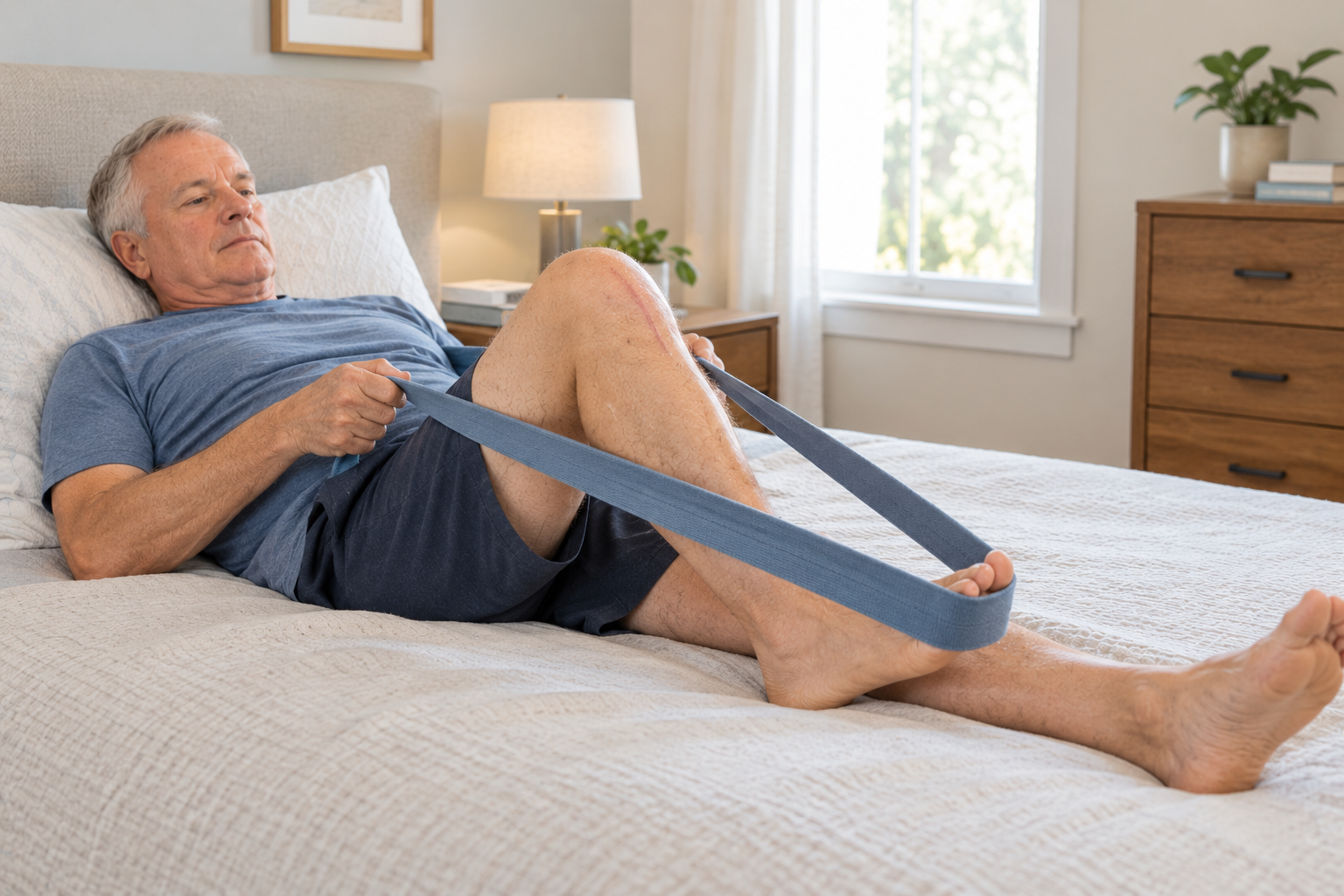
- A continuous passive motion (CPM) machine. These were standard for years, and most current guidance no longer recommends them routinely. Your own heel slides do more.
- A fancy cold therapy machine. They’re pleasant, and some people love them. But rotating gel packs works, and the money is better spent on a shower chair or a few weeks of help. I know some surgeons are sending patients home with these after surgery and that’s fine. But personally, I still like gel ice packs better.
- A knee immobilizer or brace, unless your surgeon specifically prescribes one.
- A wheelchair. Almost nobody needs one after a routine knee replacement, and having one around encourages sitting when you should be walking.
People and Logistics
Equipment is the easy part. The part people underestimate is coverage.
The first 72 hours. Have someone with you, ideally staying over. This is when you’re groggiest, most nauseated from the medication, and least steady.
Rides. You won’t drive for roughly four to six weeks with a right knee. Line up transportation for follow-up appointments and outpatient therapy now.
Home therapy. Ask your surgeon’s office who will be coming out, and when the first visit is scheduled. If you’re being discharged the same day, confirm this before surgery, not after.
Medication. Fill prescriptions before surgery day if your team allows it. Pharmacy runs on day one are miserable.
A check-in plan if you live alone. Most people recover at home alone just fine with preparation, but set up a daily call or a neighbor who has a key. Put a phone in every room you’ll spend time in.
Work and pets. Sort out both before the date. Nobody wants to arrange dog walking from a hospital bed.
Before Surgery: Give Your Knee a Head Start
A few things in the weeks before surgery pay off more than anything you’ll buy:
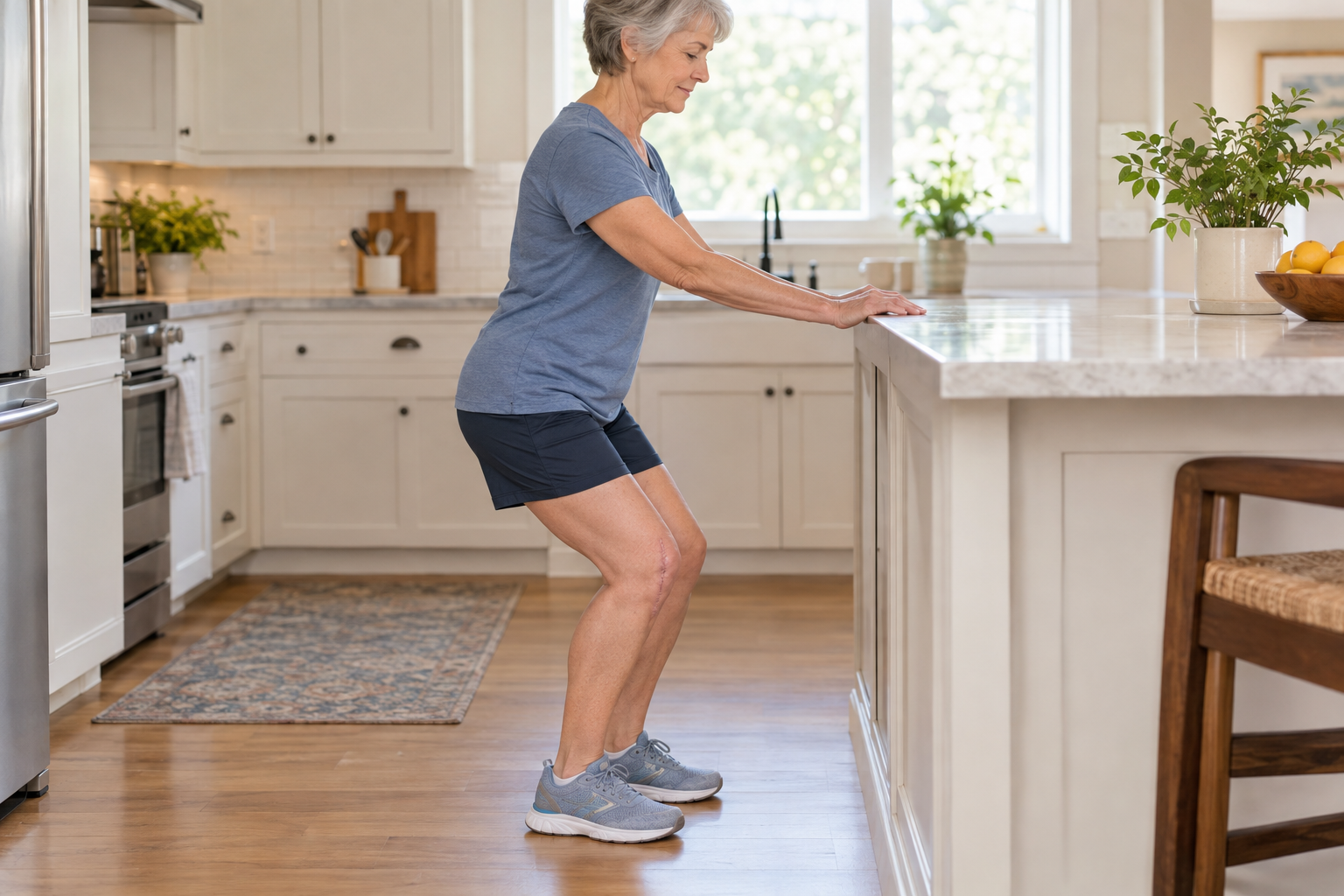
Work on the knee you have. Knees that bend further before surgery tend to bend further after. Quad sets, heel slides, and a stationary bike if you have one are all worth doing now. See more knee replacement exercises.
Practice with the walker. Get it in advance if you can and walk your own hallway with it. Learning to steer around a corner is easier on two good legs.
Practice getting in and out of your car. Back up to the seat, sit down, then swing the legs in. Do it once now, when it’s easy.
Two Weeks Out: The Short Checklist
- Rugs rolled up, cords taped, paths cleared
- Recovery chair chosen and set up
- Ice packs in the freezer
- Shower chair and non-slip mats in place
- Bed and bathroom plan settled, upstairs or down
- Kitchen items moved to waist height
- Meals frozen or arranged
- Rides lined up for the first month
- Someone staying for at least the first few days
- Prescriptions filled, pharmacy plan set
- Home therapy confirmed
- Pets and work covered
Final Thoughts
I’ve never walked into a home and thought someone overprepared.
But I’ve walked into plenty where the only chair was a soft couch, the walker didn’t fit through the bathroom door, and there was one bag of frozen corn in the freezer doing all the work.
Those recoveries aren’t doomed, they’re just harder than they had to be, and the hardest part lands in the first week when you have the least energy to fix anything.
An afternoon of preparation before surgery buys you a much better first two weeks.
Do the floors, pick the chair, fill the freezer with ice packs, and line up your people.
Then let the knee do its job.
Frequently Asked Questions
What should I buy before knee replacement surgery?
At minimum: several ice packs, a shower chair, non-slip mats, a firm foam wedge or pillows for elevation, and loose clothing. A reacher, a long shoehorn, and elastic shoelaces help. Your walker usually comes from the hospital.
Do I need a raised toilet seat after knee replacement?
Only if your toilet is low or your legs are weak. Unlike hip replacement, there are no precautions against sitting low after a knee replacement. It’s a comfort and strength issue, not a safety rule.
Can I use a recliner after knee replacement?
Yes, but recline it fully so your leg is out straight with support under the calf, not under the knee. Sitting for hours with the knee slightly bent makes it harder to straighten later.
Do I need a CPM machine at home?
Usually not. Continuous passive motion machines were once standard, but current guidance no longer recommends them routinely. Doing your own heel slides achieves more. Some doctors send mini exercise bikes home now though, which is the best of both worlds.
Can I recover from knee replacement alone at home?
Many people do, with preparation. Arrange someone to stay for the first few days, set up a daily check-in, keep a phone in every room, and have transportation arranged for appointments.
Should I move my bedroom downstairs?
If your bedroom and bathroom are upstairs, a temporary main-floor setup makes the first week or two easier. It isn’t required, since most people can manage stairs with a rail from day one, but it removes the hardest trip of the day.
This article is educational and doesn’t replace individual assessment. Your surgeon and physical therapist know your situation, and their instructions come first.