Every December, I hear questions from patients and caregivers like “I have money left in my FSA and I don’t know what to do with it.”
If that’s you, here’s some good news – if you have a medical condition that exercise helps treat, a treadmill, elliptical, exercise bike, or seated stepper may qualify as an HSA or FSA expense.
That means you’d be paying with pre-tax dollars instead of losing the money.
The catch: exercise equipment doesn’t qualify just because it’s good for you.
You’ll usually need a letter of medical necessity from a doctor or other licensed provider explaining why you need it to treat a specific condition.
The short answer:
- FSA: Most plans are use-it-or-lose-it by December 31, unless your employer offers a grace period or carryover.
- HSA: Your money never expires, so there’s no year-end rush (but you can still use it for qualifying equipment).
- What you need: A diagnosed condition, a letter of medical necessity and an itemized receipt.
In this guide, I’ll walk you through how it works, what the letter should say from a PT’s point of view, and which machines make the most sense.
This post contains affiliate links. If you buy through them, I may earn a small commission at no extra cost to you. I’m a physical therapist, not a tax advisor. Check with your plan administrator before you buy.
How HSA and FSA Rules Work for Exercise Equipment
The basic rule
The IRS lets you use HSA and FSA money for medical care: things that diagnose, treat, mitigate or prevent a disease. Fitness equipment you buy to “get in shape” or for general health doesn’t count.
It’s treated as a personal expense, the same as a gym membership.
But when a provider says you need the equipment to treat a specific condition, it can count as a medical expense.
That’s where the letter of medical necessity comes in.
Conditions where this often comes up
In my experience, these are the conditions where exercise equipment is most commonly prescribed:
- Knee or hip arthritis
- Recovery after a knee or hip replacement
- Heart disease or high blood pressure
- Type 2 diabetes or obesity, as part of a supervised plan
- Parkinson’s disease, MS or stroke recovery
- Balance problems and fall risk
- Chronic low back pain
Having one of these isn’t necessarily enough by itself.
The letter needs to connect your condition to the specific equipment and explain why you need it.
HSA vs. FSA: the deadlines are different
| FSA | HSA | |
|---|---|---|
| Does the money expire? | Usually yes, at the end of the plan year | No, it rolls over forever |
| Year-end deadline | Often Dec 31, but check your plan | None |
| Extra time options | Your employer may offer a grace period (up to 2.5 months) or a carryover (up to $680 from 2026 into 2027), not both. Some plans offer neither | Not needed |
| Same eligibility rules? | Yes | Yes |
The 2026 FSA contribution limit is $3,400, and the carryover limit is $680, according to IRS Rev. Proc. 2025-32 (summary from Hylant).
Many FSA plans also have a run-out period, which is extra time after the plan year ends to submit receipts for purchases made during the year.
That doesn’t let you buy after December 31, but it gives you time to file the paperwork.
Check your plan documents or call your administrator to see which rules apply to you.
What a Letter of Medical Necessity Should Say
A letter of medical necessity (often called an LMN) is a short letter from a licensed provider. It explains why you need a specific item to treat a medical condition.
Vague letters are the most common reason claims get denied. “Exercise is good for this patient” won’t cut it. Here’s what I’d want to see in a strong letter:
- Your diagnosis. The specific condition, such as “bilateral knee osteoarthritis” or “status post right total knee replacement.” Not just “knee pain.”
- The specific equipment. For example, “a recumbent cross trainer” or “a home treadmill with handrails,” not “exercise equipment.”
- Why this equipment treats your condition. For example, “Low-impact stepping improves knee range of motion and quadriceps strength without the joint loading of walking outdoors.”
- Why alternatives won’t work. This is the part most letters skip. Examples: unsafe to walk outside because of fall risk, uneven sidewalks, icy winters, or no reliable way to get to a gym.
- How you’ll use it. Frequency and duration, such as “20 to 30 minutes, 5 days a week.”
- How long you’ll need it. For example, “12 months” or “ongoing, for management of a chronic condition.”
- The provider’s signature, credentials and date.
Who can write it?
Usually your doctor, but some plans accept letters from other licensed providers, such as a nurse practitioner or physician assistant.
As a physical therapist myself, I wish PT’s were allowed to write these letters ourselves, but we can’t (just like we can’t write orders for walkers and rollators).
Ask your plan administrator who qualifies before you request one.
A PT tip: If you’re seeing a physical therapist, ask them to write a short note about what equipment they recommend and why. Bring it to your doctor. It makes the letter easier to write and more specific.
What about online LMN services?
Some retailers, including Sole, work with a company called Truemed.
At checkout, you fill out an online health survey, and a licensed provider reviews it. If you’re approved, you get a letter of medical necessity, usually within a day or two.
It’s convenient, especially if you can’t get a doctor’s appointment before December 31.
Just know that your plan administrator still makes the final call, and the letter only helps if you actually have a qualifying condition.
Free download: Letter of Medical Necessity Kit
Take the guesswork out of your doctor’s visit. This free 4-page printable kit includes:
- A prep sheet to fill out before your appointment
- A letter template your provider can copy onto their letterhead
- Sample “why it’s needed” language for knee replacement, arthritis, balance problems, heart disease and Parkinson’s
- A checklist for buying, submitting and keeping your records
Exercise Equipment That May Qualify
These are the machines I recommend most often to my patients and any of them may qualify with the right condition and a letter of medical necessity.
| Machine | Best fit for | Approx. price | How the brand handles HSA/FSA |
|---|---|---|---|
| Teeter FreeStep LT1 | Balance problems, arthritis, joint replacement recovery | $699 | Listed as HSA/FSA eligible; use your card at checkout |
| Teeter FreeStep LT3 | Same as LT1, more comfort for daily use | $799 | Listed as HSA/FSA eligible; use your card at checkout |
| Sole R92 recumbent bike | Knee replacement recovery, arthritis, back pain | $1,199.99 | Check Sole’s checkout for Truemed |
| Sole F63 treadmill | Heart health, diabetes, walking programs | $1,099.99 | Truemed survey and LMN at checkout |
| Horizon T101 treadmill | Daily walking on a budget | $699 | Available through Truemed at some retailers |
| Horizon 7.0 AT treadmill | Daily walking, sturdier frame | $1,099 | Check with retailer |
| Sole E25 elliptical | Knee or hip arthritis, low-impact cardio | $1,199.99 | Check Sole’s checkout for Truemed |
For balance problems or joint pain: Teeter FreeStep
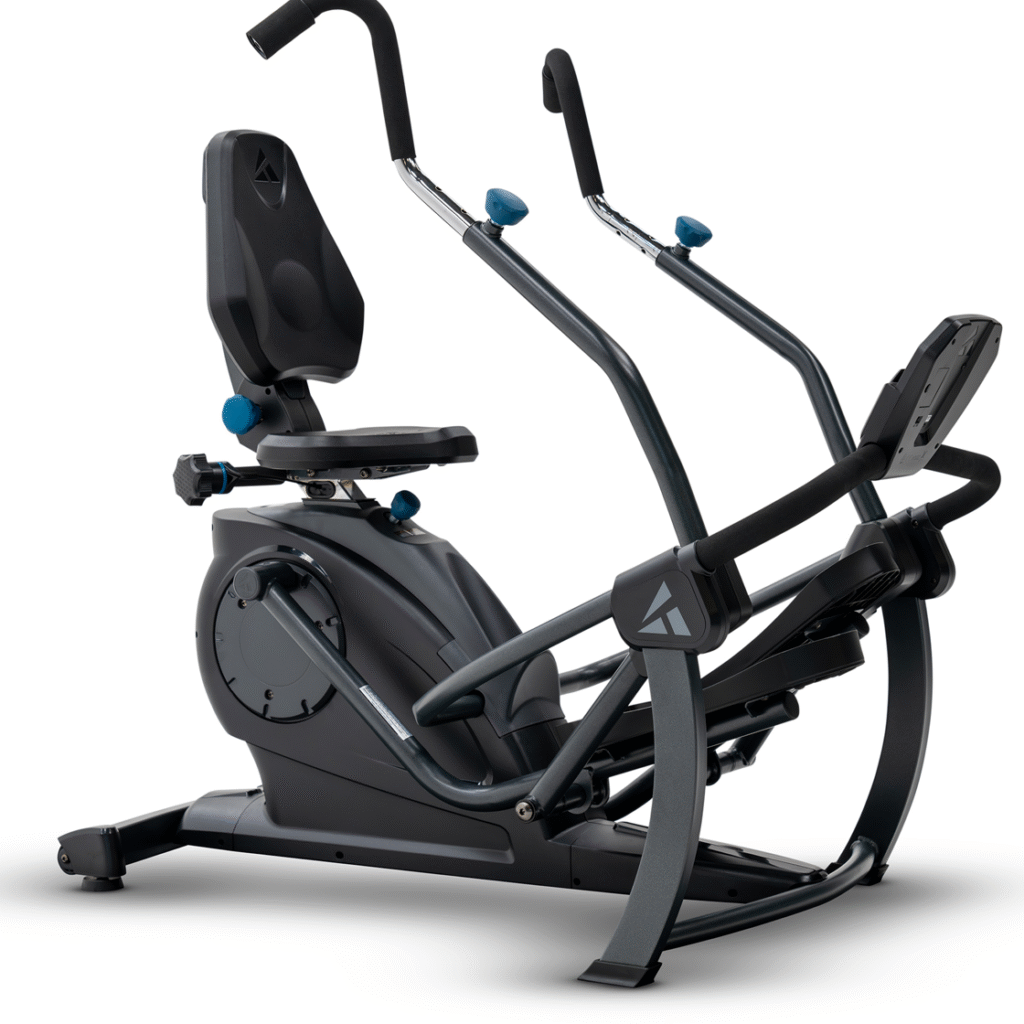
If you have balance concerns, knee or hip arthritis, or you’re recovering from a joint replacement, the FreeStep is the machine I’d look at first.
You sit in a supported seat and step with your legs while pushing and pulling with your arms. There’s no moving belt, so there’s no fall risk.
It’s also one of the easier machines to justify in a letter, because it closely resembles the recumbent cross trainers used in PT clinics.
Teeter lists both the LT1 and LT3 as HSA/FSA eligible and lets you pay with your card at checkout.
Teeter notes that you may still need a letter of medical necessity from your doctor.
Not sure? For more info, see my complete comparison article on the FreeStep LT1 vs LT3.
For walking programs: Sole and Horizon treadmills
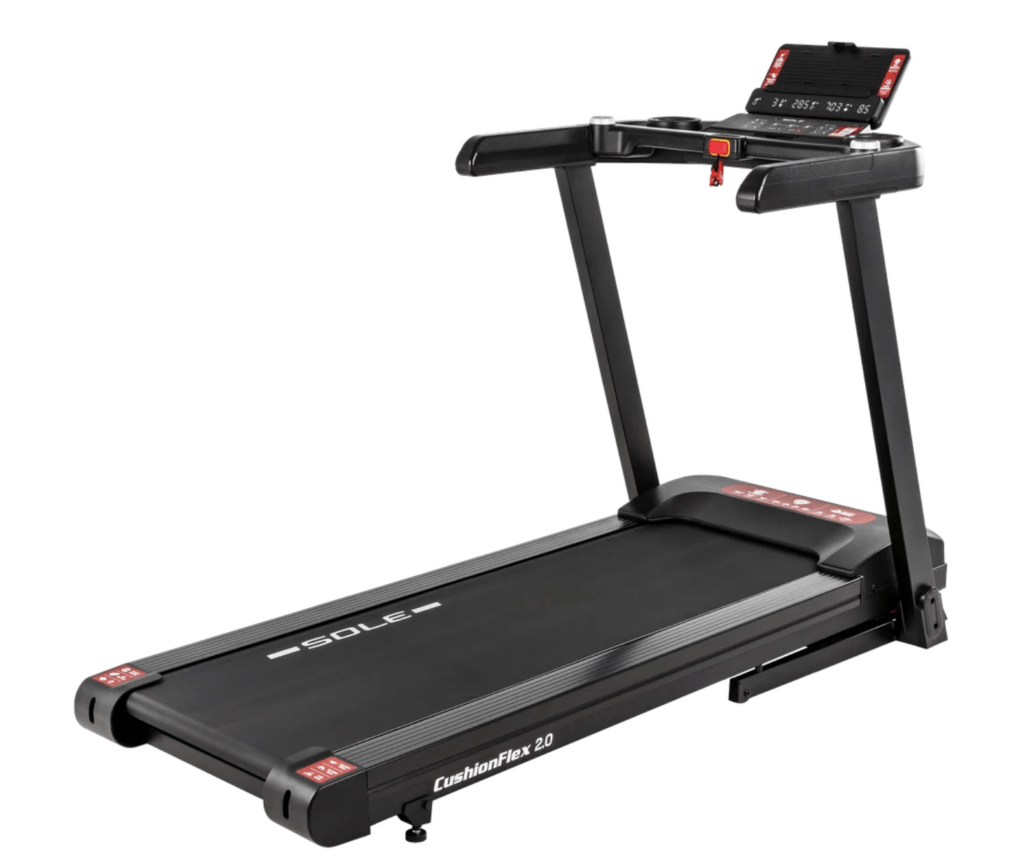
If your doctor wants you walking for your heart, blood sugar or weight, but walking outside isn’t safe or practical, a treadmill can make sense.
Handrails, a safety key and a predictable surface make it a safer option than icy or uneven sidewalks for many of my patients.
Sole makes the process easy with Truemed at checkout.
Sole lists the F63, F80 and F85 as HSA/FSA eligible.
For Horizon, Truemed offers the 7.0 AT through some retailers, such as Johnson Health & Wellness.
Double check with the retailer before you buy.
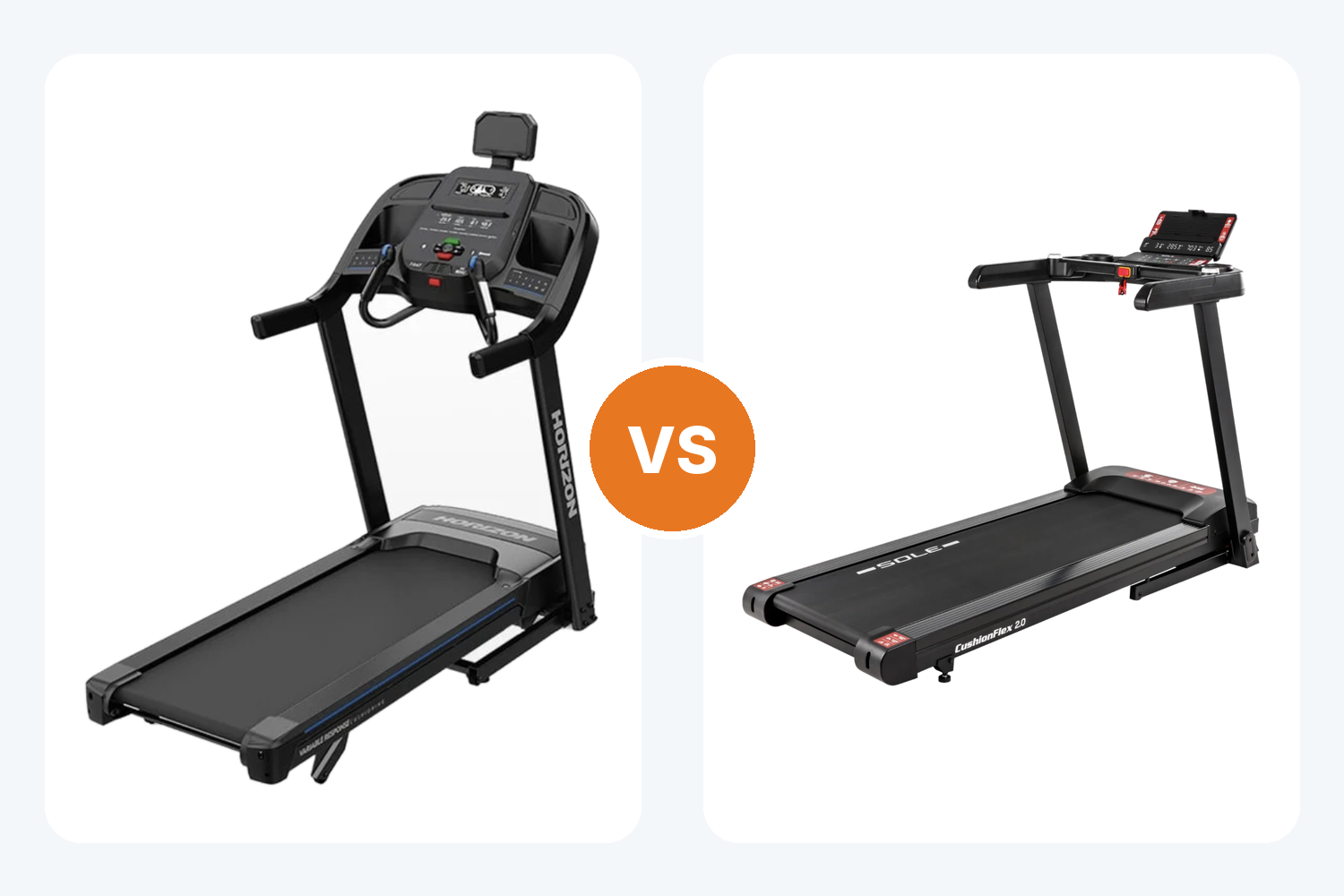
For more info, check out: Best Horizon treadmill for seniors and Horizon 7.0 AT vs Sole F63
For arthritis and low-impact cardio: Sole ellipticals
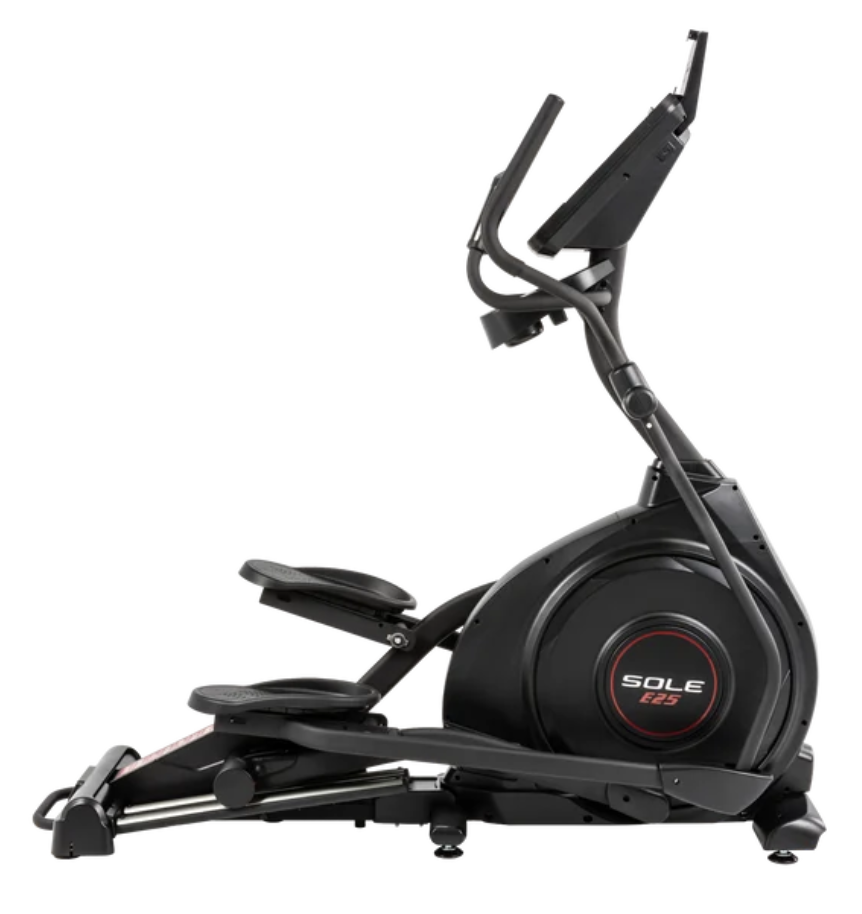
An elliptical keeps your feet on the pedals the whole time, so there’s no pounding on your knees and hips. For knee or hip arthritis, that’s a strong case for medical necessity.
Sole fitness makes great home ellipticals, and again, they can qualify for FSA/HSA use if all the paperwork is in line.
For more info, check out my guide on the best Sole elliptical for seniors.
For knee replacement and back pain: exercise bikes

An exercise bike is one of the most common machines I recommend after a knee replacement.
Pedaling is one of the best ways to get your knee bending again, and you can start with very little resistance.
It’s also easy on arthritic joints and lets you work your heart without standing.
For most seniors, I prefer a recumbent bike over an upright one.
The bucket seat with a backrest supports your lower back, and it’s much easier to get on and off. Many recumbent bikes have a step-through frame, so you don’t have to swing your leg over a bar.
Which really matters if your balance or hip motion is limited.
Recovery after knee replacement is one of the easiest cases to make in a letter of medical necessity. Your surgeon or PT is already telling you to bike, so ask them to put it in writing.
The Sole R92 recumbent bike is a sturdy option with a comfortable seat and smooth magnetic resistance.
For more info: Best recumbent exercise bikes for seniors, best exercise equipment after knee replacement and FreeStep vs. recumbent bike
How to Buy With Your HSA or FSA Before December 31
Start now. Doctor’s offices get busy in December, and big machines can take a week or more to ship.
- Check your balance and deadline. Log in to your benefits account. Find out how much is left, when it expires, and whether your plan has a grace period, carryover or run-out period.
- Call your plan administrator. Ask whether exercise equipment is allowed with a letter of medical necessity, whether they need pre-approval, and what documents they want.
- Get your letter of medical necessity. Ask your doctor at your next visit or through your patient portal. Use the checklist above. If you can’t get an appointment in time, a service like Truemed may be an option where it’s offered.
- Pick the right machine. Choose the one that fits your condition and your home, not just the biggest discount. Holiday sales can help your money go further.
- Pay the right way. Use your HSA/FSA card at checkout if the retailer accepts it. If it’s declined, pay with a regular card and submit for reimbursement.
- Keep everything. Save the itemized receipt, the letter of medical necessity and any approval from your administrator. HSA owners should keep these with their tax records in case the IRS ever asks.
- Submit your claim before the deadline. For FSAs, the purchase usually has to happen during the plan year. Submit the claim before your run-out period ends.
Important: Make sure the letter is dated before or on your purchase date. Some administrators won’t accept a letter written after you buy.
Don’t Need a Big Machine? Other Things That May Qualify
If you only have a few hundred dollars left, or a big machine isn’t the right fit, there are other options.
Many of these are mobility and safety items that IRS Publication 502 specifically lists as medical expenses, so they usually don’t need a letter.
Usually eligible without a letter:
- Walkers, canes and crutches. Publication 502 lists crutches and wheelchairs, and most plans treat walkers and canes the same way. See my guide to finding the right walker.
- Grab bars and handrails. Publication 502 says adding handrails or grab bars “anywhere” in the home usually counts, because they don’t raise your home’s value. See where to install grab bars.
- Copays for physical therapy. If you’ve been putting off PT for your knees, hips or balance, now’s a good time.
May qualify, depending on your plan:
- Shower chairs, tub benches and raised toilet seats. Many plans allow these. See shower chairs vs. tub benches.
- Upright and rollator walkers. See my best upright walkers for seniors.
- Medical alert systems. Some plans count these.
Usually not eligible:
- Gym memberships and health club dues
- Equipment for general fitness, with no diagnosed condition
- Regular shoes, even supportive ones
When in doubt, call your plan administrator before you buy.
Final Thoughts
If you have FSA money that’s about to expire and a condition that exercise helps treat, a piece of home equipment can be a smart way to use it.
You get pre-tax dollars working for your health instead of losing them.
The key is doing it the right way: get a specific letter of medical necessity, check your plan’s rules and keep your paperwork.
And start now, not December 30.
If you’re not sure which machine fits your needs, my guide to ellipticals vs. treadmills for seniors is a good place to start.
And if you’re shopping during the holidays, check out my Black Friday deals page to stretch your HSA/FSA dollars further.
Frequently Asked Questions
Is a treadmill FSA eligible?
Not automatically. A treadmill for general fitness isn’t eligible. It may qualify if a provider writes a letter of medical necessity saying you need it to treat a specific condition, and your plan administrator approves it.
Can I use my HSA for exercise equipment?
Yes, under the same rules as an FSA: you need a medical reason and, usually, a letter of medical necessity. The difference is that HSA money doesn’t expire, so you don’t have to rush.
What happens to my FSA money after December 31?
It depends on your plan. Some plans give you a grace period of up to 2.5 months to keep spending. Others let you carry over up to $680 from 2026 into 2027. Some offer neither, and the money is forfeited. Your employer can offer a grace period or a carryover, but not both.
Do I need the letter before I buy?
It’s best to have it first. Some administrators require pre-approval, and some won’t accept a letter dated after your purchase.
What if my HSA/FSA card is declined?
That’s common with large retailers. Pay with a regular card, then submit your itemized receipt and letter to your plan for reimbursement.
Does Medicare pay for exercise equipment?
Generally, no. I cover this in Does Medicare Cover Exercise Equipment? Many retirees no longer have an FSA, but some still have HSA money they saved before enrolling in Medicare, and they can use it for qualifying expenses.
Can I use my FSA to buy equipment for my parent?
Usually only if your parent is your tax dependent. Ask your plan administrator. See my gifts for aging parents for other ideas.