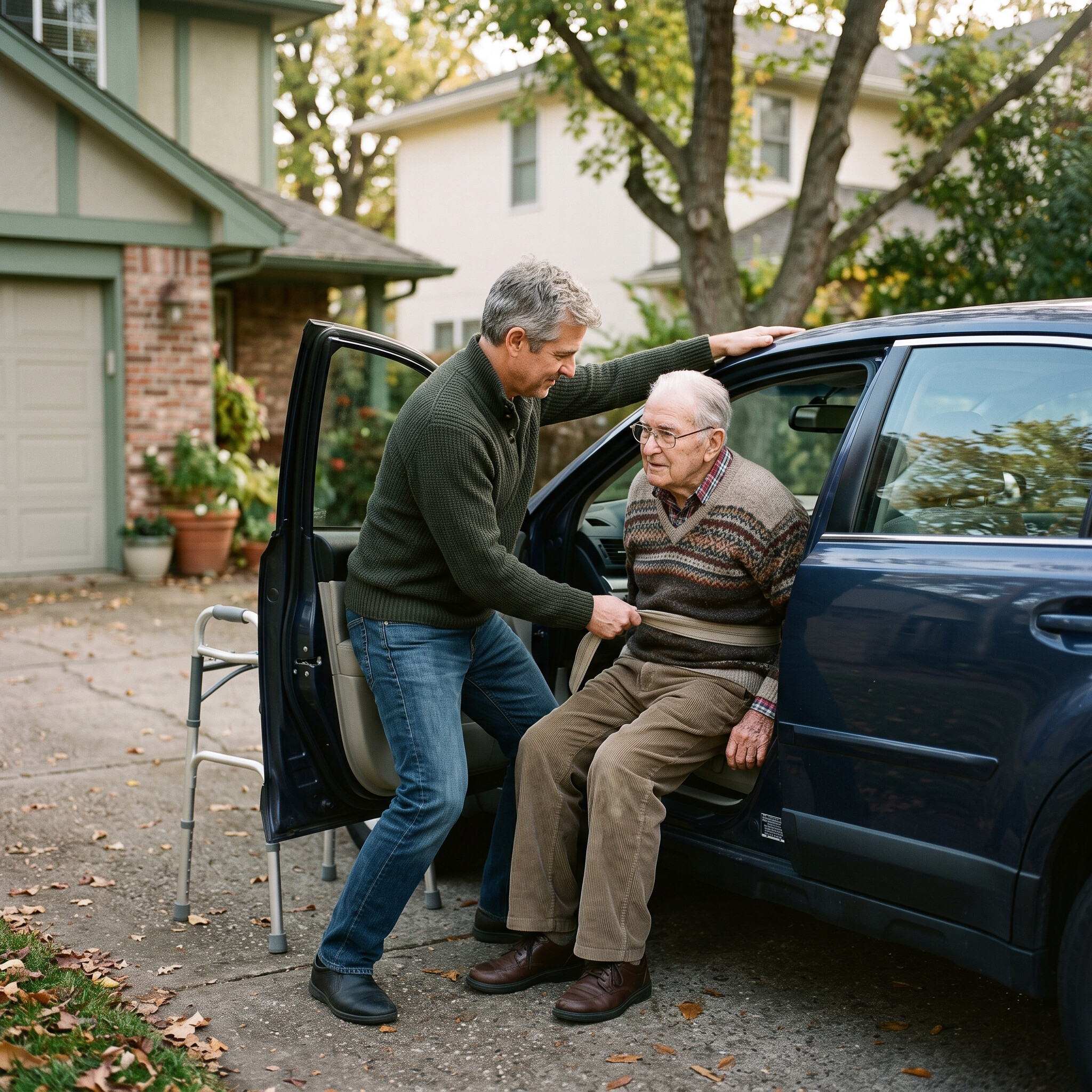

Buying a gift for an aging parent is harder than it should be.
You want to get them something useful. Something that makes life a little easier, or keeps them moving. But there’s a real risk the gift lands wrong.
Nobody wants to unwrap a shower chair on Christmas morning.
Fortunately, there’s a lot of room between useless and insulting.
I’ve spent over fifteen years walking into older adults’ homes, and I can tell you exactly which gifts get used and which ones are collecting dust in the spare room.
In this guide, I’ll go over the mobility/fitness tools I’d actually buy for a senior.
Affiliate disclosure: This article contains affiliate links. If you buy through them I may earn a commission at no cost to you.
First, the Thing Nobody Tells You
The gifts that fail aren’t the wrong products. They’re the right products given the wrong way.
For example, a grab bar is a genuinely good idea.
A grab bar that shows up unannounced says I’ve been watching you and I’m worried. Same object, completely different message, and the second one ends up being insulting.
Three questions before you buy anything in this article:

Under $50: The Reliable Ones
These are low-risk and nothing here reads as a comment on their health.
Resistance bands. The single most-used piece of exercise equipment I see in homes. Cheap, take up no space, and genuinely effective for maintaining strength. Get a set with multiple resistance levels and handles rather than plain loops, which are harder on arthritic hands. I’m currently using this band set with my patients now and it works great.
Grippy indoor footwear. Unglamorous, and one of the highest-value things on this list. A huge share of falls I see happen in socks on hardwood or in loose slippers with worn soles. Good non-slip slippers with a firm back are a real safety intervention that doesn’t look like one.
Motion-activated night lights. Nighttime trips to the bathroom are a common fall scenario. Plug-in motion lights for the hallway and bathroom cost almost nothing and get used every single night.
A back stretcher. The Teeter P2 is a floor-based arch for back extension, around $59. Good for someone with stiffness who’s still comfortable getting down to the floor and up again. If floor transfers are hard for them, skip it.
A structured home program. If they want to exercise but don’t know what to do, that’s the actual barrier. Strong & Steady: Complete is what I built for this, and it costs less than a pair of dumbbells.
$50 to $250: The Ones That Change a Routine
Adjustable dumbbells. Resistance training is the most evidence-backed intervention for age-related muscle loss, and adjustable dumbbells replace an entire rack in the footprint of a shoebox. Teeter’s ProFlex 432 set runs around $200 and is frequently discounted.
Buy a set that adjusts in small increments. Progression is what makes strength training work, and jumping from 10 lb to 25 lb isn’t progression.
A pedal exerciser. Small, sits under a chair, and gets used precisely because it’s in front of the television. Not a substitute for real training, but it beats sitting still, and for someone who won’t do a formal program it’s the realistic option. The Cubii Jr is the most impressive seated pedaler I’ve come across.
Better bathroom setup. Shower chairs, tub transfer benches, and grab bars are genuinely the highest-impact safety purchases available. But this is the category that needs a conversation first. Ask, don’t surprise. And note that Medicare doesn’t cover any of it, which is exactly why it makes a useful gift.
$250 and Up: The Real Commitments
Two things to know before you spend at this level.
Ask them first.
A $700 machine that they didn’t want is a $700 machine with laundry on it, and now they feel guilty every time they walk past.
A seated cross trainer. For a parent whose walking has become painful or unsafe, a recumbent cross trainer like the Teeter FreeStep keeps them moving with the spine supported and minimal impact through the knees or hips. This is the machine many of them already used in outpatient rehab and liked. Expect ~ $700 and up.
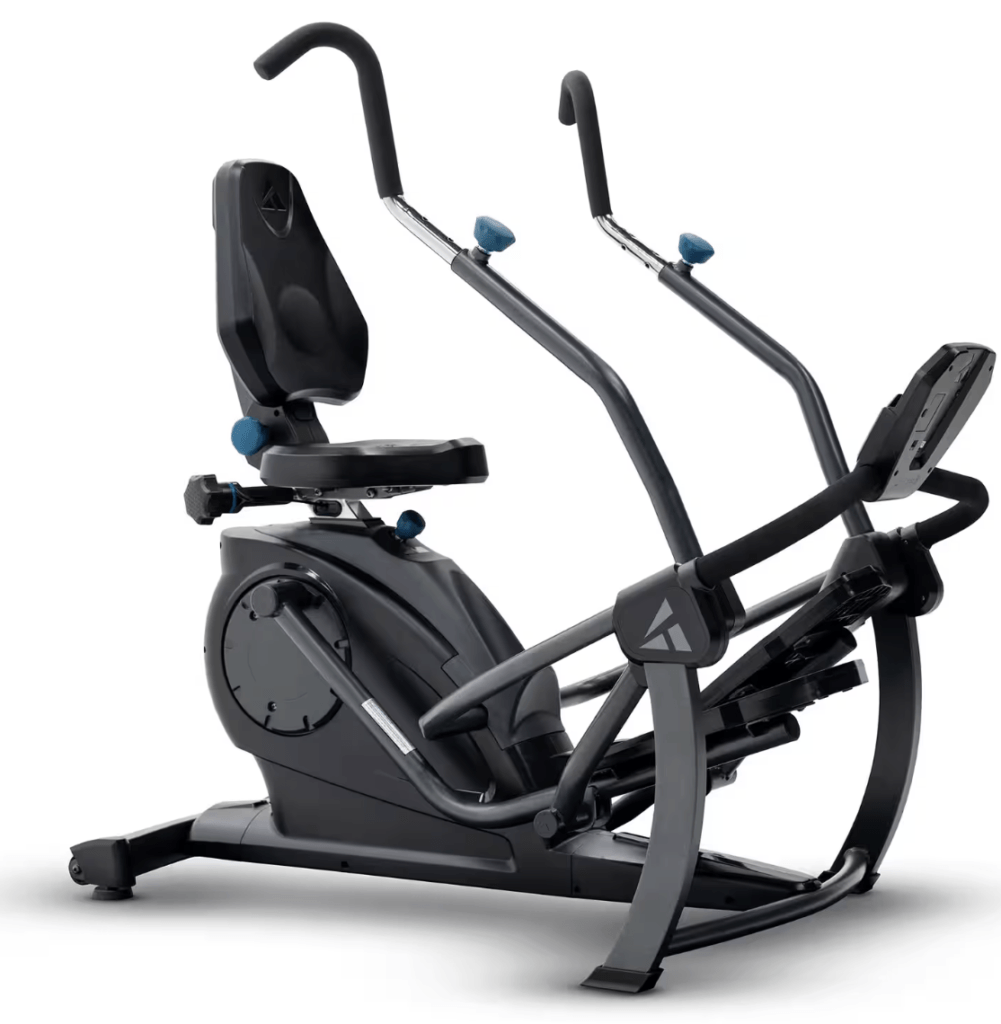
A recumbent exercise bike. The most requested piece of equipment I hear about, and for good reason. The seat has a back, there’s no balance requirement, and the step-through frame means they aren’t swinging a leg over a crossbar. For a parent who’s stopped walking for exercise because of knees, hips, or breathlessness, this is usually a safe bet.
The Sole R92 is the one I’d point people to. Look for the same things I would on any of these: a genuinely low step-through height, a console they can read without glasses, and no subscription attached to it.
Put it somewhere they already spend time. A bike in the basement gets used for three weeks. A bike in front of the television gets used for years.
Portable Power Wheelchairs
This category has changed a lot in the last few years.
Folding travel power chairs are widely available now, they ship from Amazon, and they cost a fraction of what a comparable chair did a decade ago.
And for the right person they’re transformative.
If a parent has stopped going to the grocery store, the museum, the airport, or a grandchild’s graduation because they can’t manage the distance, a portable chair gives them back a range of life they’d written off.
That’s a bigger gift than anything else on this page.
The honest caveat, and I want to be direct about it: don’t buy one for someone who can still walk household distances.
If they use it instead of walking, their walking gets worse. Deconditioning is fast and it’s hard to reverse. The right framing is a chair for distance and outings, not a chair for the house.
If you’re unsure which side of that line they’re on, that’s a question for their doctor or physical therapist before you buy.
What to actually check:
- Folded weight. This is the one people get wrong. If you can’t lift it into a trunk, the chair never leaves the house. Many “portable” models are 50 to 60 lb even folded.
- Battery type. If they’ll ever fly, you want airline-approved lithium batteries and documentation to match.
- Weight capacity, and give yourself margin.
- Turning radius, if it’ll be used indoors at all.
- Who assembles it. Plan on doing that yourself.
On Medicare: some power wheelchairs can be covered as durable medical equipment, but the criteria are strict and centered on need within the home. A travel chair for community outings usually won’t qualify, which is exactly why buying one privately is a reasonable gift. More on how Medicare handles equipment here.
The Gift That Isn’t a Product
Pay for a gym or class membership.
The social component does as much as the exercise here.
A water aerobics class or a seated fitness class three times a week beats almost any home equipment, for the simple reason that they’ll actually go.
Home equipment competes with the couch – a class at ten on Tuesday competes with nothing.
Check whether their Medicare Advantage plan already includes a fitness benefit like SilverSneakers before you pay for anything – a lot of people have one and don’t know it.
What I’d Skip
Fitness trackers. High return rate in this demographic. Small screens, frequent charging, app pairing, and a stream of notifications about goals they didn’t set. A risky purchase unless you’ve heard hints.
Anything with a subscription. Fixed incomes and recurring charges are a bad combination, and cancelling these is often deliberately difficult.
Complicated tech that needs your help to run. If maintaining it requires you, you haven’t given them independence. You’ve given them a reason to call you.
Massage guns. I love massage guns, but a lot of the seniors I treat daily would have a hard time using one by themselves.
Surprise medical equipment. Covered above, but it’s the most common mistake, so it’s worth repeating.
If You’re Actually Worried About Them
Sometimes the gift is a proxy. You’ve noticed they’re unsteady, or they’ve had a near miss, and buying something feels easier than saying it.
Buy the gift if you want, but have the conversation too, because the gift won’t do it for you.
A useful opener is asking what’s gotten harder rather than telling them what you’ve noticed.
“Is anything around the house feeling more awkward than it used to?” gets a real answer far more often than “I’m worried about you on those stairs.”
And if there’s been a fall, even a small one, that’s worth a doctor’s visit regardless of what you buy. Falls tend to come in sequences.
Frequently Asked Questions
What do you get an elderly parent who says they don’t want anything? Services and consumables, generally. A class membership sidesteps the “I don’t need more stuff” objection entirely. Among physical items, resistance bands and good non-slip slippers get used the most and feel the least like a statement.
Are exercise gifts insulting to seniors? Only when they arrive as a surprise judgment. Framed as I thought you’d get a kick out of this rather than I think you need this, they land fine. The safest approach for anything mobility-related is to ask first.
What’s the most useful gift for a parent with balance problems? Better lighting and grippy indoor footwear, in that order. Both are cheap, both get used daily, and neither reads as a comment on their balance. Beyond that, the highest-value thing isn’t a purchase – it’s encouraging them to ask their doctor for a physical therapy referral, since a PT can identify the specific hazards in their specific house.
Does Medicare pay for any of this? No. Medicare doesn’t cover exercise equipment, grab bars, or home modifications. HSA or FSA dollars with a Letter of Medical Necessity are usually the best route for larger purchases.
Is it worth buying exercise equipment if they won’t use it? Probably not. Start with something small and see whether it gets used before spending several hundred dollars. A resistance band set that gets used beats a treadmill that doesn’t.