Using an inversion table can be a great way to help relieve back pain, but between mobility deficits and the long list of contraindications, there are a lot of folks who can’t use them.
This is especially true for seniors.
Fortunately, there are plenty of alternatives to offer similar benefits – but the best alternative depends on why inversion tables were ruled out in the first place.
Someone ruled out for glaucoma needs something completely different from someone ruled out because their ankles can’t take it.
One of those people can’t go head-down at all. The other can go head-down all day, just not hanging by their feet.
So, this article is organized by why you got a no, not by product. Find your reason, and skip the rest.
Affiliate disclosure: This article contains affiliate links. If you buy through them I may earn a commission at no cost to you.
First, Which “No” Did You Get?
There are five, and they lead different places.
- A pressure problem. Glaucoma, ocular hypertension, retinal history, hypertension, heart conditions, stroke or TIA history, anticoagulants, any intracranial issue.
- An ankle problem. Neuropathy, ankle arthritis or fusion, chronic swelling, fragile skin, or the cuffs simply hurt too much to tolerate.
- A bone density problem. Osteoporosis or significant osteopenia.
- An operational problem. You’re medically fine, but you can’t reach the ankle lock, can’t reliably return upright, or live alone with nobody nearby.
- A reflux problem. GERD or a hiatal hernia.
If none of these sounds familiar, you haven’t actually been screened yet. Go through the full contraindication list first, then come back here.

If You Got a Pressure “No”
This is the strictest group, and I want to be direct with you: nothing that puts your head below your heart is a safe alternative.
Not an inversion table, not gravity boots, not a hip-supported device, not lying on a slant board. The mechanism is the position itself, and no equipment design engineers around it.
That rules out more products than most people expect, including some that get marketed as gentler alternatives.
What actually works for you:
The P2 Back Stretcher. The Teeter P2 is a floor-based arch that allows you to decompress while you stay flat on your back (or seated), head level with your heart. No inversion, no pressure change. And at around $59, it’s the cheapest thing in this article by a wide margin.
The honest caveat, and it’s a real one for seniors: it requires getting down to the floor and back up (again, you can use it seated in a chair, but with a much lighter stretch).
If floor transfers are hard for you, this isn’t a solution. Try lying on your bedroom floor for two minutes and getting up before you order one.
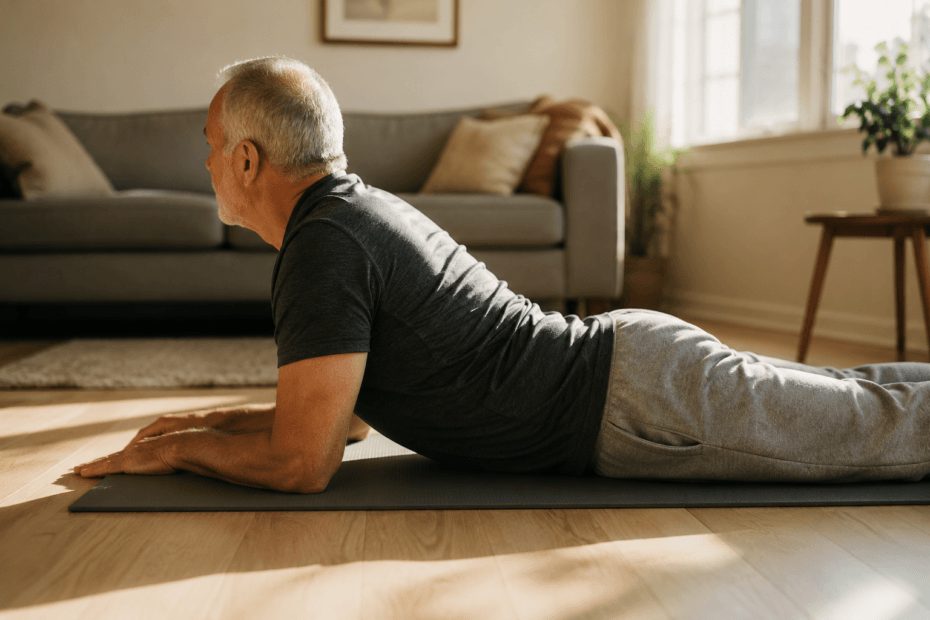
Prone press-ups. Free, no equipment, and reasonably well supported for disc-related back pain (and an important part of McKenzie method exercises) . Lie face-down, hands under your shoulders, and press your chest up while your hips stay on the floor.
Ten repetitions, held a few seconds each.
One caution worth knowing: if your pain comes from spinal stenosis rather than a disc, extension often makes it worse and flexion feels better.
If press-ups increase your symptoms, stop – and that’s usually diagnostic information, and it means you want the opposite direction.
Knees-to-chest, seated forward bending, that type of movement.
Thoracic extension over a foam roller. Lie back over a roller placed across your mid-back and let your upper back drape over it. It’s a good mobility option that doesn’t invert you or load your spine.
I’ve been a huge fan of foam rollers ever since I began my physical therapy career and I still use one personally to this day to stretch and massage my thoracic spine.
Foam rollers can be used to help massage and relax just about every muscle in the body, so a great addition to any home.
But again, make sure you’re comfortable and able with getting up and down from the floor before purchasing.
If You Got an Ankle “No”
You’re in the best position of anyone reading this, because there’s a device built specifically for your problem.
The DEX II. Teeter’s DEX II is a forward-rotating, hip-supported decompression machine. Instead of hanging by your ankles, you’re supported at the hips in a bent-knee, bent-hip position, and Teeter’s materials are explicit that it places no load on the ankles or knees.
You control the rotation with your arms, the same way you would on a table. It has a raised non-slip boarding step, and it’s rated to 350 lb with a height range of roughly 4’8″ to 6’6″.
The 90/90 position also flattens the lumbar curve, which concentrates the decompression in the low back rather than spreading it up the whole spine. If your problem is specifically lumbar, that’s an advantage, not just a workaround.
But read this before you buy one: the DEX II still inverts you. Your head still goes below your heart. Everything in the pressure group above still applies.
It solves the ankle problem and nothing else.
It also has its own physical demands – you step up onto a platform and rotate forward from a kneeling-style position.
That’s a different set of requirements than a table, and not an easier one across the board. If your operational tests were shaky, run them again with this in mind.
Also worth trying first: before you give up on a table entirely, try a folded washcloth under the ankle cuffs and experiment with the cuff height setting. A meaningful number of “the ankles hurt too much” cases are padding-and-adjustment problems rather than anatomy problems.
If You Got a Bone Density “No”
This is the group I’d steer away from decompression equipment altogether, and I want to explain why rather than just saying no.
Traction applies load to bone.
That’s true whether you’re hanging by your ankles or supported at the hips, so the DEX II isn’t a workaround here.
And the hip-supported forward position adds something worse: with osteoporosis, loaded spinal flexion is a recognized vertebral compression fracture risk. Bending forward under load is one of the specific movements taught against in osteoporosis programs.
So the honest answer for osteoporosis is that the whole category is probably wrong.
What you actually want is the intervention with the strongest evidence behind it for your condition, which is progressive resistance training and weight-bearing exercise.
Loading bone is what maintains it – hanging from it not so much.
That’s a bigger conversation than this article, and it’s genuinely the highest-value thing you could do with the money you were about to spend on a table.
A few sessions with a physical therapist who works with osteoporosis is money better spent than any equipment purchase.
If You Got an Operational “No”
You’re medically cleared, but you just couldn’t pass the physical screen in the getting-on-and-off guide — the reach, the recovery maneuver, the step-over, the stand-up.
This is the most fixable group, and I’d resist jumping straight to a substitute product.
Fix the reach. Ankle lock design varies a lot by model. Some have a long handle so you never bend to your ankles. If Test 2 was your only failure, that’s a model selection problem, not a “you can’t use an inversion table” problem.
Fix the exit. Most people who can’t return upright have a main shaft length that’s wrong for their body, not a strength deficit. Lengthening it usually solves it outright.
Fix the isolation. If living alone is the barrier, that’s real, and it’s the one I’d take most seriously. A shallow tether angle plus a phone in your pocket plus telling someone when you’re using it covers a lot of it.
Book a virtual demo with the manufacturer before buying so somebody walks you through the settings on your actual body.
If those don’t resolve it, the P2 Back Stretcher is a solid fallback, assuming floor transfers are manageable.
If You Got a Reflux “No”
Head-down positioning and GERD don’t mix, and again, that applies to the DEX II as much as a table.
The P2 Back Stretcher is your best equipment option, because it can help unload your spine while you stay flat rather than inverted.
Prone press-ups work too and cost nothing – both keep your head at or above heart level.
Time of day matters more than most people realize here. Anything spine-related goes better a few hours after eating rather than after dinner.
What Everyone in Every Group Should Consider
Two things, regardless of which “no” you got.
Conditioning, if the real problem is that you’ve stopped moving. A lot of people reach for a decompression device when the actual issue is that walking hurts, so they walk less, so everything gets stiffer and weaker.
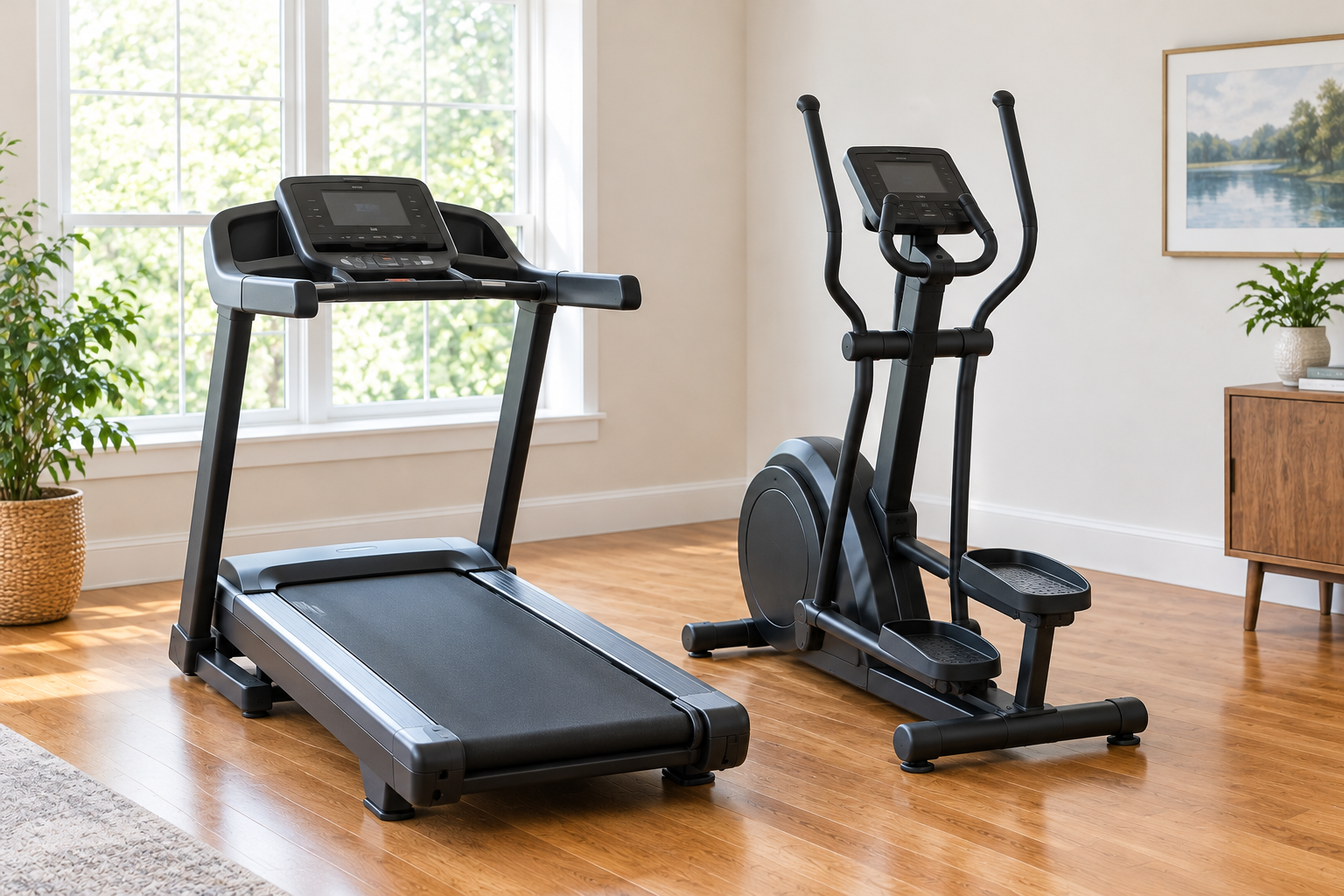
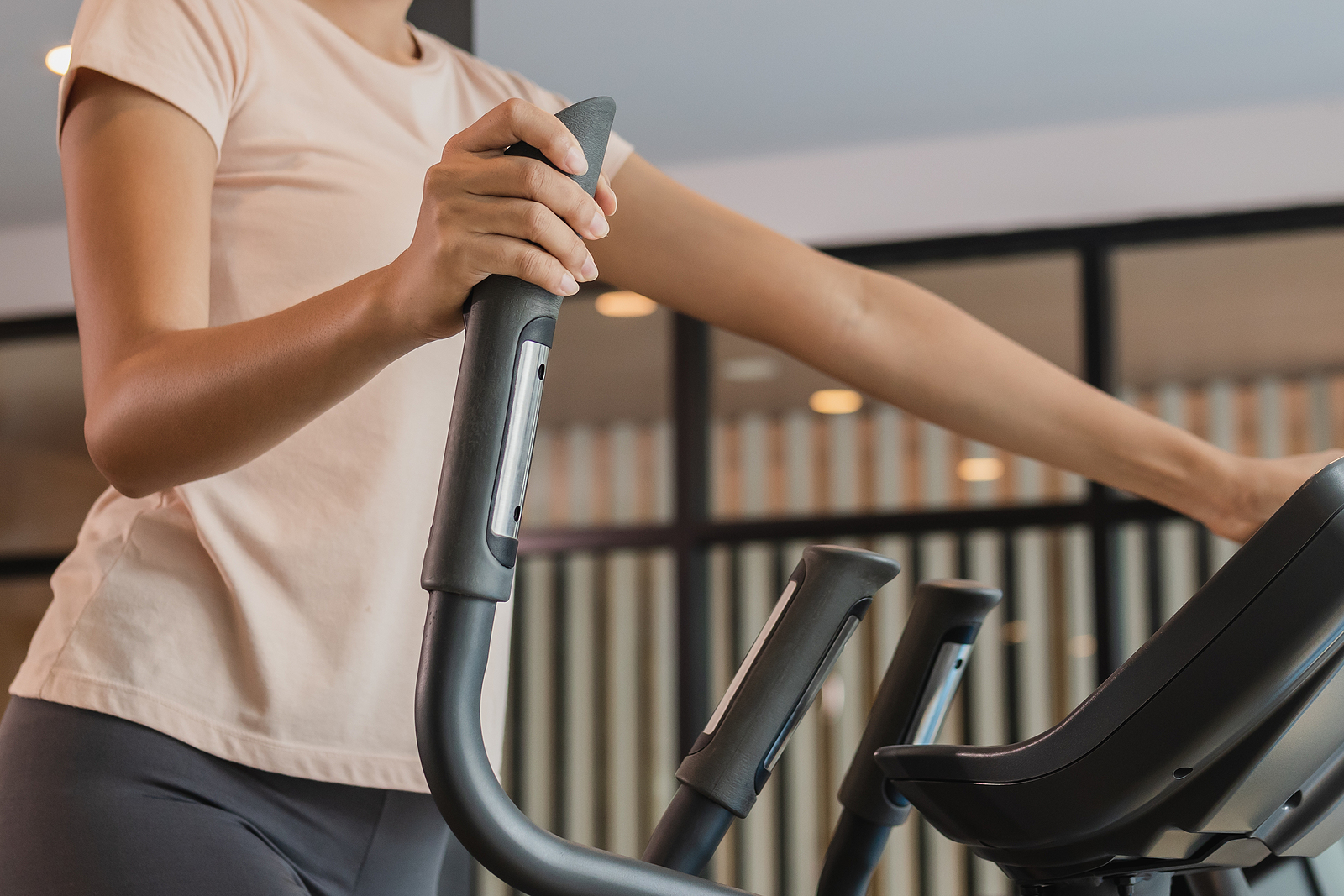
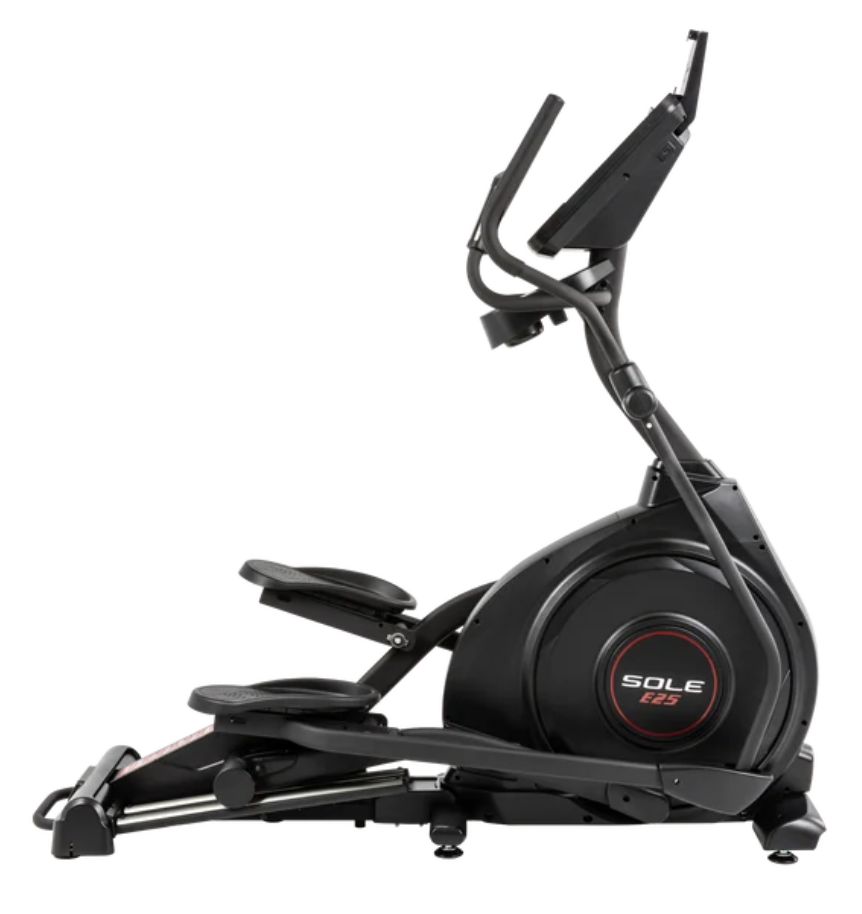
If that’s the group you’re in, a seated cross trainer like the FreeStep addresses the cause rather than the symptom – spine supported, no impact through the knees or hips.
If interested, I’ve compared the LT3 and LT7 here.
Formal physical therapy. I know how that sounds coming from a physical therapist, but a course of PT could be more beneficial than most of the equipment in this article, it’s often covered by insurance, and it’s the only option here that involves someone examining you specifically.
What I’d Skip
Gravity boots. They come up constantly as a cheap alternative, and for an older adult I’d avoid them. You hang from an overhead bar, and getting out requires a sit-up from full inversion with no frame to push against. The failure mode is much worse than a table’s.
No-name inversion tables. If a table is the wrong tool for you medically, a cheaper one is still the wrong tool. And if it’s the right tool, the balance adjustment and ankle lock quality are worth investing in.
Anything promising to fix a diagnosis. Decompression devices provide temporary relief for some people with some conditions. Nothing in this article reverses degenerative disc disease, stenosis, or osteoporosis. Be skeptical of any product claiming otherwise.
Final Thoughts
Being ruled out for an inversion table isn’t the end of the road, but it does mean the answer depends on why.
Pressure exclusions rule out the entire head-down category, and that’s the group most likely to get sold something inappropriate.
Ankle exclusions have a purpose-built solution in devices like the DEX II.
Osteoporosis should skip this category entirely and put the money toward strength. Operational failures are usually fixable with settings and model choice rather than a different product.
And for a lot of people, the honest answer is that seeing a physical therapist is the best place to start.
Frequently Asked Questions
What’s the best inversion table alternative for high blood pressure? Not a device that inverts you by a different mechanism, because the pressure effect comes from the head-down position itself. Look at the P2 Back Stretcher, prone press-ups, or thoracic extension over a foam roller, all of which keep your head level. Get your physician’s input either way.
Is the Teeter DEX II safer than an inversion table? Safer for your ankles, yes – it supports you at the hips with no ankle or knee loading. Not safer for anything pressure-related, because it still puts your head below your heart. And for osteoporosis it’s arguably worse, since it adds loaded spinal flexion.
Can I get spinal decompression without any equipment? Positionally, yes, to a degree. Prone press-ups, knees-to-chest, and supported extension all change loading on the spine. They don’t replicate sustained traction, but they’re free, they’re safe for most people, and they’re the right first step before spending money.
I have osteoporosis but my back really hurts. What can I do? See a physical therapist who works with osteoporosis, and ask specifically about which movements to avoid. Loaded forward bending is usually on that list. Progressive resistance training is the intervention with real evidence behind it for bone, and it also tends to help the pain.