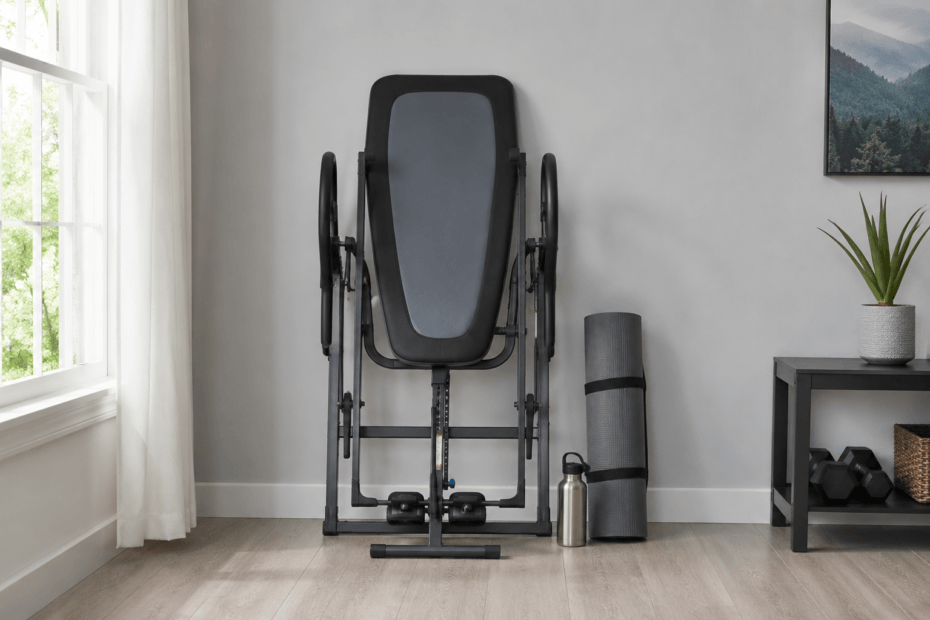
Once you’ve been cleared to use an inversion table, the next question is which one to buy.
Teeter is the leader in this category and they sell three main models, and there’s a few hundred dollars between the entry table and the flagship.
And for an older adult, this decision looks different than it does for a 40-year-old with a bad disc.
The good news though, is that the choice is simpler than the spec sheets make it look.
Most of what separates these tables is comfort. Only three differences actually change whether you can use the machine safely, and two of those three are about getting on and off.
So, this article goes over what’s the same, what’s different, and who each table is actually for.
Affiliate disclosure: This article contains affiliate links. If you buy through them I may earn a commission at no cost to you.
What’s the Same on All Three Tables
This is worth covering first, because a lot of people assume the cheapest model is the compromised one on safety.
In this case, it isn’t.
All three share:
- 300 lb weight capacity and a 4’8″ to 6’6″ height range
- The same 5-year full warranty. Not tiered. The EP-560 carries the same coverage as the flagship.
- FDA-registered Class 1 medical device status and UL safety certification
- Full inversion with a secure lockout
- The same 3-setting roller hinge for precision balancing, which is the adjustment that governs how easily you return upright
- Ergo-Embrace ankle supports with a foam liner and wrap-around design, plus the Ankle Comfort Dial
- Lumbar Bridge, acupressure nodes, and a head pillow included
- HSA/FSA eligibility
- Folding for upright storage
These shared safety specs matter more than the differentiating features Teeter advertises.
And the mechanisms that determine whether you can get back up – the roller hinge and the height adjustment – are identical across these Teeter inversion tables.
This means you aren’t buying additional safety with the extra money.
What’s Different at a Glance
| EP-560 | X3 | LX9 | |
|---|---|---|---|
| MSRP | $349 | $499 | $599 |
| Ankle lock | T-pin | EZ-Reach | EZ-Reach |
| Boarding platform | No | No | Yes |
| Marked tether | No | 20/40/60 | 20/40/60 |
| Traction handles | No | Yes | Yes |
| Weight | 59 lb | 66 lb | 74 lb |
All three share a 300 lb capacity, a 4’8″ to 6’6″ height range, a 5-year full warranty, FDA registration, UL certification, and the same balancing system.
The rest of this article is about which of those differences should actually change your decision.
The Three Differences That Actually Matter
1. The Ankle Lock
This is the big one, and it’s the difference I’d weigh most heavily for anyone over 70.
The X3 and LX9 use the Deluxe EZ-Reach Ankle Lock System, with a long handle, a micro-adjusting closure, and a secondary gravity-lock mechanism.
The EP-560 uses a T-pin closure – it’s secure, but you have to reach down to your ankles to operate it.
If you went through the four-test screen in the getting-on-and-off guide, this is Test 2. Sitting in a chair and touching the top of your foot with both hands.
If that test was hard for you, the EP-560 is not your table, and no amount of savings changes that. You’d be buying equipment you can’t independently secure yourself into.
If Test 2 was easy, this difference is a convenience feature rather than a deciding one.
2. The Boarding Platform
Only the LX9 has the Raised Boarding Platform and the LX ergonomic arched frame. The X3 and EP-560 don’t.
That platform gives you an elevated, solid surface to step onto instead of stepping up into the ankle lock from the floor.
This is Test 1 – the step-over.
And it matters more on the way out than on the way in, because you’re dismounting after your back has fully relaxed and your blood pressure has just done something unusual.
3. The Marked Angle Tether
The X3 and LX9 have the EZ-Angle Tether with embroidered markings at 20, 40, and 60 degrees. The EP-560 has a plain angle tether with no markings.
This one gets almost no attention in comparisons, and I think that’s a mistake for our purposes.
My standing advice is to start at 20 degrees and stay there for at least a week, then move up deliberately.
That’s easy to follow when the tether has 20, 40, and 60 stitched into it. On an unmarked tether you’re estimating, and people who estimate tend to drift deeper without noticing.
If you’re going to be disciplined about angle progression, I’d buy the tether that helps you do it.
What Else Is Different (But Less Important)
The X3 and LX9 have the FlexTech backrest with an 8-point floating suspension system, versus the EP-560’s ComforTrak backrest.
They also add Stretch Max handles and EZ-Stretch traction handles, which let you add decompression at shallow angles.
Those traction handles are genuinely useful if you’re staying at 20 or 40 degrees, since they let you increase the stretch without increasing the angle.
That’s a good trade for seniors.
The LX9 also adds a storage caddy for your phone. Minor, but keeping a phone within reach while inverted is something I recommend anyway.
Teeter X3 vs. EP-560
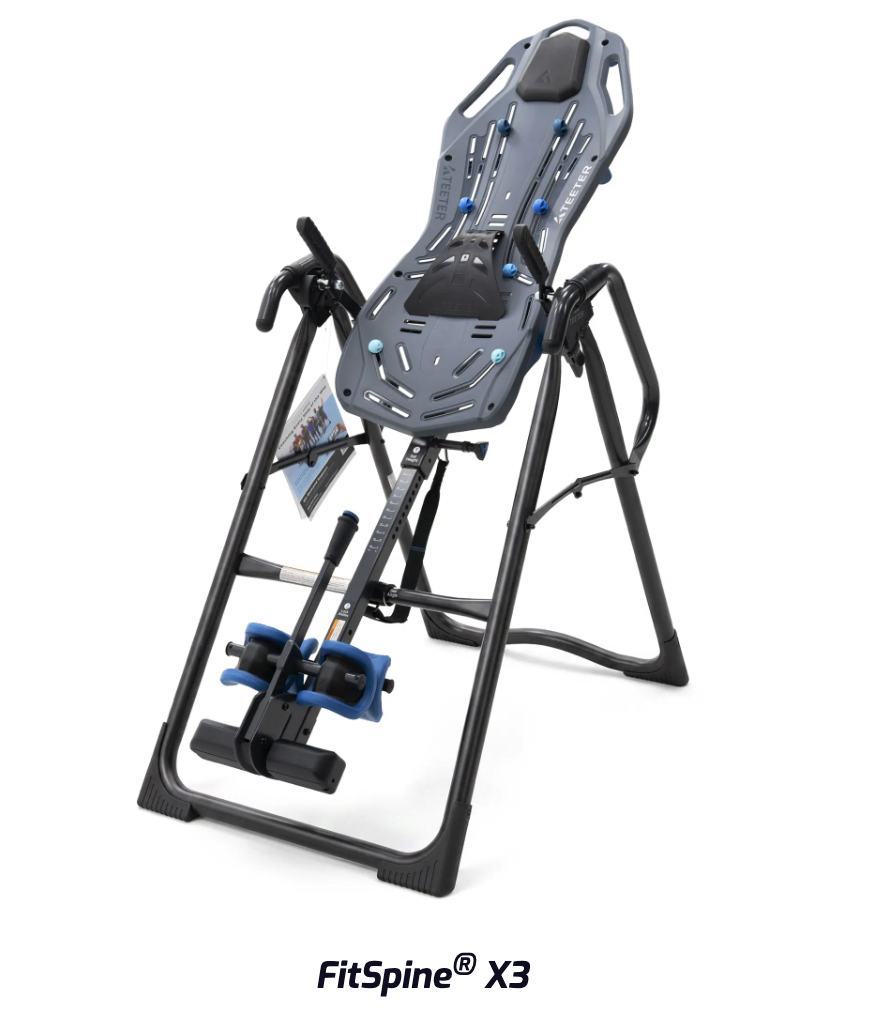
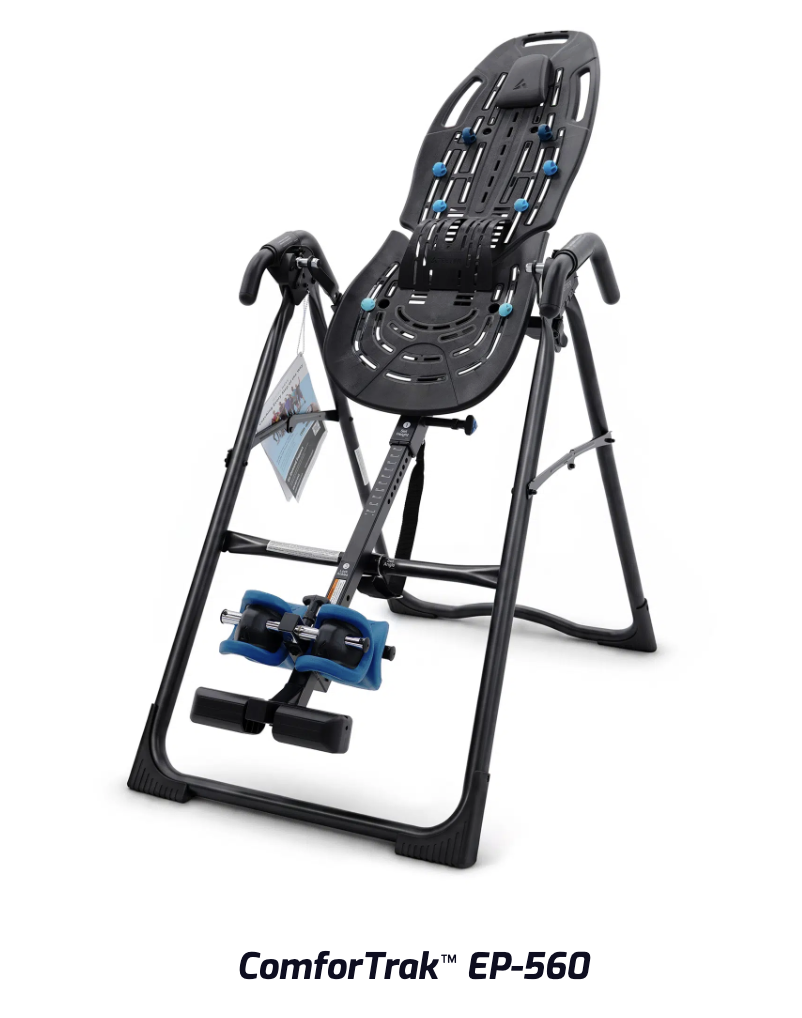
Images courtesy of Teeter.
This is the comparison most people should actually be making, and the difference is about $150 at list price.
Going with the X3 means you’re paying for the EZ-Reach ankle lock, the marked tether, the FlexTech bed, and the stretch and traction handles.
Buy the EP-560 if: you passed the reach test comfortably, you’re on a tight budget, and you want to try inversion without committing flagship money. It’s a real Teeter with the same warranty, capacity, and safety certifications.
Buy the X3 if: reaching your ankles is any kind of effort, or you want the marked tether to keep your angle progression honest. For seniors, that’s most people.
Teeter X3 vs. LX9
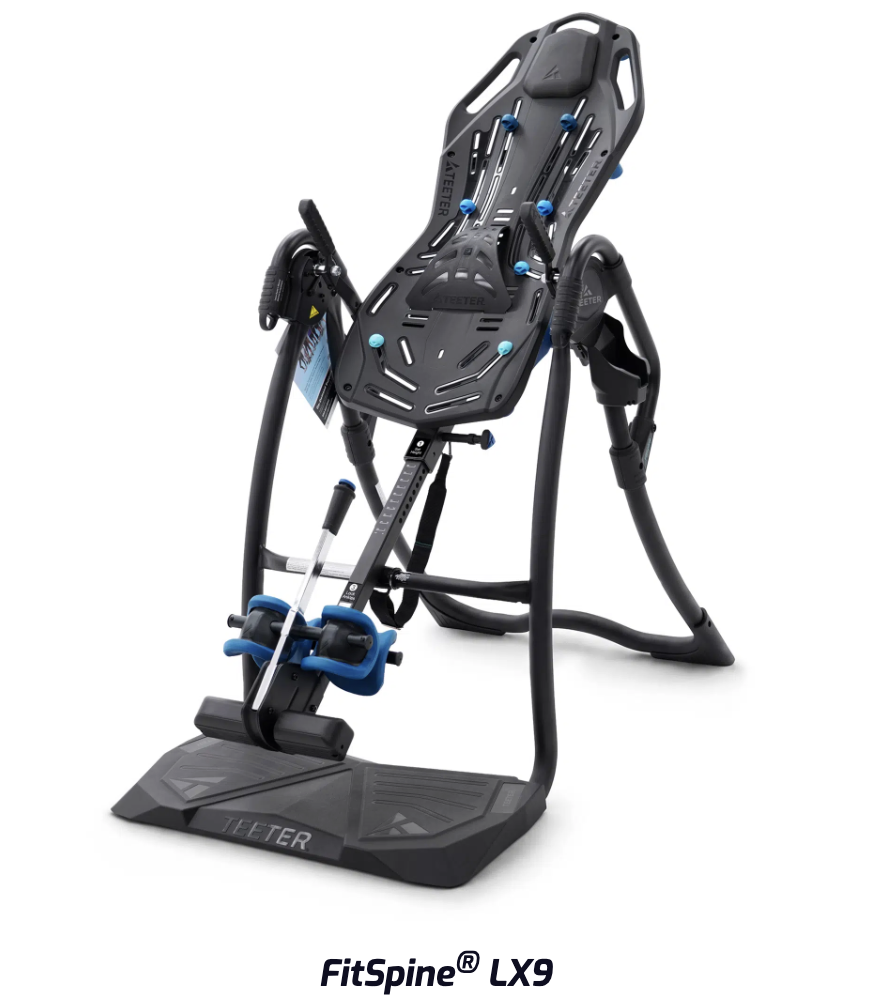
Images courtesy of Teeter.
Opting for the LX9 adds $100 at list price, and it buys one thing that matters: the boarding platform and arched frame.
The ankle lock is identical. The tether is identical. The warranty, capacity, hinge, and certifications are identical.
Buy the X3 if: stepping up and over isn’t a problem for you. It’s the better value in the lineup and the one I’d point most people toward.
Buy the LX9 if: the step-over test was shaky, you have balance concerns, or you’re planning to invert most days. Daily use magnifies small friction, and the dismount is where I’d spend the extra hundred dollars.
The LX9 is also the heaviest at 73.6 lb and slightly wider in use. If you’re moving it or working with tight space, that’s worth knowing.
Teeter LX9 vs. EP-560
Images courtesy of Teeter.
This is the full spread – $250 at list – and honestly, if you’re comparing these two directly you’ve probably already decided based on budget.
The LX9 gives you every accessibility feature Teeter makes: the long-handle ankle lock, the boarding platform, the marked tether, the arched frame.
The EP-560 gives you the same core safety system for a lot less.
If both step-over and reach were difficult for you, the LX9 isn’t a luxury purchase, it’s the only one of the two you’ll actually use.
If both were easy, the EP-560 will serve you fine.
So Which One?
Here’s the short version, mapped to the screening tests.
Failed or struggled with the reach test? X3 or LX9. Not the EP-560.
Failed or struggled with the step-over? LX9.
Both were easy, budget matters? EP-560.
Both were easy, you want the better experience? X3. This is the one I’d recommend most often.
Planning to invert most days? LX9, regardless of how the tests went.
If you haven’t done the screening yet, do that before you spend anything.
The contraindication list comes first, then the four-test screen. If either one rules you out, there are better places to put the money.
Space and Setup
All three need about 86 inches of height in use, so check your ceiling before ordering, especially in a basement or a room with a fan.
Footprints are close between models.
In use, the X3 and EP-560 are about 29 inches wide and the LX9 about 32. All three fold for upright storage at roughly 20 to 22 inches deep.
Weights run 59 lb for the EP-560, 65.8 lb for the X3, and 73.6 lb for the LX9.
If you’ll be folding and moving it regularly, that difference is worth considering before purchasing.
A Note on Price and Payment
Teeter runs frequent promotions, so the number you see today may not be list price. Check before you buy, and check whether a sale is running before you talk yourself out of a higher model.
Two other things worth knowing:
All three are HSA/FSA eligible, which for a lot of buyers turns this into a pre-tax purchase.
Teeter also offers financing through Affirm, with rates ranging from 0% to 36% APR depending on your credit.
At 0% that’s a genuinely useful option on a fixed income. At the high end it isn’t – read the rate you’re actually offered rather than the headline.
And all three come with a 90-day trial with a full refund less return shipping.
Final Thoughts
The spec sheets make this look more complicated than it is.
Every one of these tables will safely invert you, and they all use the same balancing system to get you back upright.
Remember, the extra money buys accessibility, not safety.
For most seniors, the X3 is the right answer.
If reaching your ankles or stepping up is hard, move up to the LX9. If both are easy and budget is the constraint, the EP-560 is a real Teeter and not a compromise.
And if you haven’t been screened yet, do that first.
The best table is the wrong purchase if you shouldn’t be inverting in the first place.
Frequently Asked Questions
Is the Teeter EP-560 safe compared to the newer models? Yes. It carries the same 300 lb capacity, the same FDA registration and UL certification, the same 5-year warranty, and the same roller hinge and lockout system. The differences are accessibility and comfort features, not structural safety.
What’s the real difference between the X3 and the LX9? The boarding platform and arched frame. The ankle lock, tether, bed, warranty, and capacity are identical. If stepping up onto the table is easy for you, the X3 is the better value.
Which Teeter inversion table is best for seniors? For most, the X3, because the EZ-Reach ankle lock and marked angle tether address the two things that actually cause problems for older users. If balance or stepping up is a concern, the LX9’s boarding platform is worth the difference.
Do any of these have a longer warranty than the others? No. All three include the same 5-year full warranty, with an optional 5-year extension available for purchase.
Are Teeter inversion tables HSA/FSA eligible? Teeter lists all three as HSA/FSA eligible. In practice you may need a Letter of Medical Necessity from your physician, which is worth asking about at your next visit.
Can I try one before buying? Teeter offers virtual demos and has a store locator for in-person retailers. For a purchase this size, and for anyone nervous about the equipment, I’d take them up on it.