Every inversion table page on the internet is happy to tell you who should buy one, but very few will tell you who shouldn’t.
As a home health physical therapist, I’ve had many patients ask me about inversion tables over the years and the honest truth is that a lot of seniors should avoid them.
But how can you tell if you’re safe to use an inversion table?
After all, if you’re 68 and thinking about spending a few hundred dollars on a table for your back, you deserve a straight answer about whether you’re a candidate before you order it.
And sometimes that answer is no. Sometimes it’s “not until you talk to your cardiologist.” Other times it’s yes, with adjustments.
That’s what this article is about.
Affiliate Disclosure: Senior Stride Academy is a Teeter affiliate. If you purchase through links on this page, we may earn a commission at no extra cost to you. This does not affect which model we recommend — both links pay us the same.
The Short Answer
Do not use an inversion table without your physician’s approval if you have any condition affecting your:
- blood pressure
- your heart
- your brain
- your eyes or inner ear
- your bone density
- your digestive tract
- or your ability to safely operate the equipment
Teeter, the leader in home inversion tables, offers up-front labeling that’s blunter than most sales sites are willing to be.
Their manuals state you shouldn’t use the table until a licensed physician approves it, and that inversion is contraindicated in any condition made worse by elevated blood pressure, elevated intracranial pressure, or the mechanical stress of hanging upside down.
That’s not fine print you can skim. Read on for what it means in practice.
Age Itself Isn’t a Contraindication
Let’s clear this up first, because it’s the question underneath the question.
Being 70 does not disqualify you from inversion.
There is no age cutoff on any inversion product.
Instead, what happens is that the conditions on the contraindication list get much more common with age, so a larger percentage of people over 65 land in the “no” or “ask your doctor first” column than people over 35.
The distinction matters.
You’re not being screened out for your birthday.
You’re being screened for hypertension, glaucoma, osteoporosis, reflux, anticoagulant use, and balance issues — and if you have none of those, your age is not the deciding factor.
The Three Reasons Inversion Becomes Unsafe
Almost every contraindication traces back to one of three mechanisms. Understanding which one applies to you is more useful than memorizing a list.
1. Pressure. Tipping head-down redistributes blood toward your head. That raises pressure inside your skull and inside your eyes, and it changes the workload on your heart. Any condition where a pressure spike is dangerous belongs in this bucket.
2. Mechanical load. In full inversion, your entire body weight hangs from your ankles. The traction that decompresses a healthy spine is a distraction force applied to every joint in the chain. If your bones or hardware can’t tolerate a pulling load, this is why you shouldn’t use an inversion table.
3. Your ability to operate the equipment. This is the one nobody talks about and the one I care most about with older patients. Getting out of full inversion is an active movement. If you can’t reliably perform it, the table becomes a trap rather than a tool. More on this below.
Cardiovascular and Circulatory Conditions
Ask your doctor before inverting if you have:
- high blood pressure or diagnosed hypertension
- any heart condition
- an elevated stroke risk
- or you take anticoagulants
Hypertension appears on Teeter’s contraindication list without a carve-out for people whose blood pressure is medicated and controlled.
I want to be precise here, because you’ll find affiliate sites making confident claims in both directions: the honest position is that this is a conversation with the prescriber who knows your numbers, not something a website can clear you for.
The anticoagulant issue is another important issue.
Blood thinners are extremely common in the 65-plus population – atrial fibrillation, clot history, post-stent.
Teeter’s list includes anticoagulant use, and specifically flags high-dose aspirin as well.
If you’re on Eliquis, Xarelto, warfarin, or a daily aspirin regimen prescribed by a doctor, this is a required conversation, not an optional one.
Brain, Stroke, and Neurological Conditions
Do not invert without clearance if you have:
- any history of intracranial bleed
- head trauma
- a history of TIA or stroke
- a documented stroke risk
- or severe headaches
Also in this category: any neurological condition that produces unexplained tingling, weakness, neuropathy, seizures, dizziness, disorientation, or fatigue, or that affects your strength, alertness, or thinking.
That last cluster is broad on purpose.
It covers both the pressure mechanism and the operation mechanism – condition that makes you lightheaded is dangerous on an inversion table for two separate reasons at once.
Eye, Ear, and Balance conditions
Do not invert without clearance if you have:
- glaucoma
- ocular hypertension
- a history of retinal detachment
- chronic sinusitis
- middle or inner ear disease
- vertigo
- or significant motion sickness
Glaucoma is the one I’d flag hardest for a senior audience, because it’s common, it’s often asymptomatic in early stages, and the mechanism is direct — head-down positioning raises intraocular pressure, which is the exact thing glaucoma treatment exists to lower.
If you have not had an eye exam in the last two years and you’re over 60, get one before you buy an inversion table.
You may not know your pressures.
As a physical therapist, the vertigo and inner ear conditions are the ones I’m most experienced with and they’re a double risk here: the position itself can provoke symptoms, and being dizzy while suspended upside down is precisely the situation you don’t want to be in.
Bone, Joint, and Spinal conditions
Do not invert without clearance if you have:
- osteoporosis
- a significant spinal curvature
- acutely swollen joints
- recent fractures, dislocations, medullary pins, or surgically implanted orthopedic supports
Osteoporosis deserves its own paragraph.
It’s present in a large share of postmenopausal women, many of whom are also the people most interested in back pain relief.
This is where I see the worst reasoning online — the argument that traction is gentle because it’s a pulling force rather than a compressive one. The problem is, reduced density bone doesn’t distinguish between the two.
And I’d consider hanging your full body weight through your ankles, knees, and hips a meaningful load.
If you have a DEXA scan showing osteoporosis or significant osteopenia, do not order an inversion table before your physician sees the numbers.
Surgical hardware is a similar story.
Spinal fusion, hip and knee replacements, pins and rods. Not automatically disqualifying, but a decision for the surgeon who put the hardware in, not for a blog.
Digestive and Internal Conditions
Ask your doctor before inverting if you have:
- severe acid reflux
- a hiatal (or any other kind of) hernia
- gallbladder disease
- or kidney disease.
Reflux is the sleeper on this list.
GERD is extremely common, it worsens with age, and it responds badly to being tipped head-down.
Plenty of people who are cleared on every other count discover this one experimentally, which is unpleasant.
If you sleep with your head elevated, take a proton pump inhibitor, or avoid lying flat after meals, expect inversion to aggravate it.
Conditions Where Exercise is Already Restricted
If a physician has specifically directed, limited, or prohibited exercise for you — because of pregnancy, obesity, or recent surgery – inversion falls under that restriction too.
Recent surgery is worth calling out for the senior reader.
Post-op abdominal, cardiac, spinal, ophthalmic, or joint replacement surgery all have recovery timelines during which inversion is off the table entirely, and those timelines belong to your surgeon.
The Equipment Limits People Miss
It’s important to check these specific limits with any inversion table you may be considering, Teeter or otherwise:
- Weight limit
- Height limit
- Physical dimensions
Exceeding the first two risks structural failure and injury – and avoid disappointment and double check you have the floor space required before delivery.
Teeter also specifies that their tables aren’t intended for people with reduced physical, sensory, or mental capabilities without supervision and instruction from someone responsible for their safety.
That last provision is written in medical device language, but it’s aimed at real situations.
If you’re buying a table for a parent with early dementia, or for someone whose balance and judgment are declining, “supervised use only” is not a technicality.
The Questions I’d Ask You
Set aside the diagnosis list for a second. Here’s the screen I’d run in person.
Can you get yourself out of full inversion, unassisted, on the first try?
Returning upright isn’t passive.
You have to bend your knees and shift your weight toward the foot end of the table to change your center of mass. Teeter’s manuals are explicit that you should not try to sit up or lift your head to do it.
If you’re locked out at full inversion, there’s a separate release procedure to follow.
That requires abdominal control, hip flexor strength, adequate shoulder mobility to reach, and enough proprioception to know where your body is while upside down.
Plenty of people in their seventies have all of it. Plenty don’t, and they’ve never had a reason to find out.
Can your ankles tolerate hanging your body weight?
Everything about full inversion runs through the ankle cuffs.
Peripheral neuropathy, prior ankle fusion, severe arthritis in the ankle or foot, chronic swelling, or fragile skin all change this calculation.
Ankle discomfort is a common complaint from new users, and for some people it’s not an adjustment issue – it’s a stop sign.
Do you have someone nearby?
Teeter’s own guidance is that new users, and users who are physically or mentally compromised, need a spotter.
If you live alone and have nobody within earshot, I’d want you starting at shallow angles only, and I’d want you telling someone when you’re using it.
Falling in these three areas doesn’t necessarily mean no.
It often means: start at 20 or 30 degrees, never go to full inversion, and have someone with you the first several sessions.
But partial inversion delivers most of the decompression benefit at a fraction of the risk, and it’s dramatically easier to exit.

Warning Signs to Stop Immediately
Return upright right away if you experience:
- dizziness
- lightheadedness
- pain
- blurred or changed vision
- ear pressure or pain
- a pounding headache,
- shortness of breath
These aren’t symptoms to push through or adapt to.
Vision changes in particular warrant a call to your doctor the same day, not a decision to try again tomorrow at a lower angle.
What To Use Instead if Inversion Isn’t For You
If you read the list above and found yourself in it, this isn’t the end of the road.
Most of what people want from an inversion table – decompression, mobility, less stiffness, staying active without joint pain – is available through other routes.
Teeter’s P2 Back Stretcher is a floor-based device that puts your spine into extension without inverting you, which sidesteps the blood pressure and pressure mechanisms entirely. At $59 it’s a fraction of a table’s cost too.
If the real problem is that walking has become painful and your activity level is dropping, a table probably wasn’t the right tool anyway.
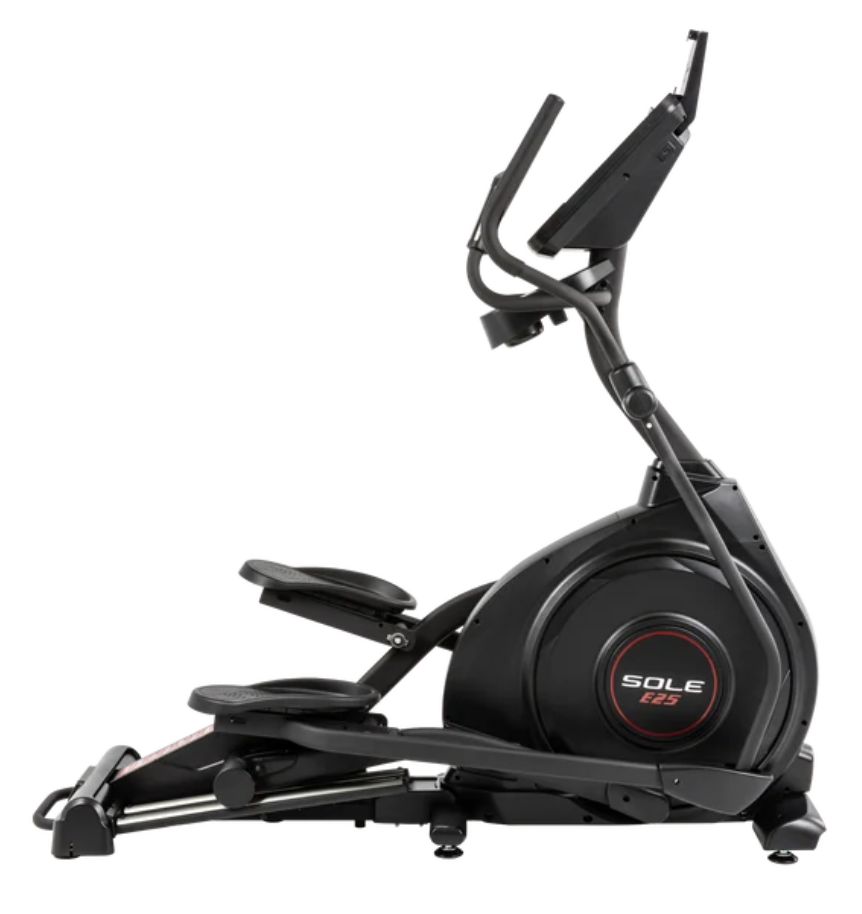
In these cases, a seated recumbent cross trainer like the Teeter FreeStep keeps you moving with your spine supported and no impact through the knees or hips.
For more information, check out our full guide on the top inversion table alternatives.
How to Ask Your Doctor About This
Most people go into the appointment and say “is an inversion table okay for me?” and get a shrug, because the doctor is being asked to approve a product they haven’t seen.
Try this instead:
“I’m considering an inversion table for my back. It would put me head-down at up to about a 60-degree angle for a few minutes at a time, hanging by my ankles, which raises blood pressure and intraocular pressure. Given my blood pressure, my eye history, my bone density, and the medications I’m on, is that safe for me? And if it’s borderline, is there a maximum angle you’d want me to stay under?”
That gives them the mechanism, not the brand name, and it’s a question they can actually answer.
Ask specifically about a maximum angle – a “yes, but keep it under 45 degrees” answer is very common and very useful.
Two things worth bringing up in the same visit: whether a Letter of Medical Necessity would make the purchase HSA/FSA eligible and whether they’d rather refer you for a round of PT first.
Final Thoughts
An inversion table is a medical device – Teeter’s are FDA-registered as Class I devices and UL safety certified – and it deserves to be treated like one.
Read the contraindication list, take the ones that apply to you seriously, and get a real answer from the physician who knows your history.
If you’re cleared, it can be a genuinely useful tool – here’s which model.
If you’re not, there are other ways to get where you’re going.
Frequently Asked Questions
Are inversion tables safe for seniors? For older adults without the contraindications listed above, and who can safely operate the equipment, yes. Age alone isn’t a disqualifier. The catch is that the disqualifying conditions – hypertension, glaucoma, osteoporosis, anticoagulant use, reflux, balance disorders – are all more common after 65, so a larger share of seniors need physician clearance first.
Can I use an inversion table if my blood pressure is controlled by medication? High blood pressure and hypertension appear on Teeter’s contraindication list without an exception for controlled cases. Ask the physician who manages your blood pressure. This is not something a website can clear you for.
Can I use an inversion table with osteoporosis? Not without physician approval. Osteoporosis is explicitly on the contraindication list. Traction applies real load to weakened bone, and the fact that it’s a pulling force rather than a compressive one does not make it safe by default.
Can I use an inversion table after a hip or knee replacement? Surgically implanted orthopedic supports are on the contraindication list, so this is a question for your surgeon, not a general rule. The answer depends on your hardware, how long ago it was placed, and how well it’s integrated.
Can I use an inversion table with glaucoma? Glaucoma and ocular hypertension are both on the contraindication list. Head-down positioning raises intraocular pressure, which works directly against glaucoma management. Talk to your ophthalmologist before buying.
Does partial inversion still work? Yes, and for many older adults it’s the appropriate starting and ending point. Angles in the 20 to 60 degree range provide meaningful decompression, are much easier to return from, and carry substantially less pressure-related risk than full inversion. There is no requirement to ever go all the way over.