Disclosure: Senior Stride Academy is a Teeter affiliate. If you purchase through links on this page, we may earn a commission at no extra cost to you. This does not affect which model we recommend — both links pay us the same.
If you’ve already decided a Teeter FreeStep is right for you, congratulations — as I wrote in our guide to treadmill alternatives for seniors, it’s the machine I recommend most often to older adults who want safe, zero-impact cardio at home.
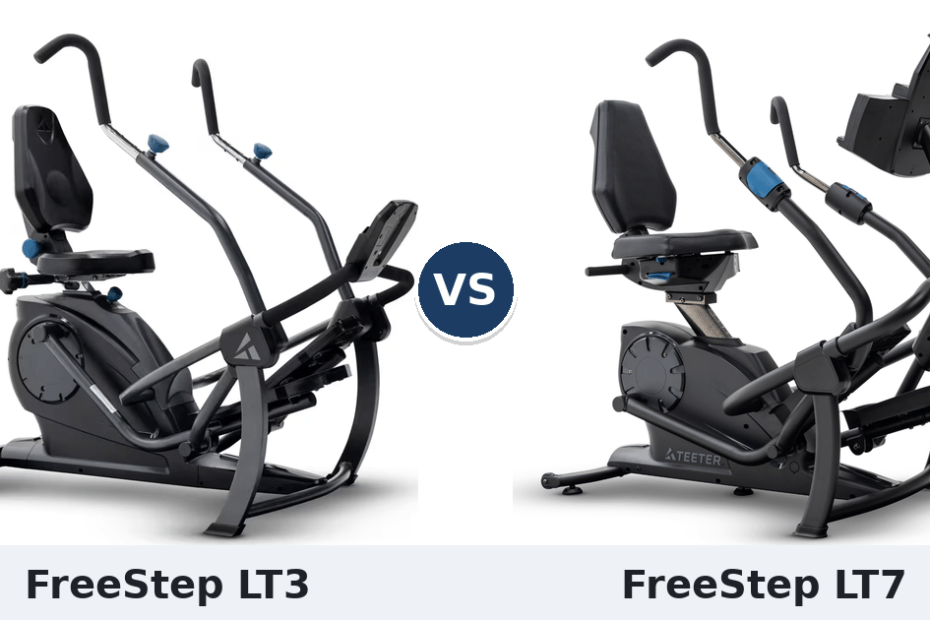
But then you land on Teeter’s website and hit the next question: LT3 or LT7?
The two models look nearly identical in photos, share the exact same patented stride, and are separated by about $500 at full price.
So is the LT7 worth the upgrade, or is Teeter just charging more for a fancier screen?
Here’s my honest answer up front: the LT3 is the better value for most healthy, mobile seniors, but the LT7 is worth every penny for anyone with meaningful mobility, stability, or size concerns — and there’s one feature in particular that decides it.
Let me walk you through the real differences.
What’s Identical on Both Machines
First, the good news: everything that makes the FreeStep special is the same on both models. You are not getting a lesser workout by choosing the LT3.
Both machines use Teeter’s patented stride licensed from commercial physiotherapy steppers — the linear stepping motion that aligns your joints and takes stress off the knees, hips, and ankles.
Both engage your upper and lower body together, so you can shift effort between arms and legs mid-workout.
Both use quiet magnetic resistance you can use in front of the TV without bothering anyone.
Both fit users from 4’11” to 6’6″, both include free access to the Teeter Move app with trainer-led workouts (no subscription), and both carry the same warranty: 3 years on the frame and 2 years on parts.
In other words, the therapy-grade motion — the reason to buy a FreeStep in the first place — is not what you’re paying extra for.
The LT7 premium buys you comfort, convenience, and accessibility features. Whether those matter depends entirely on your body and situation.
The Key Differences at a Glance
| FreeStep LT3 | FreeStep LT7 | |
|---|---|---|
| Price (list) | $999 | $1,499 |
| Resistance | 13 levels (0–110 lb), manual dial | 20 levels (0–150 lb), electronic quick-key buttons |
| Console | Basic battery-powered display (time, distance, speed, calories) | 9″ color LCD, 7 metrics, Bluetooth heart rate compatible |
| Workout programs | None (manual only) | 21 pre-programmed workouts incl. heart rate and goal-based |
| Seat | ComfortSelect™ — thicker padding, 2 depth positions, 3-position recline | ComfortMax™ — 35% larger surface, 3 depth positions, 3-position recline, piston-assist height adjustment |
| Step Lock (locks pedals for entry/exit) | No | Yes |
| Weight capacity | 300 lb | 350 lb |
| Extras | Water bottle holder | Adjustable media rack + dual cup holders |
Now let’s talk about which of these differences actually matter.
The Difference That Matters Most: Step Lock
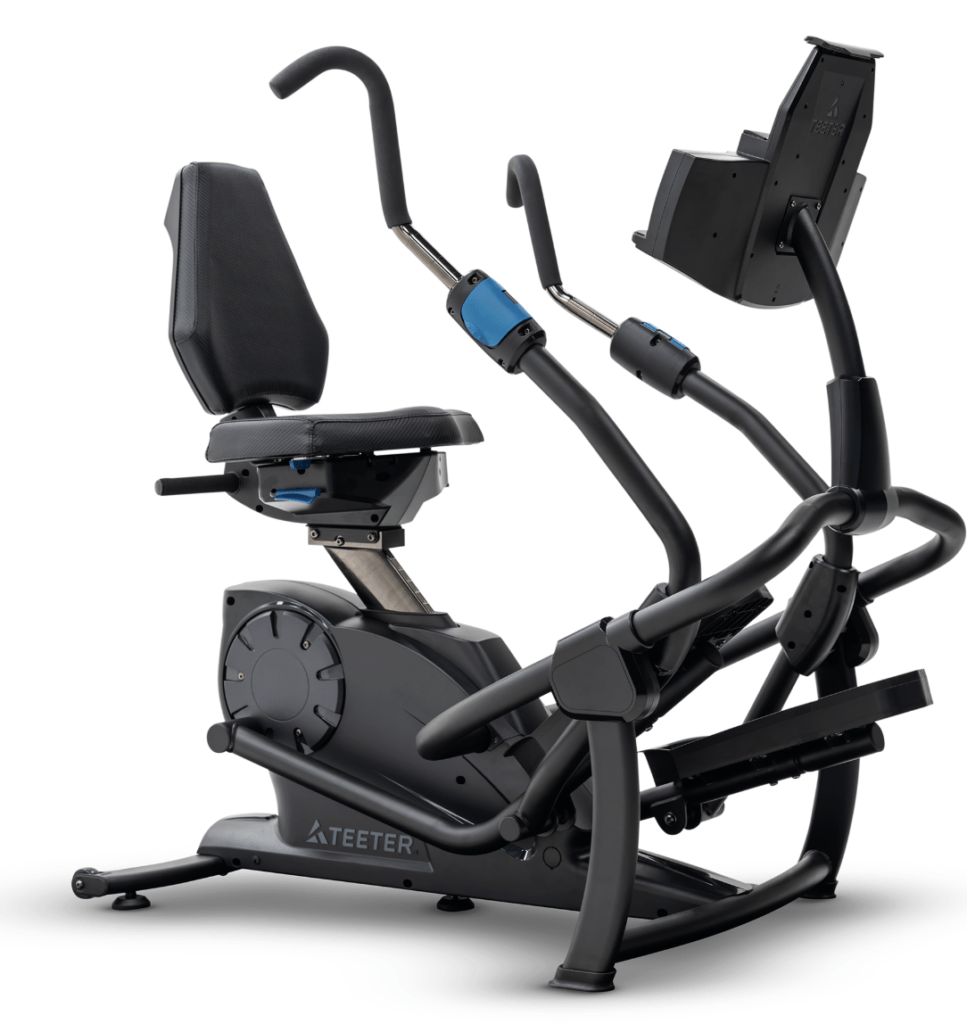
If I could only tell you one thing about this comparison, it’s this: the LT7 has a Step Lock feature and the LT3 doesn’t.
On the LT3, the pedals and handles are always free to move.
When you sit down or stand up, they can drift, which means bracing yourself against a machine that isn’t fully still.
Most people manage this without a second thought. But if you have balance deficits, significant weakness, Parkinson’s, a recent surgery, or you simply feel uneasy getting on and off exercise equipment, a drifting pedal at the wrong moment can be a recipe for disaster.
The LT7’s Step Lock, controlled right from the console, freezes the pedals and handles completely while you get seated and situated, then releases when you’re ready.
Combined with the machine’s step-through design, it makes mounting and dismounting about as secure as sitting down in a sturdy chair.
My rule of thumb: if fall risk is part of why you’re buying a FreeStep instead of a treadmill, the Step Lock alone justifies the LT7.
For everyone else, keep reading.
Seat Comfort: A Bigger Deal Than It Sounds
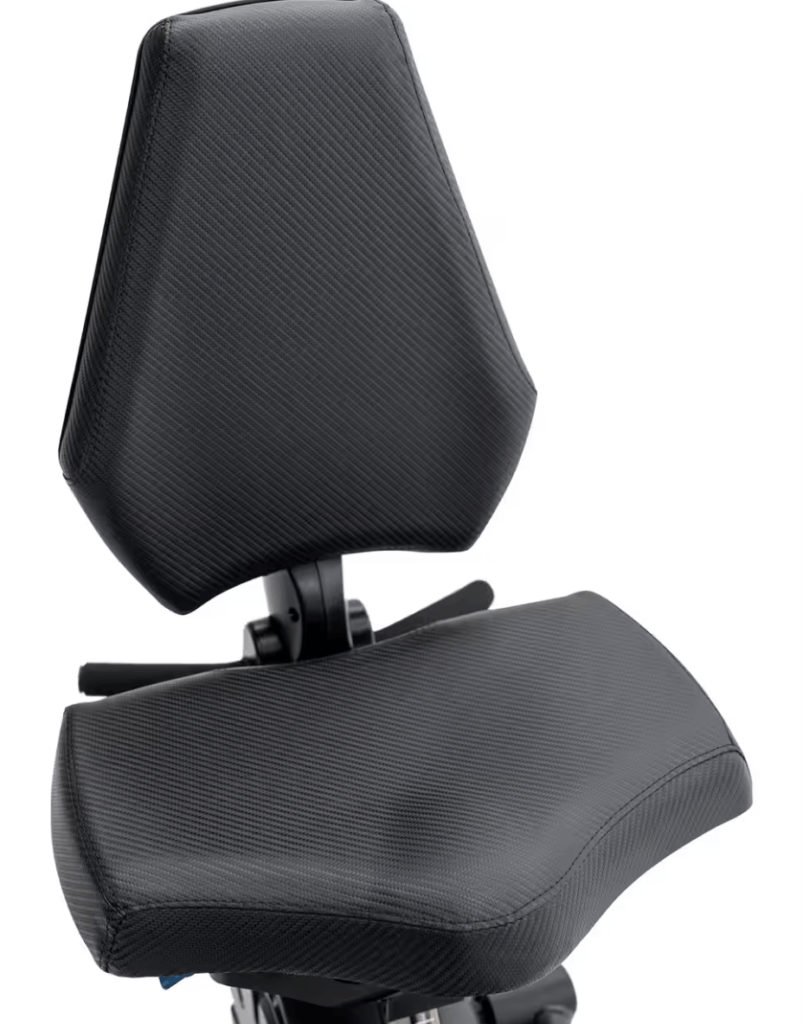
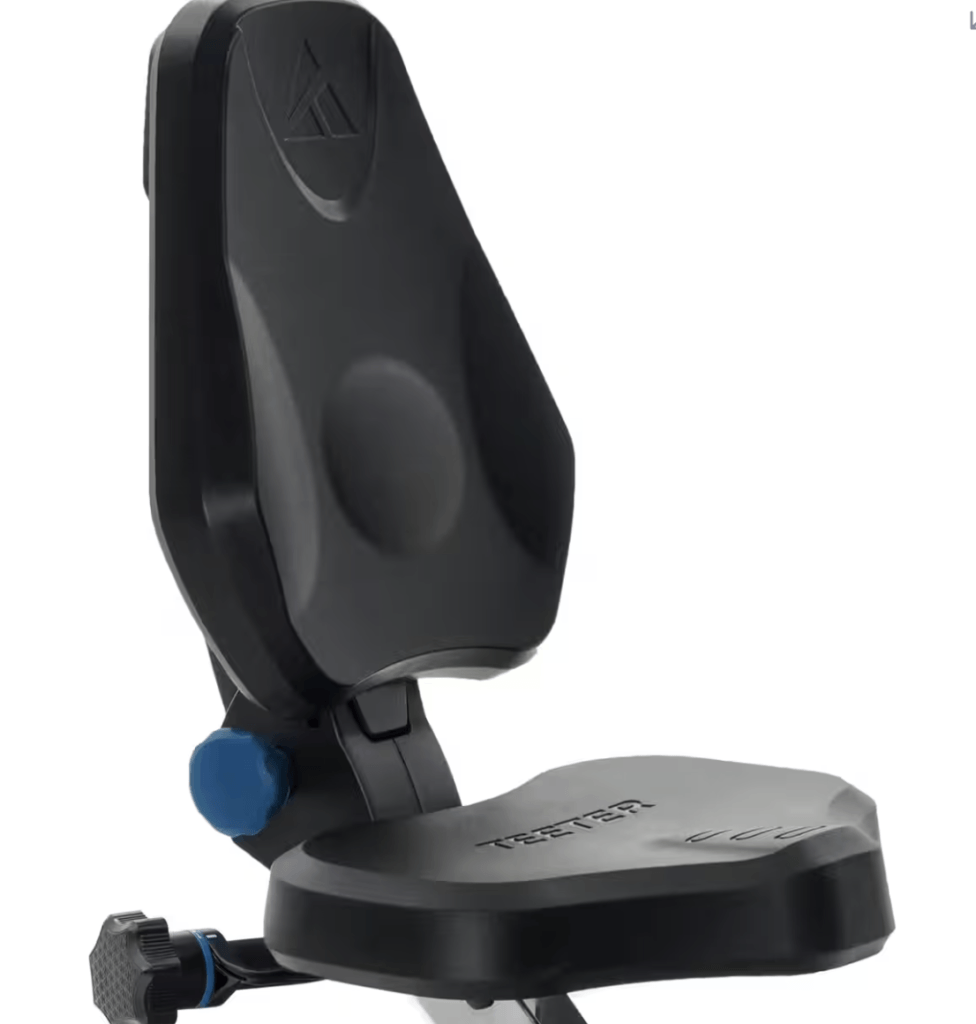
Here’s something that never shows up on spec sheets but comes up constantly with the people I work with: seat comfort determines how long you’ll actually exercise.
Nobody does a 40-minute session on a seat that makes them ache at minute 15.
The LT3’s ComfortSelect seat is genuinely decent — thicker than the original LT1 seat, with two depth positions and a three-position recline.
My main gripe is the adjustment mechanism: changing the seat height means getting off the machine and working a twist knob, and the seat travels backward at an angle as it rises rather than straight up.
Once it’s dialed in for one person, it’s fine. In a two-person household where you and a spouse are different heights, that readjustment ritual gets old.
The LT7’s ComfortMax seat is a real upgrade: 35% more surface area, a third depth position, and piston-assisted height adjustment that’s far easier to change between users.
If you’re broader-framed, have hip or tailbone sensitivity, or share the machine, this is the second-best reason to choose the LT7 (it’s also why the LT7 carries the higher 350 lb weight capacity versus 300 lb on the LT3).
Console and Programs: Nice, Not Necessary
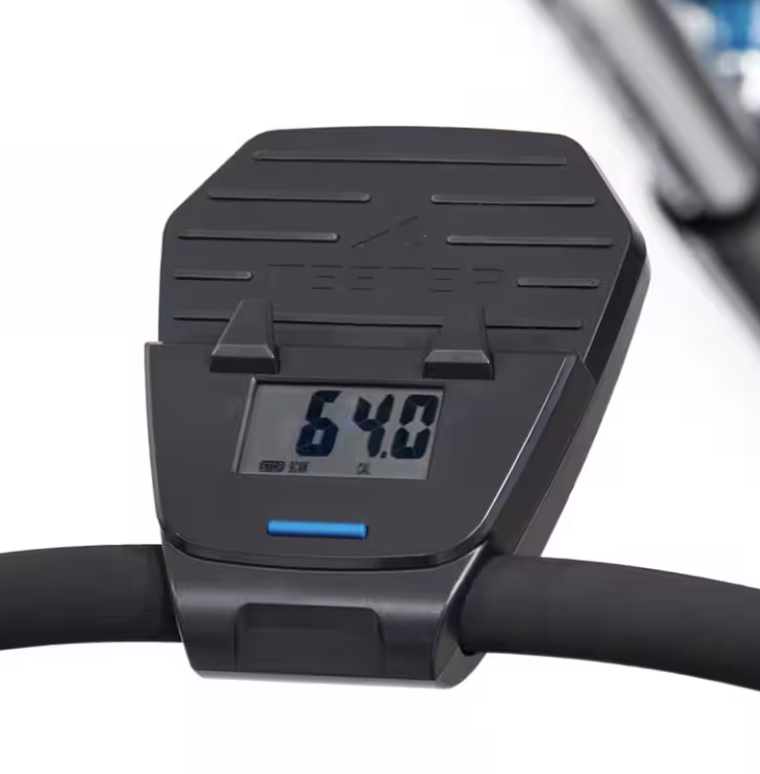
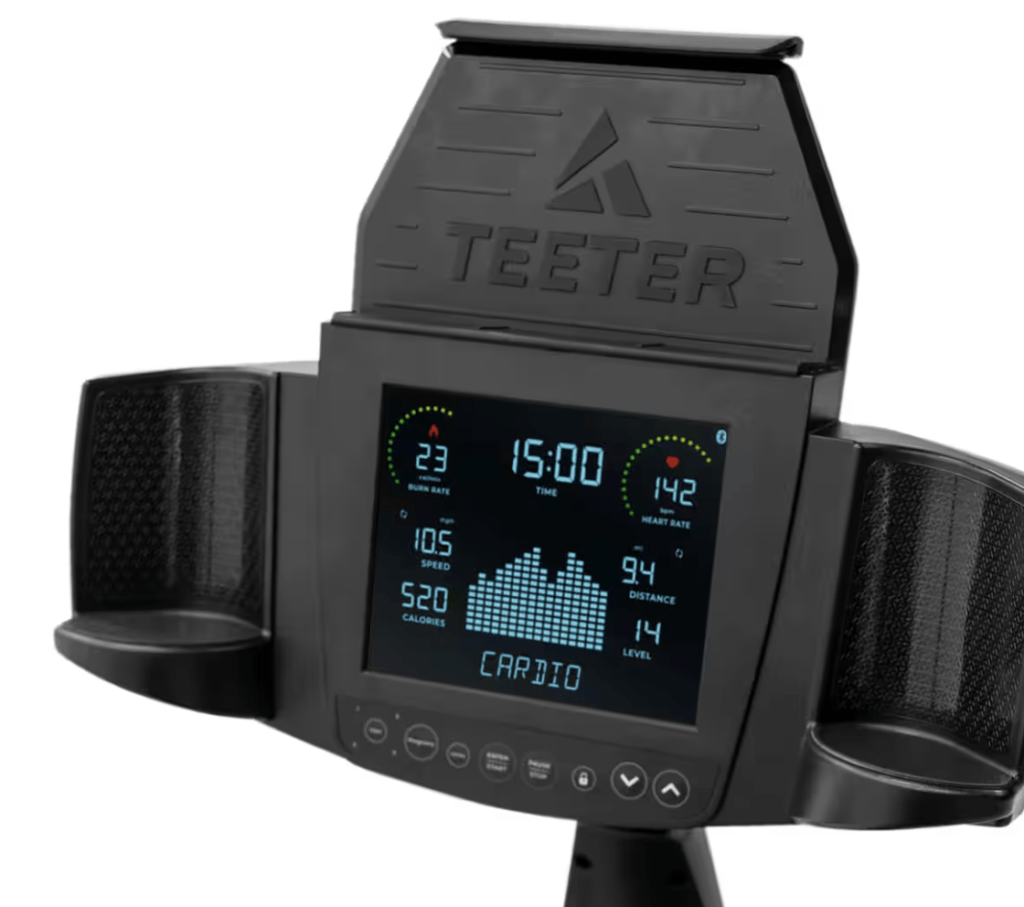
The LT3’s console is honest about what it is: a simple battery-powered readout of time, distance, speed, and calories.
There are no built-in programs, no interval tracking, and if you want to log your progress, you’re writing numbers on a notepad.
Pair it with the free Teeter Move app on a tablet and you get trainer-led workouts, which covers most of the gap.
The LT7’s 9-inch color console adds 21 built-in programs — intervals, hill profiles, and goal-based workouts for time, distance, calories, or heart rate (with a compatible Bluetooth heart rate monitor).
It also tracks a “burn rate” metric and adjusts the 20 resistance levels electronically at the push of a button instead of a manual dial.
My clinical take: programs are motivation tools, not medical necessities.
Plenty of my patients thrive with a simple manual routine. But if you know you’re the type who gets bored, or your doctor has asked you to train in a specific heart rate zone (common after cardiac events), the LT7’s console earns its keep.
Resistance: Only Matters at the Extremes
The LT3 offers 13 resistance levels up to 110 pounds; the LT7 offers 20 levels up to 150 pounds.
For the vast majority of seniors doing moderate cardio, the LT3’s range is more than enough — most of my patients live in the bottom half of it.
The LT7’s finer increments and higher ceiling matter mainly for fitter users who want room to progress, or couples where one partner is significantly stronger than the other.
It’s also worth mentioning that the LT7 uses a significantly heavier flywheel than the LT3 (~21 lb vs 7 lb).
Basically, the flywheel is what spins as you pedal, and when paired with the magnetic system, creates the resistance you work against.
Generally speaking, having a heavier flywheel produces a smoother pedaling motion – but again, seniors using the lower resistance levels likely won’t notice much difference.
What About the LT1?
Worth a quick mention, since it’s the third model in the line and the cheapest of the three.
The LT1 sits about $200 below the LT3, and the gap between those two is much narrower than the one you’ve just read about.
Same stride, same console, same 13 resistance levels, same 300 lb capacity.
What you give up are four comfort upgrades – the thicker ComfortSelect seat, rubberized SoftStep pedals, SureGrip handles, and steel ball bearings in place of plastic bushings – plus a year of warranty on both the frame and parts.
For most seniors, I’d still point to the LT3, mainly because seat comfort is what decides whether a session ends at twelve minutes or thirty.
But if budget is the deciding factor, the LT1 delivers the same workout.
I’ve broken down all four differences here: Teeter FreeStep LT1 vs LT3.
So Which One Should You Buy?
Choose the FreeStep LT3 if:
You’re generally mobile and steady, you’ll be the machine’s primary user, you’re happy with a simple “sit down, turn the dial, go” routine, and you’d rather keep the extra cash in your pocket.
The LT3 delivers 100% of the FreeStep’s therapeutic stride at the lower price, and with thousands of happy customers, it’s the proven workhorse of the lineup.
Choose the FreeStep LT7 if any of these apply:
You have balance problems, significant weakness, or any anxiety about getting on and off equipment (the Step Lock is a genuine safety feature, not a gimmick).
You weigh over 300 pounds or want the bigger, more supportive seat. Two people of different heights will share the machine.
Your doctor wants you training to heart rate. Or you know from experience that built-in programs are what keep you showing up.
If you’re on the fence, I lean LT7 for readers of this site specifically — the Step Lock and easier seat adjustments address exactly the concerns that bring most seniors to a recumbent cross trainer in the first place, and $500 spread over years of near-daily use is a small premium for the machine you’ll be more confident using.
The combination of specs and features found on the LT7 (and affordable price) make it one of the best recumbent cross trainers around.
Both models ship free in the continental U.S., come with a trial period, and offer 0% financing through Affirm if you’d rather spread the cost.
Frequently Asked Questions
Is the Teeter FreeStep LT7 worth the extra money over the LT3?
For seniors with balance concerns, mobility limitations, or a larger frame, yes — the LT7’s Step Lock entry/exit feature, larger ComfortMax seat, and 350 lb capacity directly address those needs. For steady, mobile users who just want the FreeStep’s zero-impact workout, the LT3 delivers a very similar workout for less money.
Do the LT3 and LT7 have the same workout motion?
Yes. Both models use Teeter’s patented physical therapy stride licensed from commercial physiotherapy steppers, with the same joint-friendly linear stepping motion and dual upper/lower body engagement. The differences are in comfort, console features, and accessibility — not the exercise itself.
What is the weight limit on the FreeStep LT3 vs LT7?
The LT3 supports users up to 300 pounds; the LT7 supports up to 350 pounds. Both accommodate heights from 4’11” to 6’6″.
Does the FreeStep LT3 have workout programs?
No. The LT3 has a basic console that tracks time, distance, speed, and calories, with resistance adjusted by a manual dial. Built-in programs (21 of them) are exclusive to the LT7. However, both models include free access to Teeter’s Move app with trainer-led workouts.
Do the LT3 and LT7 have the same warranty?
Yes — both carry a 3-year structural frame warranty and a 2-year warranty on mechanical and electrical parts, with an optional extended warranty available from Teeter.