Loss of balance is one of the most common mobility problems affecting older adults.
While occasional unsteadiness can happen to anyone, frequent balance problems in seniors should not be ignored, especially when they increase the risk of falls.
Loss of balance in elderly adults can have many causes, including muscle weakness, dizziness, inner ear problems, medication side effects, neurological conditions, poor vision, or age-related changes in strength and coordination.
And in many cases, balance problems develop gradually and worsen over time without proper treatment or activity.
Understanding the causes of balance loss can help seniors and caregivers identify problems early and reduce the risk of dangerous falls.
What Does Loss of Balance Mean?
“Loss of balance” refers to difficulty maintaining stability while standing, walking, or changing positions.
Loss of balance can lead to a fall, but it doesn’t necessarily have to – fyi, as a physical therapist, I define “fall” as any unintentional loss of balance that results in a person landing on a lower surface (floor, etc).
In home health, we consider any loss of balance where the patient unintentionally bumps into a wall of piece of furniture as a fall as well…. but i admit that is a stricter definition.
Anyway, older adults with balance problems may experience any of the following:
- Feeling unsteady while walking
- Swaying or staggering
- Difficulty turning or changing direction
- Needing support while standing
- Feeling like they may fall
- Sudden episodes of instability
Some seniors describe balance loss as dizziness, while others simply feel “off balance” or less steady on their feet.
Symptoms vs Possible Causes for Loss of Balance
Balance problems in seniors can appear in many different ways, and certain symptoms may point toward specific underlying causes.
| Symptom | Possible Causes |
|---|---|
| Dizziness when standing | Low blood pressure, dehydration |
| Shuffling gait | Parkinson’s disease, weakness, balance disorders |
| Sudden leg weakness | Muscle fatigue, nerve problems, circulation issues |
| Feeling unsteady while walking | Muscle weakness, vestibular problems |
| Frequent backward falls | Postural instability, neurological conditions |
| Vertigo or spinning sensation | Inner ear disorders |
| Stumbling or tripping | Weakness, poor vision, slowed reaction time |
Since balance depends on multiple systems working together, symptoms can vary significantly from one person to another.
And in reality, most cases likely involve multiple factors being present at the same time.
Is Loss of Balance a Normal Part of Aging?
Some mild balance changes can occur naturally with age.
After all, as people get older, reaction time, muscle strength, vision, and coordination gradually decline.
However, frequent or worsening balance problems are not considered a normal part of aging.
Balance loss often reflects underlying issues involving:
- Strength and mobility
- Blood pressure regulation
- The inner ear
- The nervous system
- Vision or sensory feedback
Because balance involves multiple body systems working together, even small problems in one area can significantly affect stability.
How Balance Works
Maintaining balance is a complex process that depends on multiple systems in the body working together at the same time.
In order to stay upright and move safely, the brain must constantly receive and process information about body position, movement, and the surrounding environment.
The body primarily relies on four major systems to maintain balance:
The Inner Ear (Vestibular System)
The inner ear contains small structures that detect head movement, position changes, and motion. This system helps the brain understand whether the body is moving, turning, leaning, or remaining still.
When the vestibular system is disrupted, seniors may experience:
- Dizziness
- Vertigo
- Unsteadiness
- Difficulty walking straight
- A sensation of spinning or floating
Even minor inner ear problems can significantly affect stability.
Vision
Vision plays a major role in balance by helping the brain understand where the body is positioned within the environment.
The eyes help detect:
- Obstacles
- Uneven surfaces
- Changes in direction
- Movement around the body
Poor vision can make it harder to judge distances and maintain stability, especially in dim lighting or unfamiliar environments.
Muscles and Joints
Strong muscles and flexible joints are essential for maintaining posture and correcting small balance disturbances.
The legs, hips, core, ankles, and feet constantly make tiny adjustments to keep the body upright. When muscles weaken or joints become stiff, these corrective movements become slower and less effective.
This is one reason muscle weakness is such a major contributor to falls in older adults.
Nerves and Sensory Feedback
Nerves in the feet, legs, and joints send important information to the brain about body position and pressure.
This system, known as proprioception, helps the body understand:
- Where the feet are positioned
- How weight is distributed
- Whether the body is leaning or shifting
Conditions like peripheral neuropathy can reduce sensation in the feet and legs, making balance much less reliable.
The Brain and Nervous System
The brain acts as the body’s “balance control center” – it continuously combines information from the eyes, inner ear, muscles, and nerves to coordinate movement and maintain stability.
The brain also controls:
- Reaction time
- Posture adjustments
- Walking coordination
- Protective responses when balance is lost
Neurological conditions such as Parkinson’s disease, stroke, or dementia can interfere with these processes and increase fall risk.
Why Small Problems Can Lead to Big Balance Issues
Because balance depends on so many systems working together, even a mild issue in one area can increase instability.
For example:
- Mild dehydration may lower blood pressure
- Slight muscle weakness may reduce stability
- Minor vision loss may affect coordination
When several small issues occur together, the risk of falls increases substantially.
This is why balance problems in seniors are often caused by multiple contributing factors rather than a single issue alone.
Common Causes of Loss of Balance in Elderly Adults
Several different conditions and physical changes can contribute to balance problems in seniors:
| Cause | How It Affects Balance |
|---|---|
| Muscle weakness | Reduces stability and reaction strength |
| Dizziness or low blood pressure | Causes lightheadedness and instability |
| Inner ear problems | Disrupts the body’s balance system |
| Medication side effects | May cause dizziness or slowed reactions |
| Neurological conditions | Affect coordination and movement control |
| Poor vision | Reduces environmental awareness and stability |
| Arthritis or joint pain | Limits mobility and walking mechanics |
| Fear of falling | Leads to stiff, cautious movement patterns |
Muscle Weakness
Weakness in the legs and core muscles is one of the most common causes of balance loss in older adults.
When muscles weaken:
- Standing stability decreases
- Walking becomes less controlled
- Recovery from small balance disturbances becomes harder
Reduced activity levels often worsen weakness over time, which makes it more challenging to move around.
Which, in turn, results in less activity – it’s a vicious cycle.
Dizziness and Blood Pressure Changes
Dizziness can significantly affect balance and stability.
A sudden drop in blood pressure – especially when standing or walking – may cause:
- Lightheadedness
- Unsteadiness
- Sudden balance loss
This dizziness can make it easier for seniors to lose balance and fall, so it’s paramount to take any dizziness seriously and make the effort to determine the root cause.
Inner Ear Problems
The inner ear plays a major role in balance and spatial awareness, so any disruption to its function can lead to major stability problems.
Conditions affecting the vestibular system usually cause vertigo (true spinning sensation), but they can also cause generalized equilibrium problems and feelings of vague dizziness with activity.
BPPV is a specific inner ear issue that causes vertigo with certain positional changes and it can be pretty devastating.
Fortunately, physical therapy can be very effective at treating vestibular issues.
Medication Side Effects
Certain medications may contribute to:
- Dizziness
- Drowsiness
- Slowed reaction time
- Weakness
These effects can significantly increase fall risk, so it’s important to determine whether or not loss of balance is coming from medication effects.
If you notice balance getting worse after a new medication change, discuss immediately with your healthcare provider.
FYI, some medications are more prone to causing balance issues than others – check out our full guide to see which meds are more likely to cause issues.
Neurological Conditions
Several neurological conditions can interfere with balance control, including:
- Parkinson’s disease
- Stroke
- Peripheral neuropathy
- Dementia
These conditions may affect posture, coordination, sensation, or walking ability and the effects will vary greatly depending on the severity of the disease.
If a neurological condition is to blame for loss of balance, treatment should start with a physician and likely include physical therapy intervention.
Vision Problems
Vision helps the brain understand body position and movement within the environment.
Poor vision can make it harder to:
- Judge distances
- Detect obstacles
- Maintain stability while moving
Arthritis and Joint Pain
Pain and stiffness in the hips, knees, ankles, or feet can alter walking mechanics and reduce balance confidence.
Many seniors compensate by:
- Walking more cautiously
- Taking shorter steps
- Moving more slowly
All of which makes it easier for loss of balance to occur.
Fear of Falling
Fear of falling is extremely common after a previous fall or near-fall.
Unfortunately, this fear often causes:
- Reduced activity
- Muscle weakness
- Stiff movement patterns
- Poor balance recovery
This can create a cycle where fear actually increases fall risk over time.
As a therapist, I can tell you that getting over fear of falling is tough. The key is to do what has to be done to improve safety and confidence will return with time.
Signs Balance Problems May Be Getting Worse
Balance issues should be evaluated if a senior experiences:
- Frequent stumbling or near-falls
- Difficulty walking on uneven surfaces
- Needing support while standing
- Shuffling gait
- Sudden falls or backward falls
- Dizziness while walking or standing
Changes that develop suddenly or worsen rapidly may require prompt medical attention.
How to Improve Balance in Seniors
Many causes of balance loss can improve with the right combination of exercise, medical management, and mobility training.
Strength and Balance Exercises
Exercises that improve leg strength, posture, and coordination are often very effective and should be included in every fall risk reduction program.
With the strengthening focus being especially on the larger leg muscles and core (glutes, quads, etc).
If you’re looking to improve strength and balance, seeking out a physical therapy eval is a good idea.
For a step-by-step plan, our Strong & Steady 21-Day Balance Program walks you through gentle, progressive exercises designed by a physical therapist to help prevent falls.
Staying Physically Active
When in doubt, regular activity always helps.
I tell my patients all the time that movement is our friend – this is just another way of saying that if you don’t use it, you lose it.
And unfortunately, it takes a lot longer to gain it back than it does to lose it.
Avoiding activity often leads to worsening weakness and instability, which we know increases our fall risk.
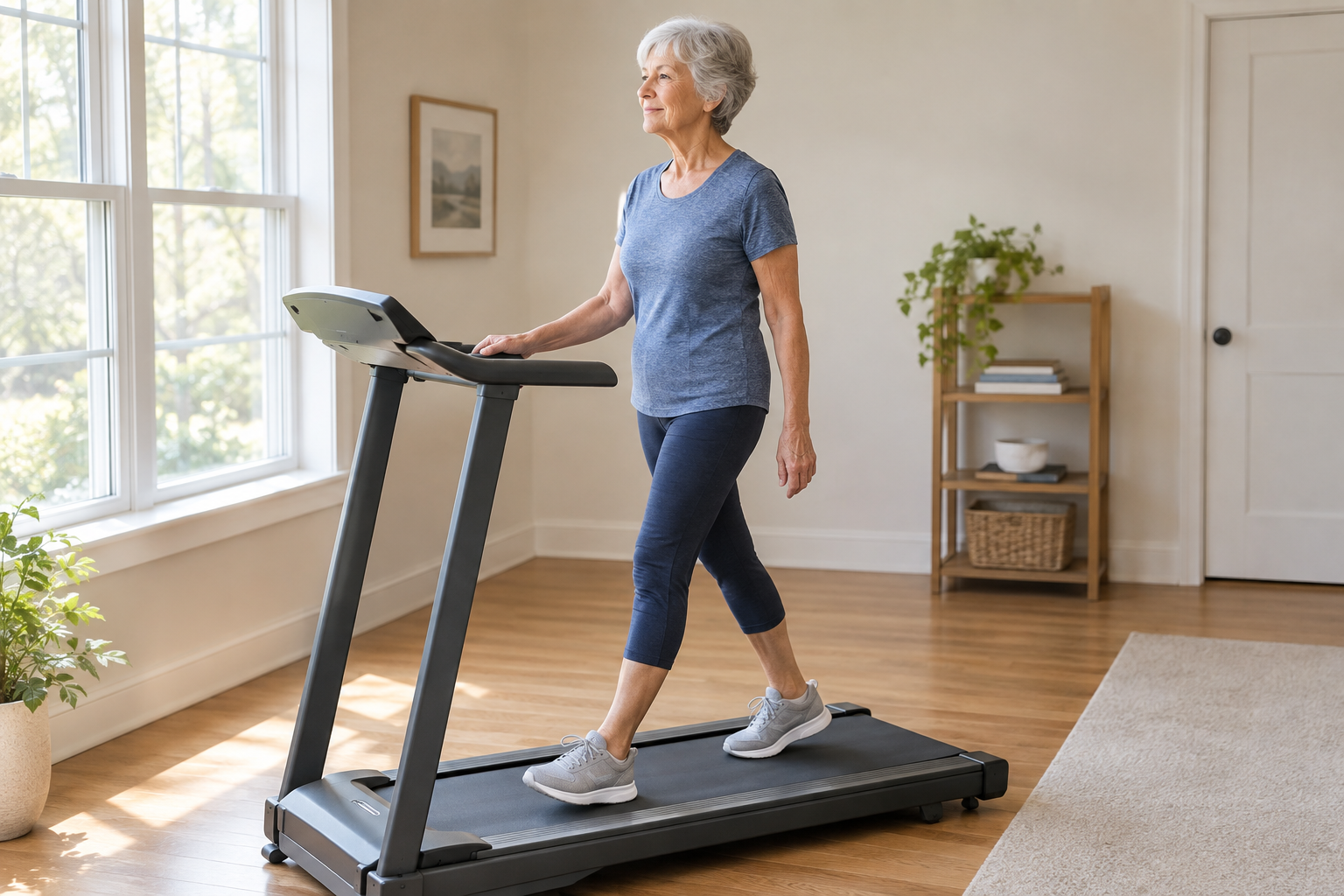
If nothing else, participating with a daily walking program can help maintain strength and mobility and make loss of balance less likely.
Additional Recommendations
Focusing on maintain strength, mobility, and balance is essential, but here are a few more tips to consider when trying to minimize fall risk as much as possible for our seniors:
- Manage underlying medical conditions
- Review medications with healthcare provider
- Wear proper footwear
- Use assistive devices when necessary
- Make necessary home adaptations
Final Thoughts
Loss of balance in elderly adults is common, but it should not simply be accepted as a normal part of aging.
Balance problems often reflect treatable issues involving strength, mobility, circulation, vision, or neurological function.
So, identifying these issues early can help reduce fall risk and improve long-term independence – especially for seniors living alone.
The good news is that many seniors can improve balance through regular activity, targeted exercise, and proper medical care.
After all, if this wasn’t the case, I’d probably be out of a job.
And remember, even small improvements in strength and stability can make daily movement safer and more confident.
FAQ: Loss of Balance in Seniors
What causes balance problems in elderly adults?
Common causes include muscle weakness, dizziness, inner ear problems, medication side effects, neurological conditions, and poor vision.
Is loss of balance a normal part of aging?
Mild balance changes can occur with age, but frequent or worsening balance problems are not considered normal.
Can dehydration cause balance problems in seniors?
Yes. Dehydration can contribute to dizziness, weakness, and low blood pressure, all of which may affect balance.
When should balance problems be evaluated?
Balance issues should be evaluated if they are worsening, causing falls, or occurring alongside dizziness, weakness, or neurological symptoms.
Can balance improve in older adults?
Yes! Many seniors can improve balance with strength training, balance exercises, physical activity, and medical management.