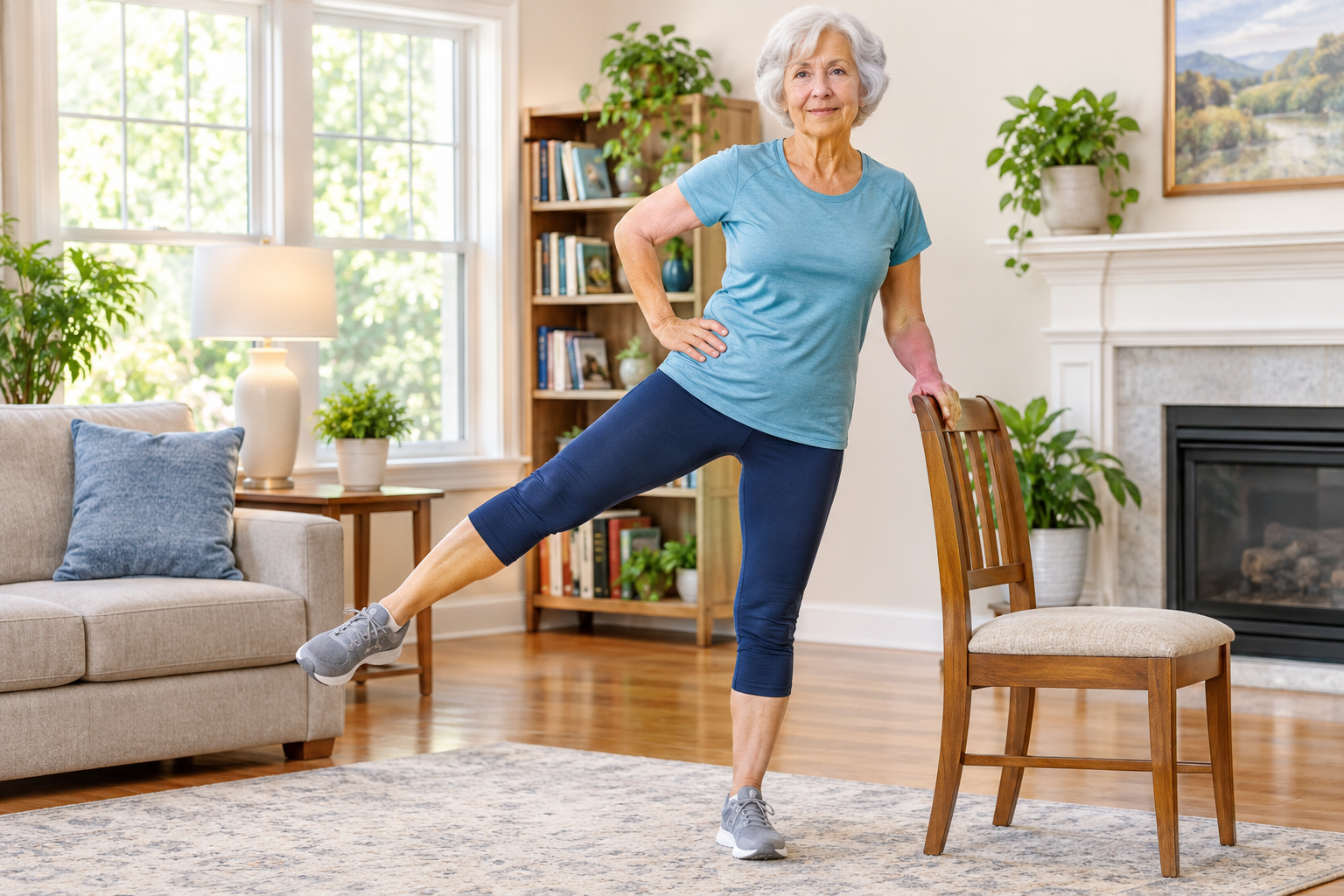

Every winter, I see the same pattern with my patients.
The weather turns colder, the first snow falls, and the daily walk quietly stops. A few weeks later, legs feel weaker, balance feels shakier and getting up from a chair takes a little more effort than it used to.
It makes sense, nobody wants to risk a fall on the ice.
But three or four months of sitting more can undo a lot of the strength and stamina you’ve worked for, and that makes falls more likely, not less.
The good news is you don’t need to brave the cold to keep moving during the winter.
In this guide, I’ll show you how to keep your steps up indoors this winter, with or without equipment, plus a simple plan to follow and a few tips for the days you do go outside.
This post contains affiliate links. If you buy through them, I may earn a small commission at no extra cost to you.
Why Winter Walking Matters So Much
Falls are the biggest risk. According to the CDC, more than 14 million adults 65 and older (about 1 in 4) report falling every year. Falls are also the leading cause of injury-related death for adults 65 and older, and the fall death rate rose 21% from 2018 to 2024.
Icy sidewalks and driveways are an obvious hazard, but staying inside and moving less is a quieter risk.
Strength and balance fade surprisingly fast when you stop using them and as a home health physical therapist, I see this first-hand all the time.
A lot of my patients start losing function and mobility due to weakness related to inactivity.
Every step counts. A large 2022 study of nearly 47,500 adults found that for people 60 and older, the risk of dying from any cause kept dropping as daily steps increased, leveling off around 6,000 to 8,000 steps a day.
You don’t need 10,000 steps to see real benefits, and even small increases help if you’re starting low.
Winter is when routines slip. Shorter days, cold weather and holiday schedules make it easy to stop moving without noticing. A simple indoor plan keeps you from losing ground before spring.
6 Ways to Walk Indoors (No Equipment Needed)
1. Map a walking loop in your home
Pick a safe route through your house, like kitchen to living room to hallway and back. Walk it a few times and count your steps so you know roughly how many each lap gives you.
Before you start, clear the path: pick up throw rugs, tuck away cords and make sure the route is well lit. My 10-point home fall risk checklist can help.
2. Walk during commercials or phone calls
This is one of the easiest habits I give patients.
Get up and walk a lap every commercial break, or walk while you’re on the phone. It adds up to hundreds of extra steps a day without feeling like “exercise.”
3. Mall walking
Many malls open early for walkers, with flat floors, climate control, benches to rest on and restrooms nearby.
Call ahead to ask about walking hours. Some communities have organized mall-walking groups, which add a social reason to show up.
4. Community and senior centers
Many senior centers, YMCAs and recreation centers have indoor walking tracks or open gym time. Some also offer group exercise classes designed for older adults.
5. Walking videos
Follow-along indoor walking videos guide you through steps like marching, side steps and walking in place in your living room.
Choose low-impact videos designed for older adults, and keep a sturdy chair or counter nearby for balance.
6. Big-box stores
A slow lap or two around a large grocery or home-improvement store counts too, and a shopping cart gives you something steady to hold.
Go during quieter hours to avoid crowds.
A Simple Winter Walking Plan
Start where you are, not where you think you should be.
If you don’t know your current step count, wear a pedometer, fitness tracker or phone for a few normal days and take the average. That’s your baseline.
| Weeks | Daily goal | How to get there |
|---|---|---|
| 1–2 | Baseline + 500 steps | Add a 5-minute indoor walk, or walk during every TV commercial |
| 3–4 | Baseline + 1,000 steps | Two short walks a day, morning and afternoon |
| 5–6 | Baseline + 1,500 steps | Add a weekly mall or community center walk |
| 7+ | Work toward 6,000–8,000 if you’re able | Keep adding about 500 steps every couple of weeks |
Tips that help:
- Break it up. Three 10-minute walks count the same as one 30-minute walk, and they’re often easier on stiff joints.
- Add a little strength. On most days, do a few sit-to-stands from a sturdy chair. Strong legs make walking easier and help prevent falls. My Strong & Steady strength program is a good place to start.
- Track it. Write your daily steps on a calendar. Seeing a streak build is surprisingly motivating.
- Don’t chase a number. If 6,000 steps is out of reach right now, that’s OK. Going from 2,000 to 3,500 is a real win.
For a full walking program, see my senior-friendly walking program for beginners.
Equipment That Makes Winter Walking Easier
If you’d like to walk every day no matter the weather, a home machine can make a big difference. Here’s what I recommend most often.
A walking treadmill with handrails

A treadmill gives you a flat, predictable surface, handrails to steady yourself and a safety key that stops the belt if you drift back.
For older adults, I look for a low step-up height, side handrails you can reach while standing tall, and speed controls on the handrails.
- Horizon T101: My top budget pick, with a low step-up just over 7 inches and speed dials on the hand grips. (Check stock; it’s been selling out due to popularity.) See the Horizon T101
- Horizon T202: Same low step-up with a longer 60″ belt for taller walkers. See the Horizon T202
- Sole F63: A sturdy, popular option with speed and incline dials in the handles. See the Sole F63
More info: Best Treadmills for Seniors and my Treadmill Safety Checklist
A note on walking pads: Those flat, under-desk walking pads are popular, but most have no handrails. I don’t recommend them for older adults with any balance concerns.
If balance is a concern: a seated machine
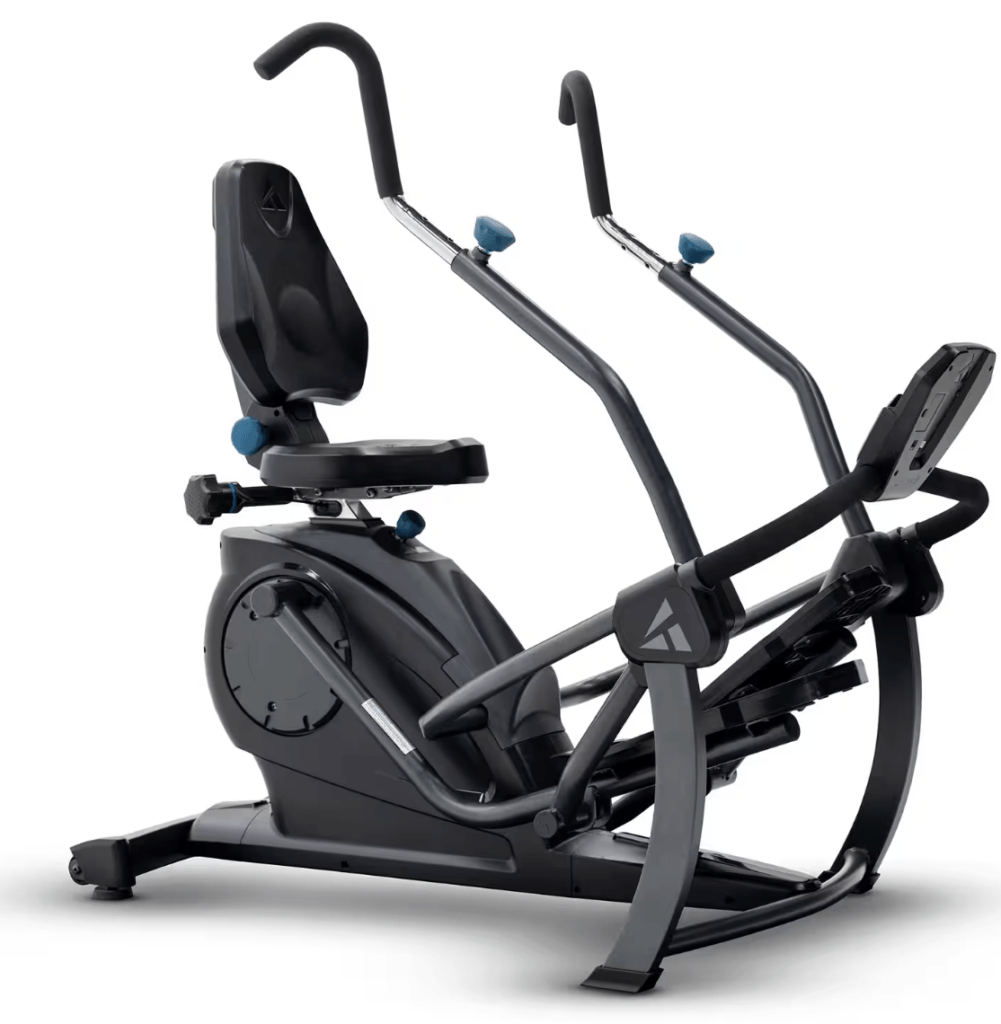
If you use a cane or walker, or have fallen recently, a treadmill may not be the safest choice.
A seated machine like the Teeter FreeStep lets you work your heart, arms and legs without a fall risk.
It’s not walking, but it keeps the same muscles strong through the winter. See the Teeter FreeStep lineup
More info: Are Treadmills Safe for Seniors? and Best Exercise Equipment for Arthritis
When You Do Go Outside: Ice Safety Tips
Some days you’ll need to get the mail, run errands or just want fresh air. Here’s how to do it more safely.
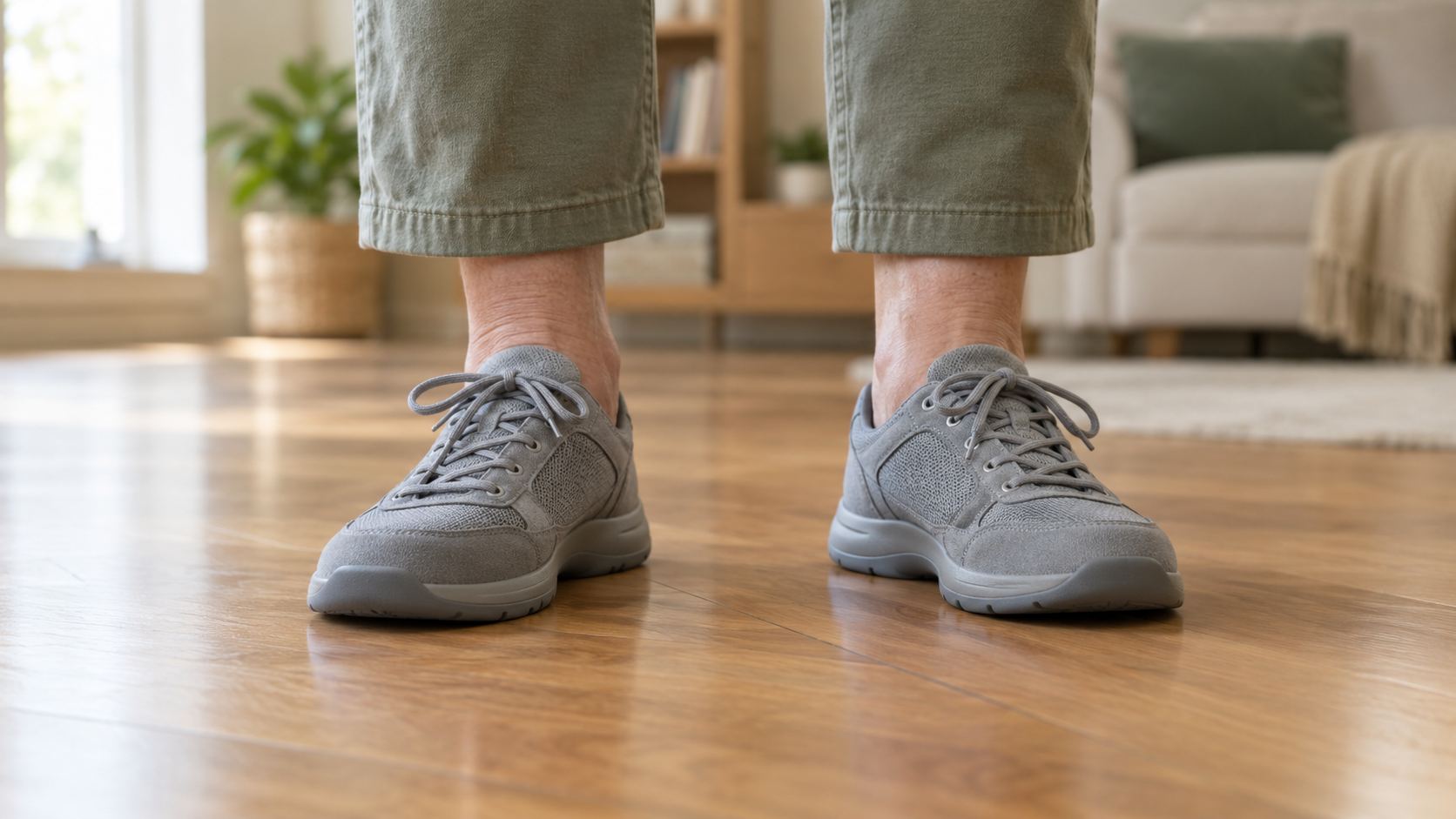
- Wear shoes with good grip. Look for rubber soles with deep tread. Slip-on ice cleats that strap over your shoes add traction on packed snow and ice. Take them off before walking on smooth indoor floors.
- Walk like a penguin. Take short, flat-footed steps, keep your weight over your feet and walk slowly. It looks silly, but it helps.
- Keep your hands free. Use a backpack or crossbody bag instead of carrying things, and keep your hands out of your pockets so you can catch yourself.
- Assume dark spots are ice. Black ice is hard to see, especially on steps, driveways and parking lots.
- Hold the railing. On steps, always use the handrail, and go one step at a time.
- Time it right. Wait until later in the day, when the sun has had a chance to melt ice and paths have been salted or cleared.
If you do fall, don’t rush to get up. My guide to how to get up after a fall walks you through it step by step.
Final Thoughts
Winter doesn’t have to mean three months on the couch.
A few short indoor walks a day, a little strength work and a safe plan for icy days can carry you through to spring stronger than you started.
Start small, track your steps and add a little at a time.
And if you’d like to walk every day no matter the weather, a simple treadmill with handrails is one of the best investments you can make in your independence.
Frequently Asked Questions
How many steps a day should a senior aim for?
Research suggests that for adults 60 and older, the benefits level off around 6,000 to 8,000 steps a day. But any increase from where you are now helps. If you’re at 2,000 steps, getting to 3,000 or 4,000 is a meaningful improvement.
Does walking indoors count as much as walking outside?
Yes. Steps are steps. Walking around your house, at the mall or on a treadmill all count toward your daily total and help keep your legs strong.
How can I get more steps without leaving the house?
Walk a loop through your home, walk during TV commercials and phone calls, follow an indoor walking video, or march in place while holding the kitchen counter. Short bouts throughout the day add up quickly.
Is a treadmill safe for seniors?
For most seniors who are steady on their feet, yes, especially one with handrails, a low step-up and a safety key. If you have balance problems or have fallen recently, start with a seated machine and talk with your doctor or PT. See Are Treadmills Safe for Seniors?
What shoes are best for walking on ice?
Shoes with rubber soles and deep tread, plus slip-on ice cleats for packed snow or ice. See my guide to footwear for seniors for more.
What if I feel weaker after a few weeks of being inside?
That’s common, and it’s very fixable. Start with short walks and simple exercises like sit-to-stands, and build up gradually. If you’ve had a fall or your balance feels noticeably worse, ask your doctor about a physical therapy evaluation.