If you’ve been living with knee pain, you’ve probably asked yourself: Should I even be exercising at all?
It’s a fair question and an important one – after all, the wrong kind of exercise can make knee pain worse.
But here’s what many seniors don’t realize: the right kind of exercise is often one of the best things you can do for your knees.
In this guide, we’ll break down what’s safe, what to avoid, and how to stay active and healthy even when your knees aren’t cooperating.
First, Why Do Seniors Experience Knee Pain?
Knee pain in older adults is extremely common.
According to the CDC, nearly 1 in 4 adults has doctor-diagnosed arthritis — and the knee is one of the most frequently affected joints.
The most common causes of knee pain in seniors include:
- Osteoarthritis — the gradual breakdown of cartilage that cushions the knee joint
- Inflammation from conditions like rheumatoid arthritis or bursitis
- Previous injuries — old sprains, tears, or surgeries that have left lasting effects
- Muscle weakness — especially weak quadriceps, which put extra strain on the knee joint
- Excess body weight — every extra pound adds roughly 4 pounds of pressure to the knee
Understanding the root cause of your knee pain matters, because it affects which exercises will help — and which ones you should skip.
Important: Always consult your doctor or physical therapist before starting a new exercise program, especially if you have a diagnosed knee condition or have had recent surgery.
Can Exercise Actually Make Knee Pain Better?
For many seniors, the answer is yes – but only when done correctly.
As a physical therapist that’s been working with seniors for 15 years, I stress the importance of exercise to all my patients with arthritic knees because it’s one of the best ways to manage pain and maintain function.
And the research consistently shows that low-impact aerobic exercise and gentle strength training can:
- Reduce joint pain and stiffness by lubricating the knee joint through movement
- Strengthen the muscles around the knee, reducing the load on the joint itself
- Help with weight management, which directly reduces pressure on the knees
- Improve balance and stability, lowering the risk of falls and further injury
- Boost mood and reduce fatigue, which often accompany chronic pain
The key word is low-impact. The problem isn’t exercise — it’s the wrong kind of exercise.
Exercises to Avoid If You Have Knee Pain
Before we get to what works, let’s talk about what to stay away from:
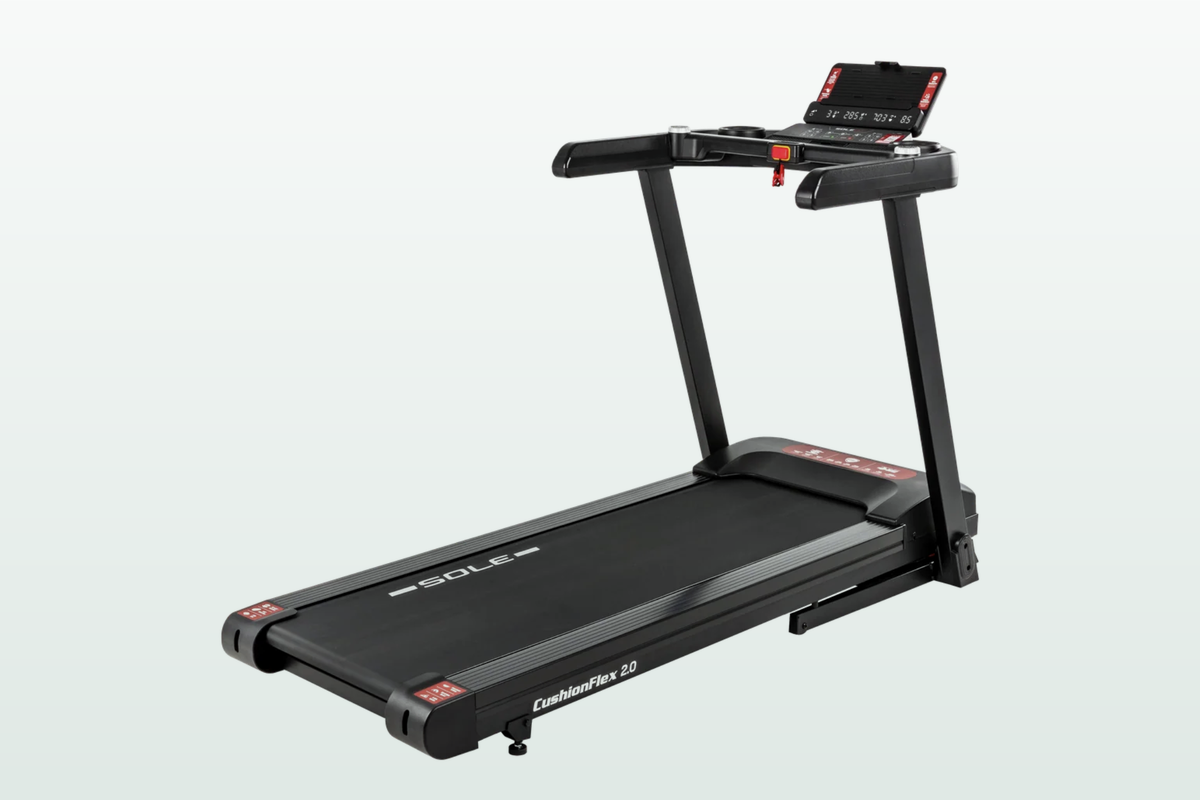
High-impact activities like running, jumping, or step aerobics can compress the knee joint and worsen inflammation. If these have been part of your routine in the past, it may be time to transition to gentler alternatives.
Deep squats and lunges place significant stress on the knee joint — particularly for anyone with osteoarthritis or a history of knee surgery.
Leg extensions on weight machines can actually increase knee pain for some people by isolating stress on the joint in an unnatural way.
Incline walking or hiking on uneven terrain can be hard on knees, especially going downhill, where the knee absorbs significant force.
The good news: there are plenty of excellent alternatives.
The Best Low-Impact Exercises for Seniors With Knee Pain
1. Seated or Recumbent Cardio
This is often the gold standard for seniors with knee pain.
When you’re seated, your body weight isn’t bearing down on the knees the way it does during walking or standing exercise.
But you can still get a great cardiovascular workout with far less joint stress.
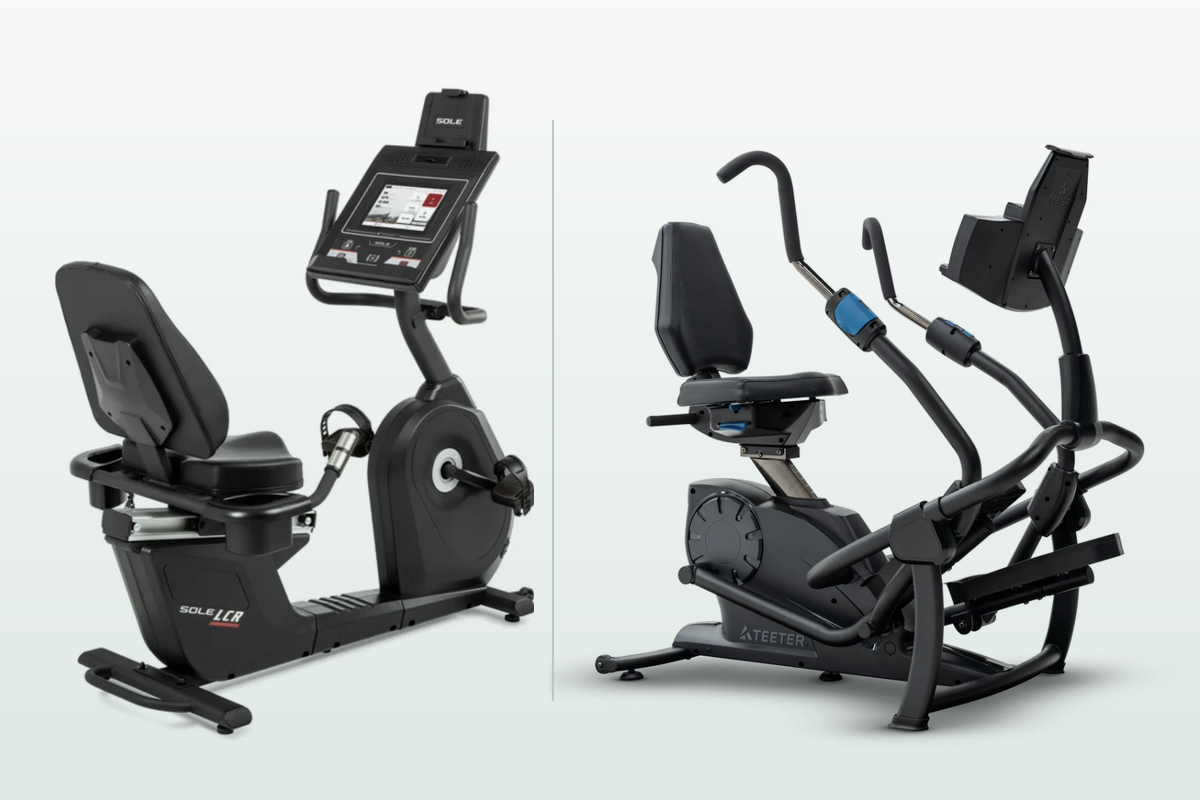
Machines like a recumbent cross trainer allow you to move your arms and legs in a smooth, elliptical-style motion while remaining fully seated. There’s no jarring impact, no twisting, and no need to bear your body weight through your knees.
You find these cardio machines in most physical therapy clinics and adult living facilities because they’re the lowest-impact exercise machine around and most seniors (even with arthritis) can use them comfortably.
We’ll talk more about this option in a moment — it’s one of the most effective tools for seniors managing knee pain at home.
2. Swimming and Water Aerobics
Water buoyancy dramatically reduces the load on your joints.
Swimming laps or taking a water aerobics class can provide excellent cardio and muscle strengthening with minimal knee stress.
The downside, of course, is not everyone has easy access to a pool.
If you do have access though, there are plenty of great pool exercises you can do on your own as well.
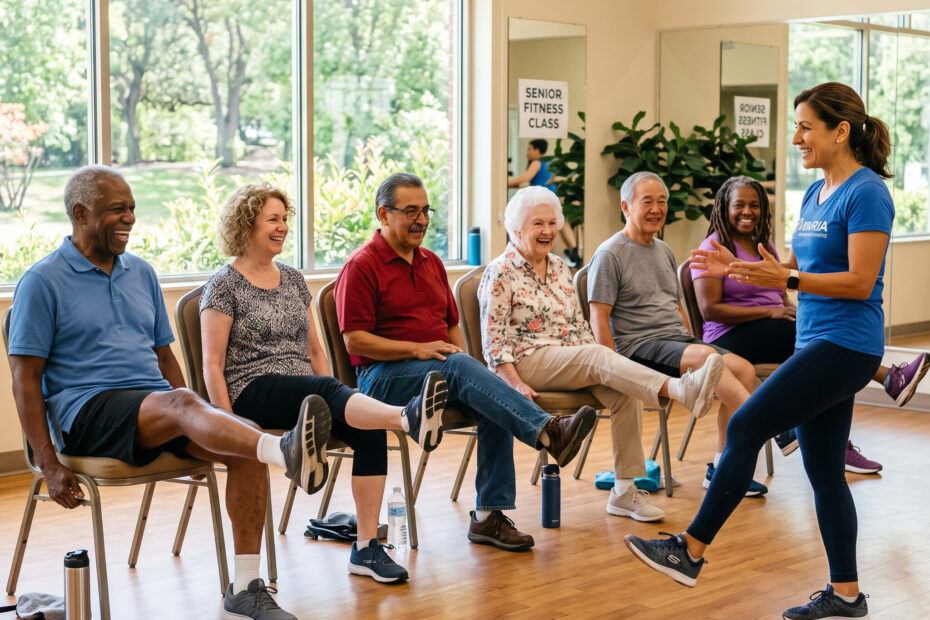
3. Seated Chair Exercises
Simple exercises done while seated in a sturdy chair — such as leg lifts, seated marches, or ankle circles — are a gentle way to maintain circulation and light muscle activation.
These are especially good for seniors just getting started or recovering from injury.
You may not get the same strengthening or conditioning effects as a cardio machine, but the movement is certainly better than nothing.
4. Gentle Yoga or Stretching
Flexibility work can ease knee stiffness and improve the range of motion around the joint.
Look for “chair yoga” or “senior yoga” classes, which are specifically designed to be low-impact and accessible.
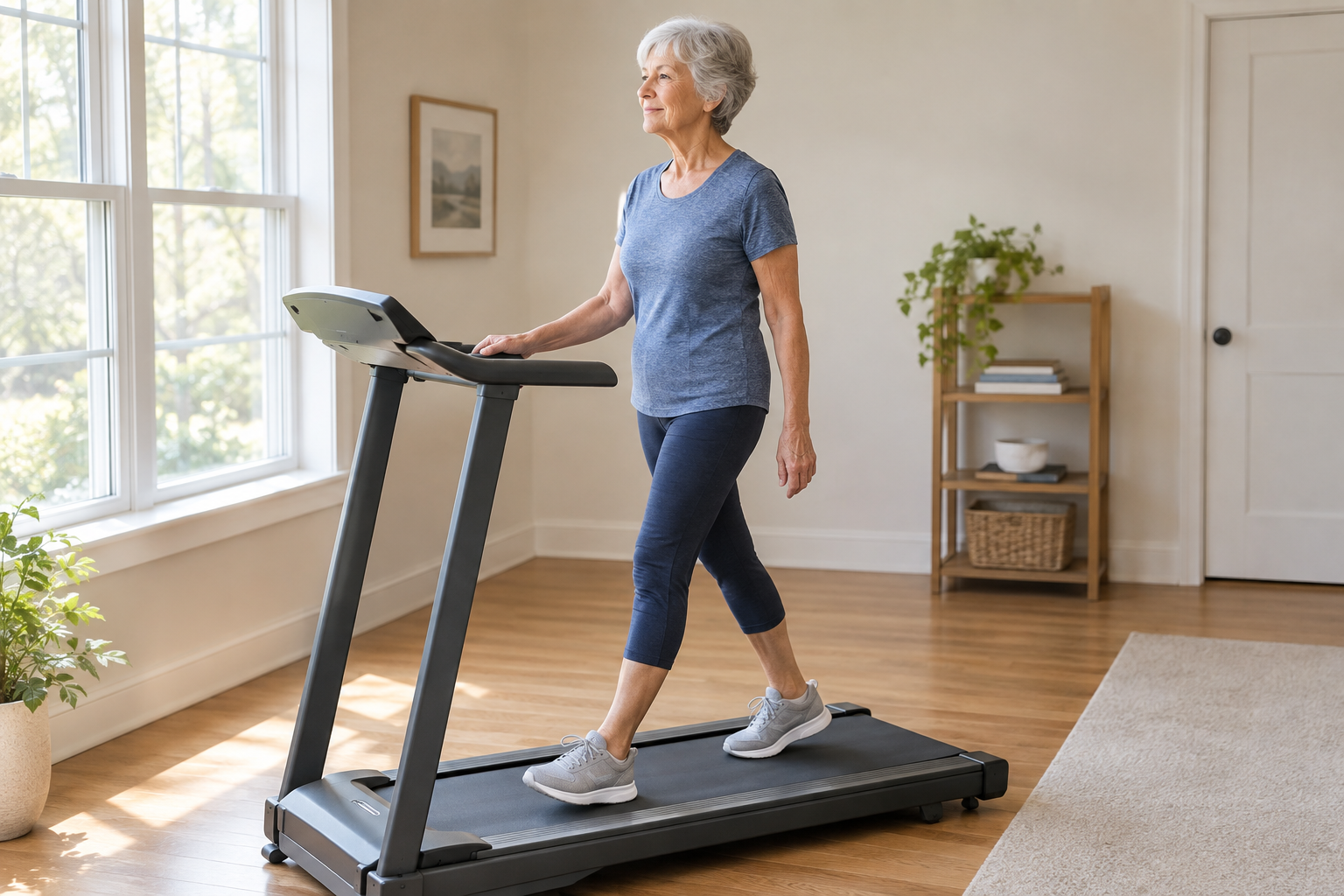
5. Walking (With Modifications)
Walking is generally a joint-friendly activity — but not always for everyone with knee pain.
If walking feels manageable, do it on flat surfaces, wear supportive footwear, and keep sessions shorter.
Listen to your body and keep in mind that the goal is to find an exercise pattern that keeps the pain to a minimum.
Why Many Seniors With Knee Pain Are Turning to Recumbent Cross Trainers
If you’re looking for a single piece of home exercise equipment that checks every box for seniors with knee pain, the recumbent cross trainer is worth a serious look.
Unlike traditional exercise bikes, which only work the lower body, or ellipticals, which require you to stand and bear weight through your joints, a recumbent cross trainer lets you:
- Stay fully seated throughout the entire workout
- Engage both your arms and legs for a full-body, low-impact workout
- Adjust the resistance to match your current fitness level
- Exercise independently in the comfort of your home — no gym required
One of the most highly regarded (and affordable) options in this category is Teeter’s FreeStep Recumbent Cross Trainer.
It features a zero-impact striding motion, reclined seating for back support, and smooth resistance adjustments — all designed with joint-friendly movement in mind.
Teeter offers 3 models to choose from, the LT1, LT3, and LT7, with differences ranging in the amount of features offered.
All models are budget-friendly, compared to more expensive models like the Nu-Step.
Many seniors who can no longer comfortably walk on a treadmill or ride an upright bike have found that a recumbent cross trainer gives them back the ability to exercise consistently.
Tips for Exercising Safely With Knee Pain
No matter which activity you choose, keep these principles in mind:
Start slow. Begin with shorter sessions — even 10 minutes — and gradually build up as your body adjusts. Don’t try to match what you were doing before your knee pain started.
Warm up first. Gentle movement for 5 minutes before exercise helps lubricate the joint and reduce stiffness.
Pay attention to pain signals. Mild muscle fatigue is normal. Sharp, sudden, or worsening joint pain is a signal to stop.
Don’t skip rest days. Allowing your body time to recover is just as important as the exercise itself.
Apply ice after exercise if you experience any swelling or soreness. 15–20 minutes can help reduce inflammation.
Track your progress. Keeping a simple log of how you feel before and after exercise helps you spot patterns and make smart adjustments.
When to Talk to a Doctor
Exercise is generally beneficial for knee pain, but there are situations where you should check in with your physician or physical therapist first:
- Your knee pain is new, severe, or getting progressively worse
- You’ve had recent knee surgery or a significant injury
- You experience swelling, warmth, or redness in the joint
- You’re unsure whether a specific activity is safe for your diagnosis
A physical therapist can be a particularly valuable resource because they can assess your specific situation and build a personalized exercise plan that works with your body, not against it.
Final Thoughts
Knee pain is challenging, but it doesn’t have to mean giving up on exercise.
For most seniors, staying active (with the right approach) is not only safe but genuinely beneficial for long-term joint health.
The key is choosing low-impact activities that keep you moving without stressing already-sensitive joints.
Whether it’s water aerobics, gentle yoga, or a home recumbent cross trainer, there are more options than ever for staying fit, mobile, and energized in your senior years.
Don’t let knee pain be the reason you stop moving. The right movement might just be what your knees need most.
Frequently Asked Questions
Is walking bad for seniors with knee pain?
No — in most cases, walking is one of the best things you can do for achy knees. It strengthens the muscles that support the joint and keeps the cartilage nourished. Start with short, flat walks on even surfaces, wear supportive shoes, and increase your distance gradually. If walking causes sharp pain or swelling that lasts more than a couple of hours afterward, scale back and talk to your doctor or physical therapist.
How often should seniors with knee pain exercise?
Aim for some movement most days of the week. A good starting point is 20–30 minutes of low-impact activity 3–5 days per week, plus gentle strengthening exercises 2–3 times per week. Consistency matters more than intensity — several short sessions are just as valuable as one long workout, and often easier on your joints.
Should I exercise if my knee hurts that day?
Mild, familiar aching is usually fine to work through with gentle movement — in fact, motion often eases stiffness. But sharp pain, new swelling, warmth, or a knee that feels unstable are signals to rest and check with your doctor. A good rule of thumb: discomfort up to a 3 or 4 out of 10 that doesn’t worsen as you move is generally acceptable; anything beyond that means stop.
What exercises should seniors with knee pain avoid?
Skip high-impact activities like running and jumping, deep squats or lunges, and exercises on uneven ground that raise your fall risk. Anything that causes sharp or lingering pain is your body’s way of saying no. Low-impact alternatives — water exercise, recumbent cycling, chair workouts — give you the same benefits without the joint stress.
Can exercise actually make my knee pain better?
Yes. Research consistently shows that regular, appropriate exercise reduces knee pain and improves function — often as effectively as medication for osteoarthritis. Stronger muscles around the knee absorb shock that would otherwise go through the joint, and movement keeps the joint lubricated. The key is choosing knee-friendly activities and progressing slowly.