
Hip arthritis is one of the most common reasons my patients start moving less, and it often starts gradually.
It starts with a stiff first few steps in the morning. Then putting on socks gets harder. Then getting in and out of the car.
Before long, many of my patients are walking less, sitting more and avoiding anything that makes the hip ache.
The problem is that moving less usually makes things worse – the muscles around the hip weaken, the joint stiffens, and everyday tasks take more effort.
The good news is that the right exercises can help you keep moving, stay strong and hold on to the things you want to keep doing.
As a home health physical therapist, I have a ton of experience working with arthritis and I promise you there are things you can do to help.
In this guide, I’ll share the exercises I use most often with my patients who have hip arthritis, a simple routine you can follow at home, and an honest look at what the latest research says you can expect.
This article is for education only. Talk with your doctor or a physical therapist before starting a new exercise program.
What the Research Says (an Honest Look)
Exercise is a first-line treatment for hip arthritis and is a big part of my work as a physical therapist.
And the American College of Rheumatology and the Arthritis Foundation strongly recommend it for people with hip osteoarthritis (2019 ACR/AF guideline).
But I want to be upfront about what the newest evidence shows.
In July 2026, research found that exercise probably reduces pain, but on average by a small amount, about 7 points on a 100-point scale.
And improvements in day-to-day function were also small on average.
The authors were clear that this doesn’t mean you should stop exercising. As co-lead author Michelle Hall put it: “Exercise is recommended as a primary treatment for hip osteoarthritis, and this review doesn’t overturn that.”
As a PT, this doesn’t surprise me.
Honestly, it’s unlikely exercise alone is going to significantly reduce severe arthritic hip pain because exercise can’t reverse changes that have already occurred in the joint.
But what exercise is very good at doing is improving strength and function.
Here’s how I explain it to my patients:
- Averages hide a lot of variation. Some people improve a great deal, others less. The review couldn’t yet tell who benefits most.
- Pain isn’t the only goal. Stronger hips and legs make it easier to stand up from a chair, climb stairs, get in and out of the car and catch yourself if you trip.
- Exercise has benefits beyond the hip. It helps your heart, blood sugar, mood, sleep and balance.
- It’s low cost and low risk. Done sensibly, it’s very unlikely to harm your hip.
So set realistic expectations.
These exercises probably won’t make hip arthritis disappear, but they can help you stay stronger, steadier and more independent – and that’s worth a lot.
Before You Start
Check with your doctor first if your hip pain is new or getting steadily worse, if you’ve recently fallen, if the hip is hot, red or swollen, or if you’ve had hip surgery. If you’ve had a hip replacement, follow your surgeon’s precautions and see my hip replacement recovery guide instead.
Use the hurt-vs-harm rules. Some discomfort during exercise is normal with arthritis. A good rule of thumb many PTs use:
- During exercise, stay at or under about 3 or 4 out of 10 on a 0–10 pain scale, and no more than a couple of points above where you started.
- The next morning, your hip should feel about the same as a normal day. If it’s clearly worse or swollen, do less next time.
I explain this in more detail in my guide to chronic joint pain and physical therapy.
Set yourself up safely. Use a sturdy chair without wheels and a kitchen counter for support. Wear supportive shoes, and clear the floor of rugs and clutter.
Warm up first. A warm shower or a few minutes of walking around the house makes the first movements easier.
The 9 Best Exercises for Hip Arthritis
I’ve split these into three groups: gentle mobility to loosen the hip, strengthening to support it, and functional exercises that carry over to everyday life.
Start with the easier version of each and progress slowly.
Mobility: loosen up the hip
1. Heel slides
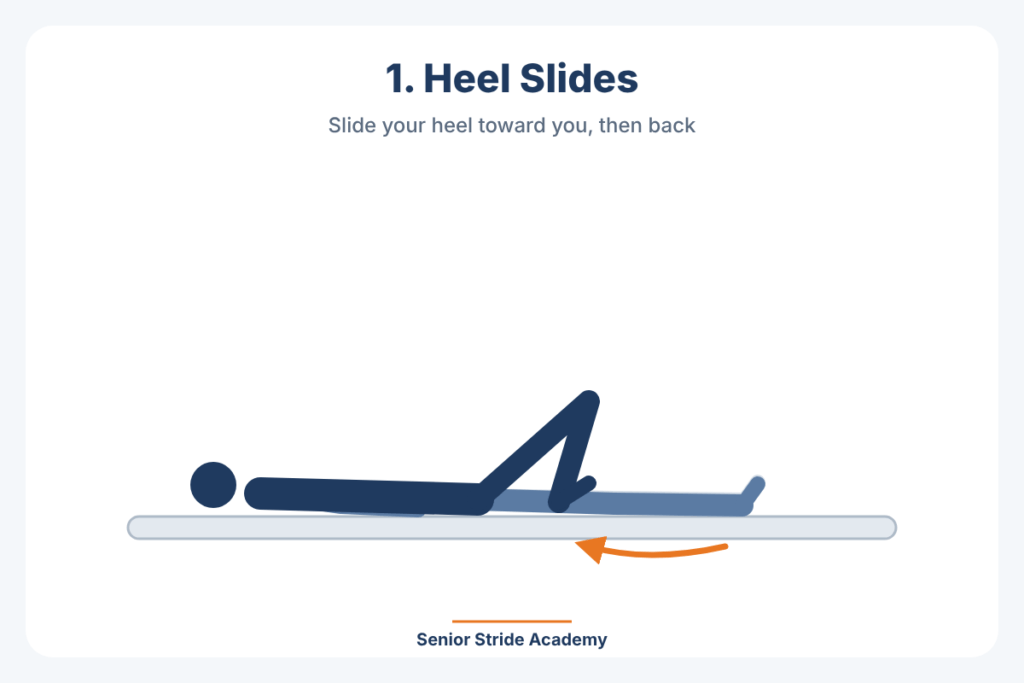
Lie on your back on a bed with both legs straight. Slowly slide one heel toward your buttock, bending the hip and knee as far as is comfortable. Slide it back down.
- Reps: 10 per side
- Easier: Smaller range
- Harder: Hold 3 seconds at the top
2. Lying hip rotations (supine clamshells)
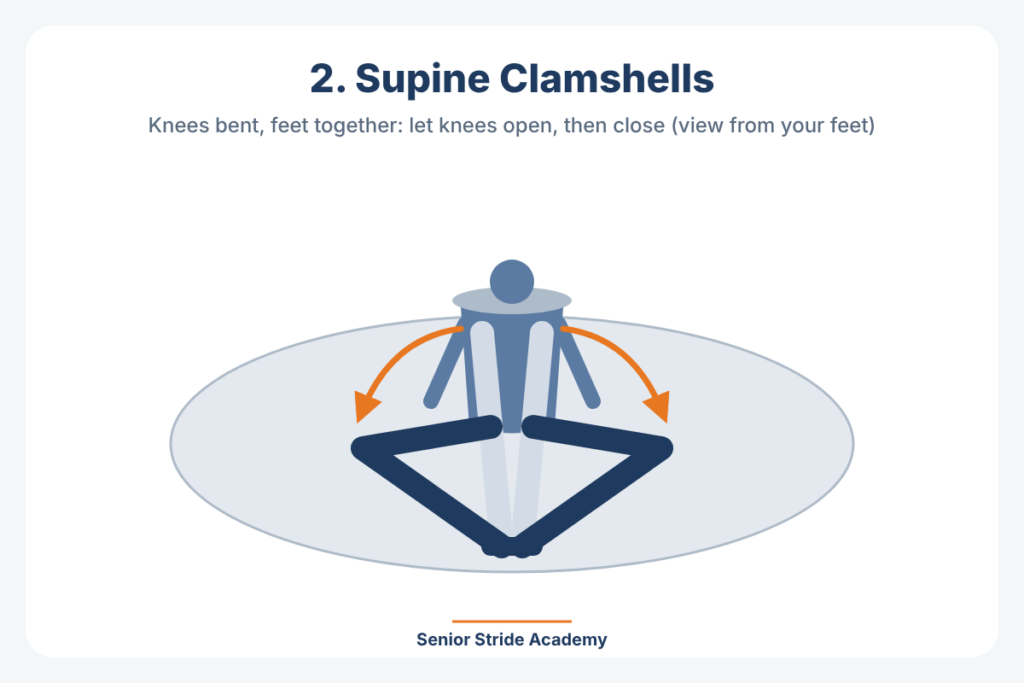
Lie on your back with your knees bent and your feet on the bed. Gently open your knees apart as far as they will comfortably go, pause, and bring them back together. Move slowly and stay in a pain-free range. (This works great as a morning warm up before getting out of bed).
- Reps: 10 to 15
- Easier: One leg at a time
- Harder: Place a resistance band around knees
3. Seated hip march
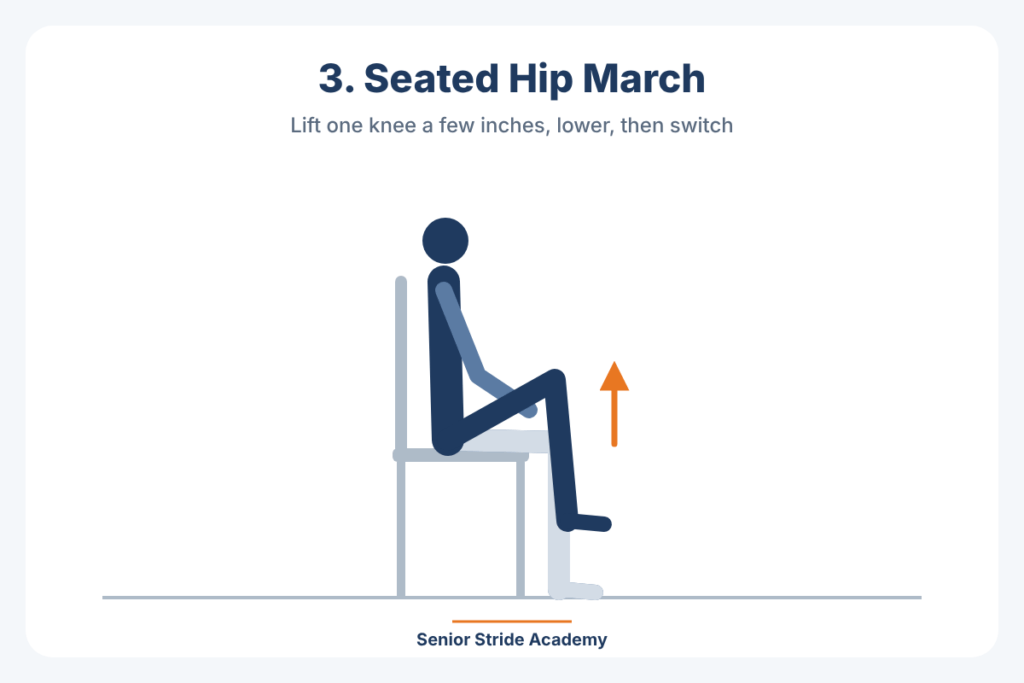
Sit tall near the front of a sturdy chair. Lift one knee a few inches, lower it, then switch. It’s simple, but it works the hip flexors and keeps the hip moving.
- Reps: 10 per side
- Harder: Hold 2–3 seconds at the top, or add a light ankle weight
Strength: support the hip
4. Glute bridge
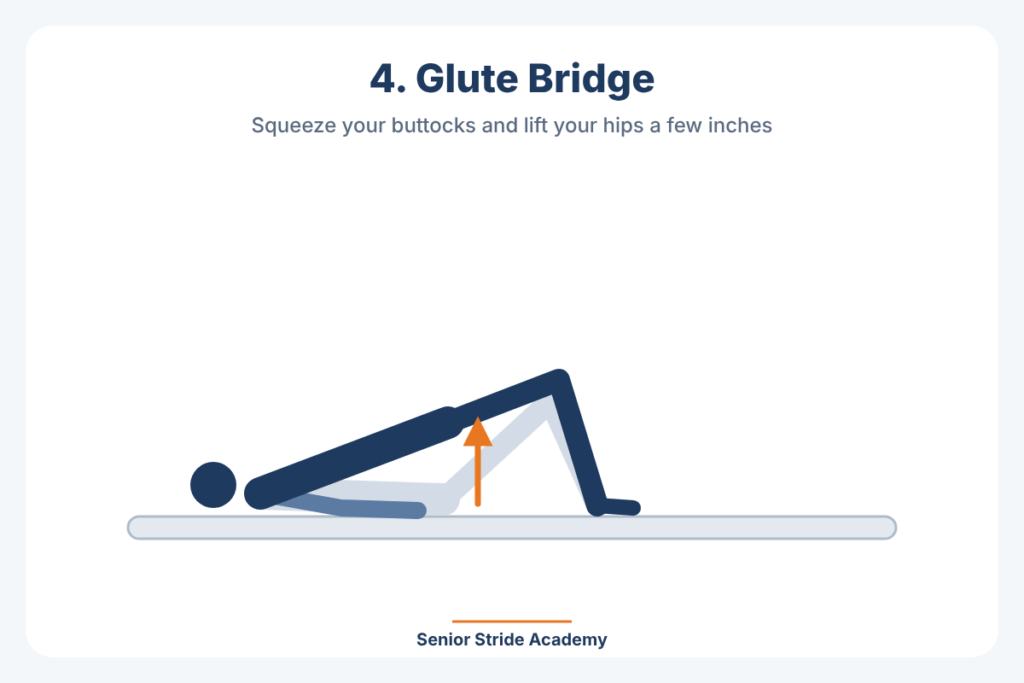
Lie on your back with knees bent and feet flat on the bed or floor. Squeeze your buttocks and lift your hips a few inches. Lower slowly.
- Reps: 8 to 12
- Easier: Lift only an inch or two
- Harder: Hold 5 seconds at the top
5. Side-lying leg lift
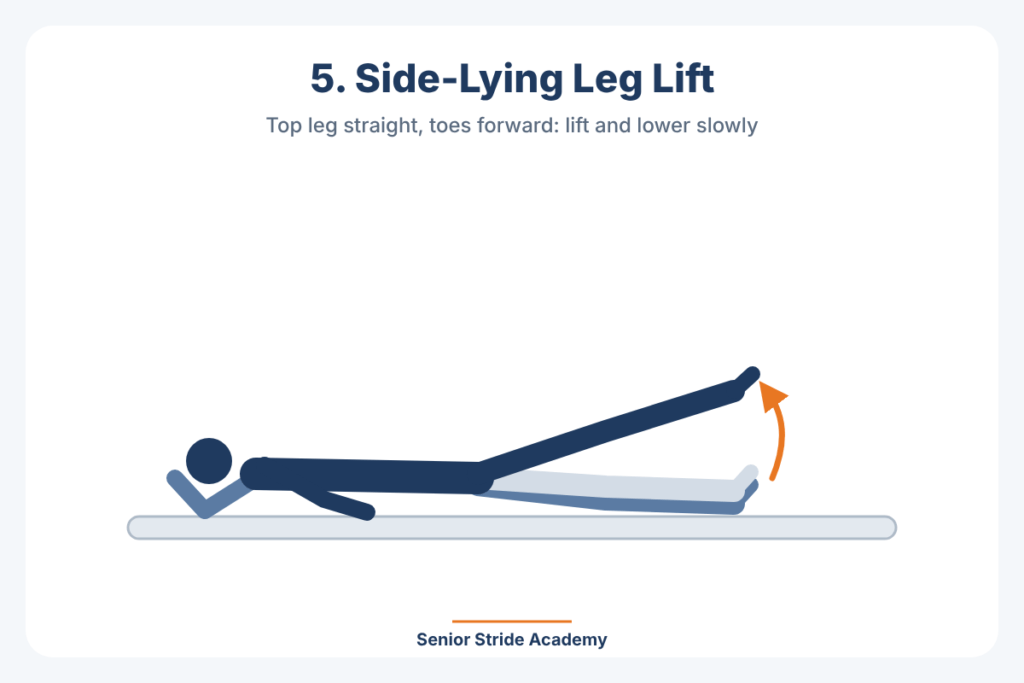
Lie on your side with your bottom knee bent for balance and your top leg straight. Lift the top leg toward the ceiling, keeping your toes pointed forward, then lower slowly. This strengthens the muscles on the side of the hip that keep your pelvis level when you walk.
- Reps: 8 to 12 per side
- Easier: Do it standing instead (exercise 6)
- If lying on the painful hip bothers you: Do the standing version
6. Standing hip abduction (side leg raise)
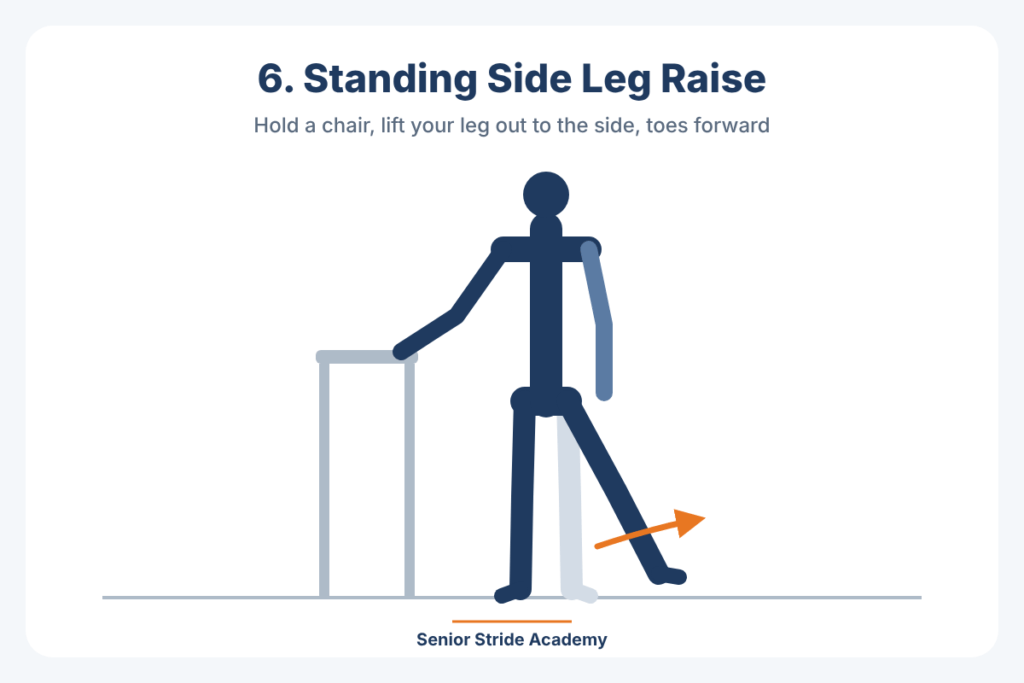
Stand tall holding the back of a sturdy chair or the counter. Lift one leg out to the side, keeping your toes pointed forward and your body upright. Lower slowly.
- Reps: 10 per side
- Harder: Add a light resistance band around your ankles
7. Standing hip extension
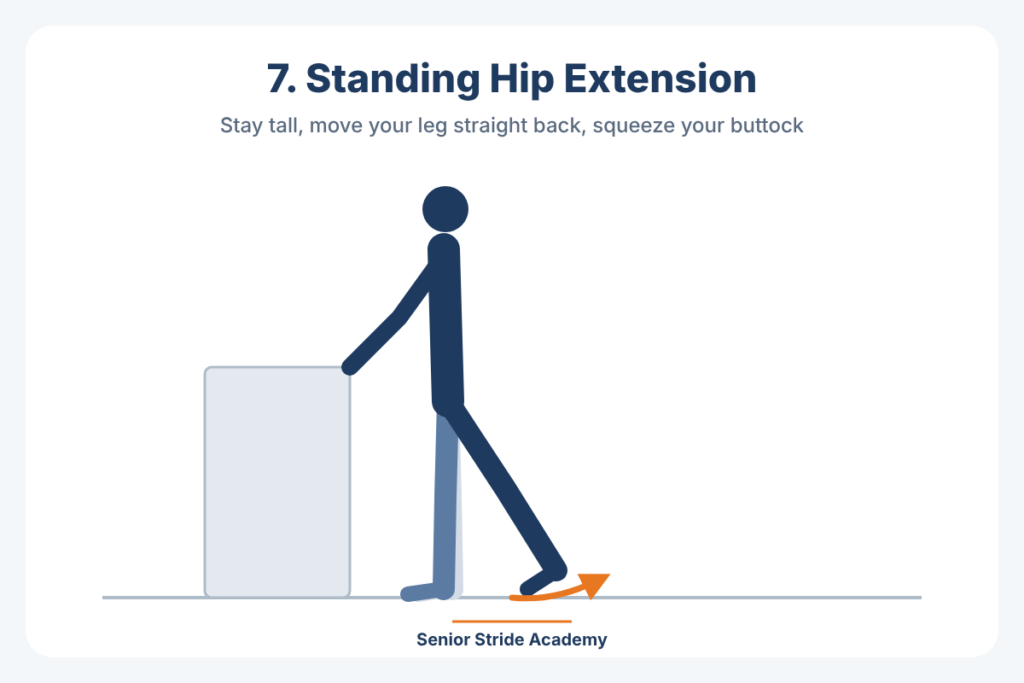
Hold the chair or counter. Keeping your body upright and knee straight, move one leg straight back a few inches, squeezing your buttock. Don’t lean forward. Return slowly.
- Reps: 10 per side
- Harder: Add a light resistance band
Function: carry over to daily life
8. Sit-to-stand
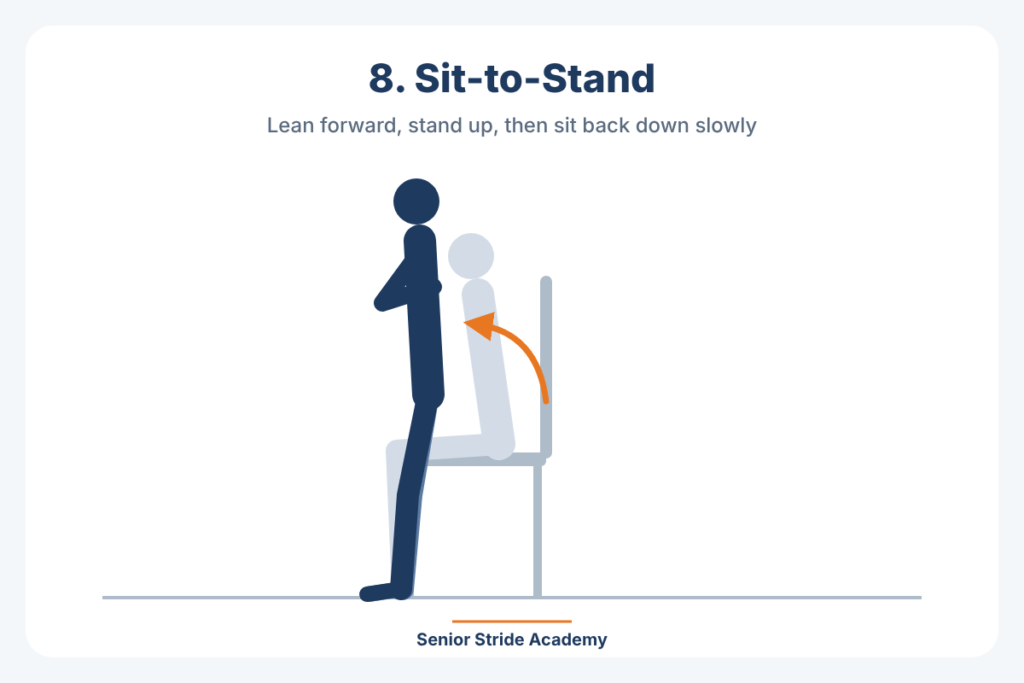
Sit near the front of a sturdy chair with your feet under your knees. Lean forward slightly and stand up, then sit back down slowly and with control.
This is one of the most useful exercises there is, because it builds the strength you use every time you get up from a chair, toilet or car seat. (I give this exercise to almost all of my patients).
- Reps: 5 to 10
- Easier: Use your hands on the armrests, or add a cushion to raise the seat
- Harder: Arms crossed over your chest, or sit down more slowly
Want to see how your leg strength compares? Try my free 30-second chair stand test.
9. Step-ups
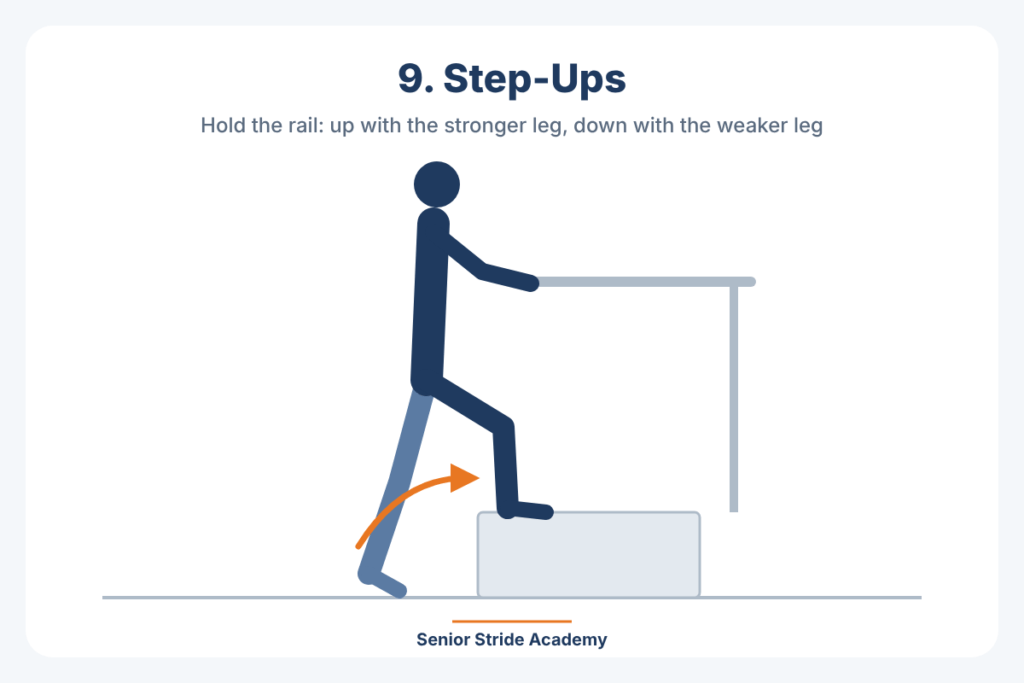
Stand facing the bottom step of a staircase, holding the railing. Step up with your stronger leg, bring the other foot up, then step down with the weaker leg first. (Remember: “up with the good, down with the bad.”)
- Reps: 5 to 10 per side
- Easier: Use a lower step, like a sturdy aerobic step
- Harder: Lead with the arthritic leg going up
A Simple Weekly Routine
You don’t need to do all nine exercises every day. Here’s a simple plan that fits the CDC’s recommendation of muscle-strengthening at least 2 days a week, plus regular low-impact cardio.
| Day | What to do | Time |
|---|---|---|
| Monday | Mobility (1–3) + Strength (4–7) + Sit-to-stand | 15–20 min |
| Tuesday | Low-impact cardio (walk, bike or seated stepper) | 10–30 min |
| Wednesday | Mobility (1–3) only | 5–10 min |
| Thursday | Mobility (1–3) + Strength (4–7) + Step-ups | 15–20 min |
| Friday | Low-impact cardio | 10–30 min |
| Saturday | Mobility + Sit-to-stand | 10 min |
| Sunday | Rest or an easy walk | — |
Weeks 1–2: One set of each exercise, at the easier version. Do your 24-hour check after each session.
Weeks 3–4: Add a second set, or move to the regular version of exercises that feel easy.
Week 5 and beyond: Try the harder versions, one exercise at a time. Change only one thing at a time so you know what caused a flare if your hip complains.
On bad days, do the mobility exercises only. A few minutes of gentle movement usually helps more than complete rest.
Remember, movement is an arthritic joint’s best friend!
Exercises to Modify or Avoid
Most movements are fine with hip arthritis if you stay in a comfortable range. These are the ones I’m most careful with though:
- Deep squats and lunges. Deep hip bending often aggravates arthritic hips. Use the sit-to-stand instead, and keep the chair high enough to be comfortable.
- Crossing your legs or deep figure-4 stretches. These push the hip into positions that often pinch. Stretch gently, or skip them.
- High-impact activity. Jumping, running and step aerobics put a lot of force through the hip. Low-impact cardio is usually a better choice.
- Long periods of sitting. Not an exercise, but worth mentioning. Get up and move for a minute or two every 30 to 60 minutes.
- Pushing through sharp pain. Sharp, catching or giving-way pain is a signal to stop and check with your doctor or PT.
The best low-impact cardio for hip arthritis
Strength exercises are only part of the picture. Regular cardio helps your heart, your weight and your overall stamina.
The best options for arthritic hips keep your feet supported and avoid pounding:
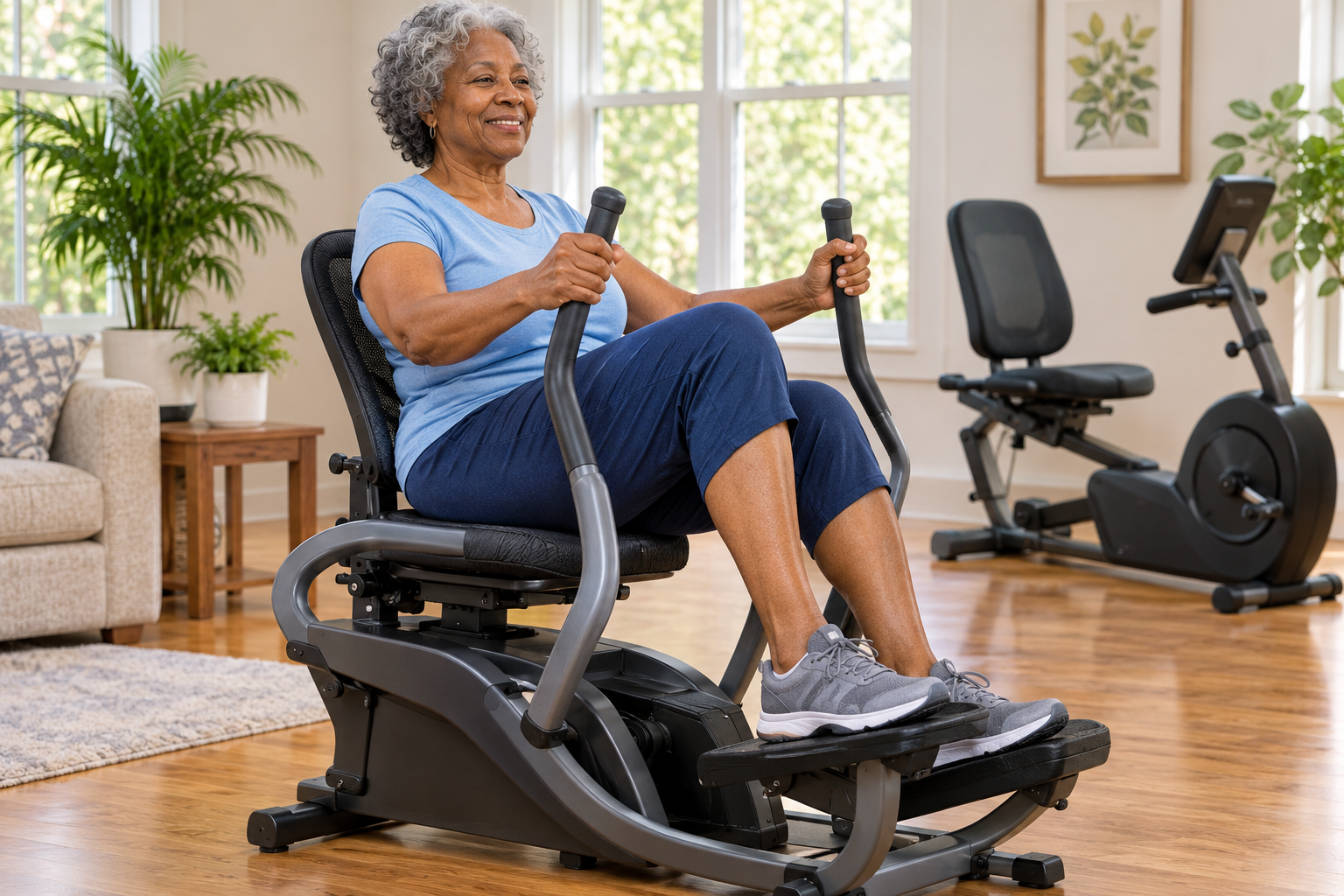
- Seated recumbent cross trainer (like the Teeter FreeStep): Seated, works your arms too, moves the hip through a moderate range
- Recumbent bike: Easy to start at low resistance; a step-through frame helps if getting your leg over is hard
- Elliptical: A good standing option if your balance is steady
- Walking: Short, frequent walks on flat ground often feel better than one long walk
- Water exercise: The water supports your weight, which many people with hip arthritis find very comfortable
For my specific machine picks, see my guide to the best exercise equipment for arthritis.
Final Thoughts
Exercise won’t cure hip arthritis, and I won’t pretend otherwise.
But staying strong and moving regularly is one of the best ways to keep doing the things you care about, like walking the dog, getting in and out of the car, or playing with the grandkids.
Start with the easier versions, follow the hurt-vs-harm rules, and build up slowly. Consistency matters much more than intensity.
If you’re not sure where to start, or if your hip is getting worse, a physical therapist can tailor a personalized program to you.
Frequently Asked Questions
What is the best exercise for hip arthritis?
There isn’t one best exercise. The latest research didn’t find any single type that worked better than the others. A mix of gentle mobility, hip strengthening (like bridges and side leg raises) and functional exercises (like sit-to-stands) is a good place to start, plus regular low-impact cardio.
Does exercise really help hip arthritis?
On average, exercise reduces hip arthritis pain and improves function by a modest amount, according to a 2026 Cochrane review. Some people benefit more than others. Exercise is still a recommended first-line treatment because it also builds strength, helps with everyday tasks and benefits your overall health.
Is walking good for hip arthritis?
For most people, yes. Start with short walks on flat ground and build up gradually. If longer walks flare your hip, try several shorter walks across the day, or mix in a seated machine like a recumbent bike.
How often should I do hip exercises?
Strengthening exercises 2 to 3 days a week is a good goal, with gentle mobility exercises on most days. The CDC recommends at least 2 days a week of muscle-strengthening activity for adults with arthritis.
What exercises should I avoid with hip arthritis?
Be careful with deep squats, deep lunges, crossing your legs and high-impact activities like jumping or running. Stop any movement that causes sharp, catching or worsening pain.
When should I consider a hip replacement?
That’s a conversation for your doctor, usually when pain and stiffness keep you from daily activities despite exercise, weight management and other treatments. Getting stronger before surgery can also make recovery easier. See my hip replacement recovery guide.