
“Should I still be walking on these knees?”
As a home health physical therapist, I hear some version of that question almost every week.
Usually it comes from someone who’s been told their knee is “bone on bone,” or who’s afraid every step is wearing the joint down a little more.
So they walk less. Then their legs get weaker, their knees get stiffer, and walking gets harder.
Here’s the good news: for most people with knee arthritis, walking is one of the best things you can do. The trick is doing the right amount, at the right pace, on the right surface.
In this guide, I’ll walk you through what the research actually says, how many steps to aim for, a simple plan to build up, and what to do on days when your knees aren’t cooperating.
This post contains affiliate links. If you buy through them, I may earn a small commission at no extra cost to you. This article is for education only. Talk with your doctor or a physical therapist before starting a new exercise program.
The Short Answer
- Yes, walking is good for knee arthritis. In a large study of adults 50 and older with knee arthritis, people who walked for exercise were less likely to develop frequent knee pain than people who didn’t.
- Walking doesn’t “wear out” your knees. For most people, the joint does better with regular, moderate movement than with rest.
- Aim for about 6,000 steps a day over time. That’s the number linked to fewer mobility problems in people with knee arthritis. If you’re well below that, any increase helps.
- Start where you are and build slowly. Add a few minutes or a few hundred steps at a time.
- Use the pain rules. Mild discomfort is okay. Pain should stay around 3 to 4 out of 10 while walking and settle back down by the next morning.
What the Research Says
Walking and knee pain
A 2022 study in Arthritis & Rheumatology followed 1,212 adults age 50 and older with knee arthritis from the long-running Osteoarthritis Initiative.
People who walked for exercise had 40% lower odds of developing new frequent knee pain over about four years than people who didn’t.
Walkers also had slightly less narrowing of the joint space on X-rays.
To be fair about what the study showed: it was observational, so it can’t prove walking caused the difference.
And among people who already had frequent knee pain, walking wasn’t linked to that pain getting better.
Still, there was no sign that walking made knees worse, and the lead researcher noted there may still be a benefit even if you already have daily knee pain.
Walking and staying independent
A 2014 study from Boston University measured daily steps in 1,788 people with or at risk for knee arthritis, then checked their mobility two years later.
Each extra 1,000 steps a day was linked to a 16% to 18% lower risk of developing functional limitations, like walking slowly or having trouble with daily tasks.
Walking fewer than about 6,000 steps a day was the best predictor of who developed those problems.
That 6,000 counts every step you take all day, including walking around the house, not just a dedicated walk.
Now I know that sounds like a lot of steps and I also know that most of the seniors I work with walk a lot less than that – but keep in mind that every extra 1,000 steps showed a significant decrease in risk.
So no matter where you are, walking more is beneficial (even if you never reach 6,000 steps/day).
The “wear and tear” myth
Many of my patients picture their knee like a tire: the more miles you put on it, the faster it wears out.
But that isn’t how cartilage works.
Cartilage doesn’t have its own blood supply. It gets nourished as the joint is loaded and unloaded, so moderate, regular movement helps it, and long stretches of sitting don’t.
And keep in mind that the American College of Rheumatology and the Arthritis Foundation strongly recommend exercise, including walking, for people with knee osteoarthritis.
What does cause trouble is too much, too fast: a big jump in distance, a long hike on hills, or pushing through sharp pain.
That’s what the rest of this guide is about.
How Much and How Far Should You Walk?
Step 1: Find your starting point
Wear a pedometer, fitness tracker or your phone for three or four normal days and take the average – that’s your baseline.
If you’d rather think in minutes, find how long you can walk at a comfortable pace on a typical day without your knees flaring that evening or the next morning.
For some people that’s 5 minutes; for others it’s 30.
Start from what you can do on a so-so day, not your best day. Building from your best day is how most people end up in a flare.
Step 2: Use the pain rules
These are the same hurt-vs-harm rules I use with all my arthritis patients (more in my guide to chronic joint pain and physical therapy):
- During your walk: Stay at or under about 3 or 4 out of 10 on a 0–10 pain scale, and no more than a couple of points above where you started.
- The next morning: Your knees should feel about the same as usual. A little stiffness that loosens up is fine. More pain, more swelling or a new limp means you did too much. Go back to your previous amount.
Mild aching while you walk with arthritis is common and generally safe. Sharp pain, pain that keeps climbing or a knee that gives way is a signal to stop.
Step 3: Build up slowly
| Weeks | Daily goal | How to get there |
|---|---|---|
| 1–2 | Baseline + 500 steps (about 5 more minutes) | Add one short walk, or walk a few minutes longer |
| 3–4 | Baseline + 1,000 steps | Two or three short walks a day |
| 5–6 | Baseline + 1,500 steps | Lengthen one walk, keep the others short |
| 7+ | Work toward 6,000+ steps if you’re able | Add about 500 steps every week or two |
A few tips that make this easier:
- Shorter, more often beats one long walk. Three 10-minute walks are usually easier on arthritic knees than one 30-minute walk, and they count the same.
- Change one thing at a time. Add distance or speed or hills, never all at once, so you know what caused it if your knees complain.
- Hold steady on bad days. On flare days, go shorter, not to zero.
For a full structured plan, see my senior-friendly walking program for beginners.
How to Make Walking Easier on Your Knees
- Wear supportive, cushioned shoes. Look for a firm heel, good cushioning and a wide toe box. Replace walking shoes when the cushioning flattens, often every 300 to 500 miles. See my guide to footwear for seniors.
- Choose flat, even surfaces. A track, a mall, a paved path or a treadmill is easier on arthritic knees than uneven grass, gravel or trails.
- Go easy on hills and stairs. Walking downhill and going down stairs put the most load through the front of the knee. Shorten your steps on the way down, and use handrails.
- Warm up first. Start at a slow pace for the first 3 to 5 minutes. Many people with arthritis find their knees loosen up after the first few minutes.
- Use a cane if it helps. A cane held in the hand opposite your sorer knee takes a meaningful amount of load off that knee. Using one doesn’t mean you’re giving in.
- Strengthen your legs too. Stronger thigh and hip muscles take load off the knee joint. Even a few sit-to-stands from a sturdy chair on most days helps.
- Use heat before, ice after if you need it. A warm shower or heating pad before a walk can ease stiffness, and an ice pack afterward can calm a knee that tends to swell.
When Walking Hurts Too Much
Some days, or some seasons, walking just isn’t comfortable. That doesn’t mean you have to stop moving. It usually means switching to something with less load on the knee for a while.
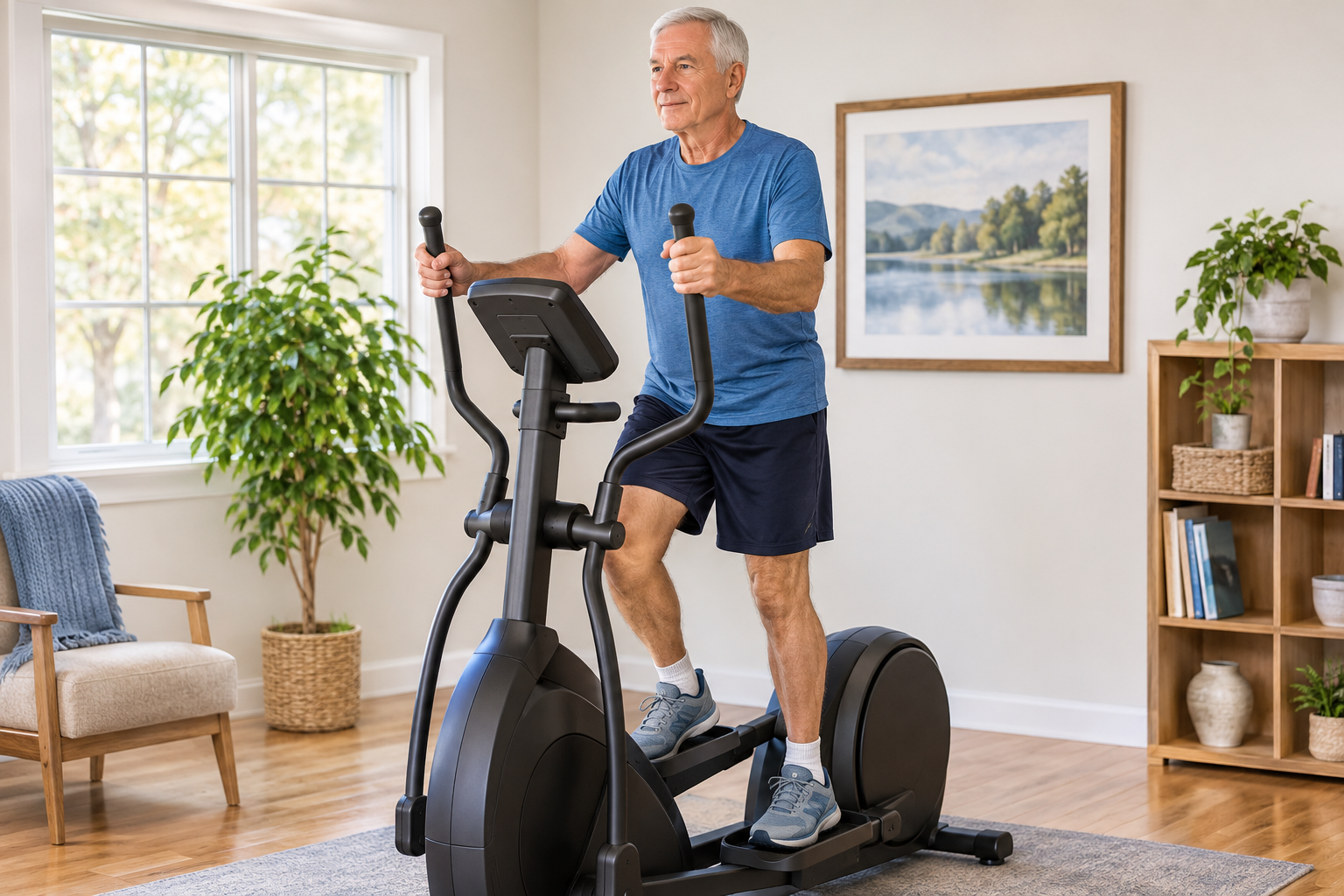
Walk on a treadmill
A treadmill gives you a flat, predictable surface, handrails to hold, and full control over speed.
You can walk at a slow, steady pace and stop the moment your knees complain.
For arthritic knees, I look for a low step-up height, long handrails and speed controls you can reach without letting go. Keep the incline flat or very low at first.
- Horizon T101: My top budget walking treadmill, with a low step-up and speed and incline dials right on the handrails. See the Horizon T101.
- Sole F63: A sturdy, popular option with handrail controls and a 20″ x 60″ belt. See the Sole F63.
More info: Treadmill safety features checklist
Switch to a seated machine
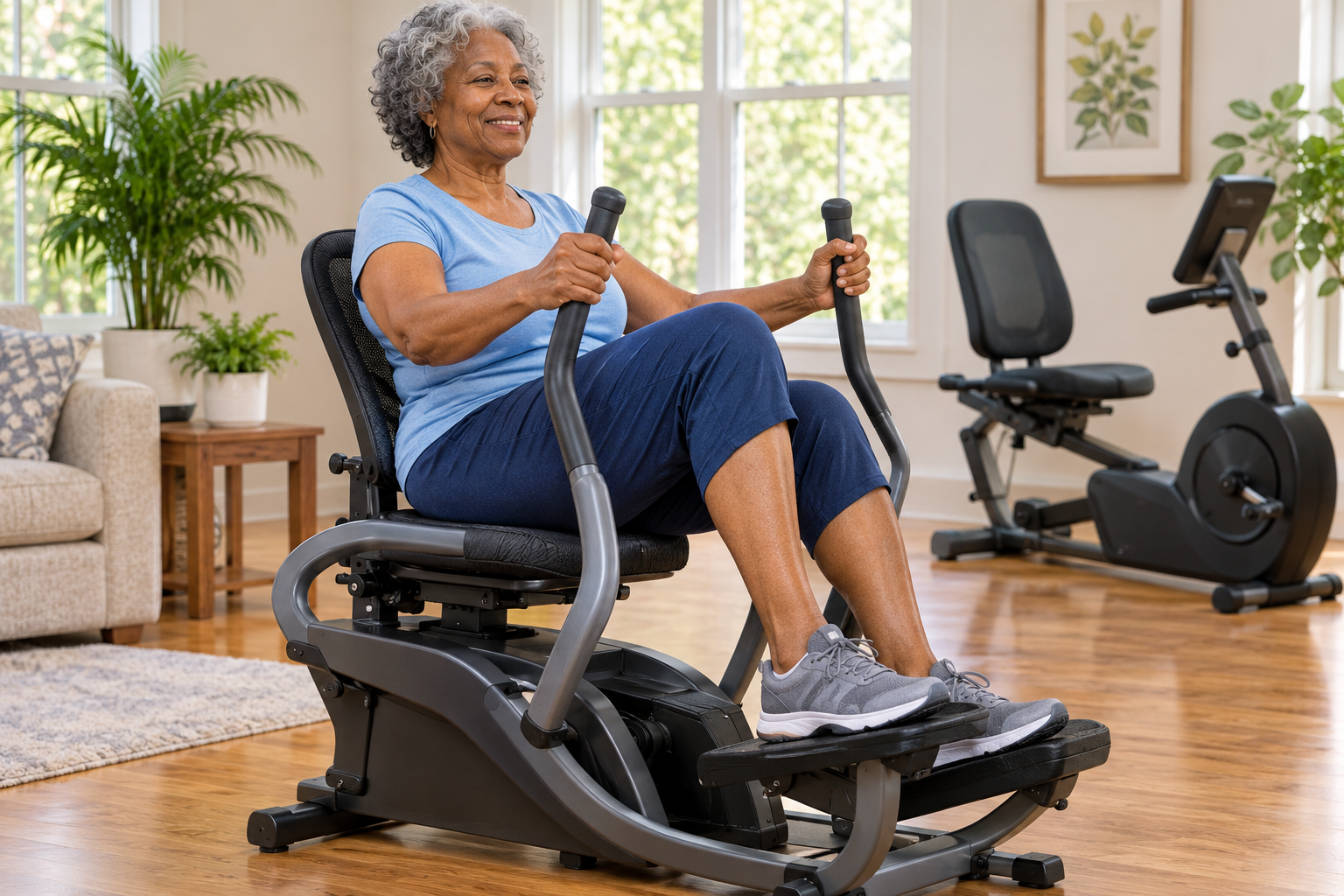
If walking flares your knees even on a treadmill, a seated machine lets you keep your legs strong and your heart working with much less load through the knee.
- Teeter FreeStep: A seated stepper that keeps your knees moving in a straight line instead of a big circle. Many of my patients with knee arthritis find it the most comfortable option. See the Teeter FreeSteps.
- Recumbent bike: Another good option. Set the seat far enough back that your knee doesn’t bend sharply at the top of the stroke. Sole’s R92 is a great, affordable option for seniors. See the Sole R92.
More: FreeStep vs recumbent bike and best exercise equipment for arthritis
Try the pool
Walking in waist- or chest-deep water takes much of your body weight off your knees.
Many community pools offer water walking or arthritis aquatic classes.
When to see your doctor or a PT
- Your knee is hot, red or very swollen
- It locks, catches or gives way
- You can’t put weight on it
- Pain keeps getting worse over a couple of weeks even after cutting back
- You’ve been building up for a month or two and still can’t walk as far as you need for daily life
A physical therapist can check your walking, strengthen the muscles that support your knee, and help you find the right amount for you.
Final Thoughts
If you have knee arthritis, walking is one of the best tools you have.
It’s free, it keeps your legs strong, and the research suggests it can help protect you from more knee pain and from losing independence down the road.
Start where you are, build slowly, follow the pain rules and don’t be afraid to switch to a treadmill or seated machine on the hard days.
Consistency matters much more than distance.
Frequently Asked Questions
Is walking good or bad for knee arthritis?
For most people, it’s good. In a large study of adults 50 and older with knee arthritis, people who walked for exercise had 40% lower odds of developing frequent knee pain. The key is building up gradually and staying within the pain rules.
Does walking make knee arthritis worse?
Regular, moderate walking isn’t linked to faster worsening of knee arthritis. In the same study, walkers actually had slightly less joint space narrowing on X-rays. Sudden big jumps in distance, steep hills or long hikes can trigger a flare, though, so build up slowly.
How many steps a day should I walk with knee arthritis?
Research suggests about 6,000 steps a day is linked to fewer mobility problems over time. That counts every step you take, not just exercise walks. If you’re far below that, start where you are and add about 500 steps every week or two.
How far should I walk with knee arthritis?
There’s no single distance. Start with the amount you can walk on a typical day without your knees feeling worse the next morning, then add a few minutes at a time. Several short walks are often easier than one long one.
Should I walk if my knee is “bone on bone”?
Often, yes. X-ray findings don’t always match how much a knee can do, and many people with severe arthritis on X-ray still walk comfortably. Start with short walks on flat ground, use a cane if it helps, and talk with your doctor or PT about what’s right for you.
Is a treadmill better than walking outside for knee arthritis?
A treadmill gives you a flat, predictable surface and handrails, which many people with arthritic knees find easier. Outdoor walking on flat, even paths works just as well if your balance is good. Both count.