Falls are the leading cause of injury among adults 65 and older and a disproportionate number of them happen at night.
Dim lighting, groggy reflexes, and the disorientation of waking suddenly create a perfect storm of fall risk.
The good news: most nighttime falls are preventable with a few targeted changes to your environment, routine, and physical habits.
Here’s what you need to know.
Why Nighttime Falls Are Especially Dangerous
Falling at 2 a.m. is different from falling during the day.
You’re less alert, help may not be immediately available, and the path from bed to bathroom is one most people navigate on autopilot (often without turning on a single light).
The most common culprits are getting up too quickly (which causes blood pressure to drop and triggers dizziness), poor lighting, loose rugs or cords underfoot, medication side effects, and the urgency of rushing to the bathroom in the middle of the night.
Understanding the “why” is the first step to addressing it.
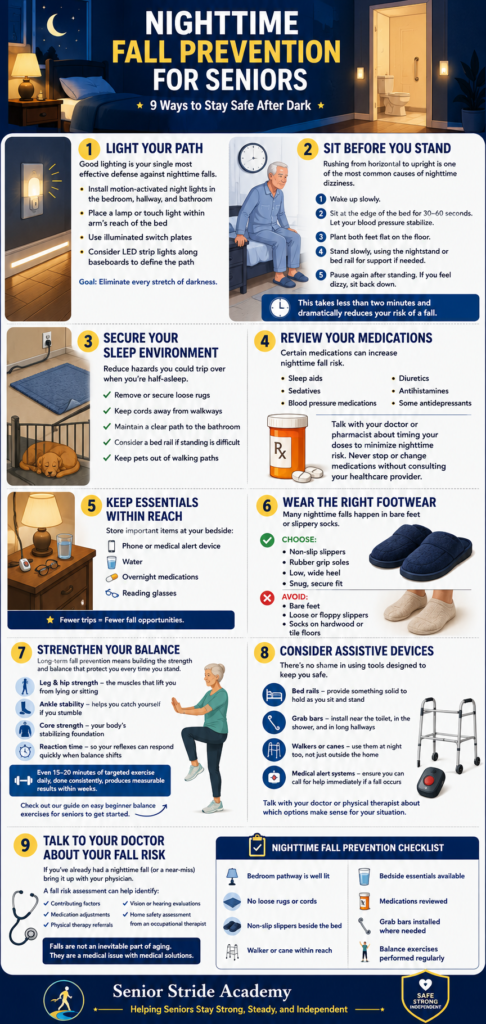
1. Light Your Path
Good lighting is your single most effective defense against nighttime falls.
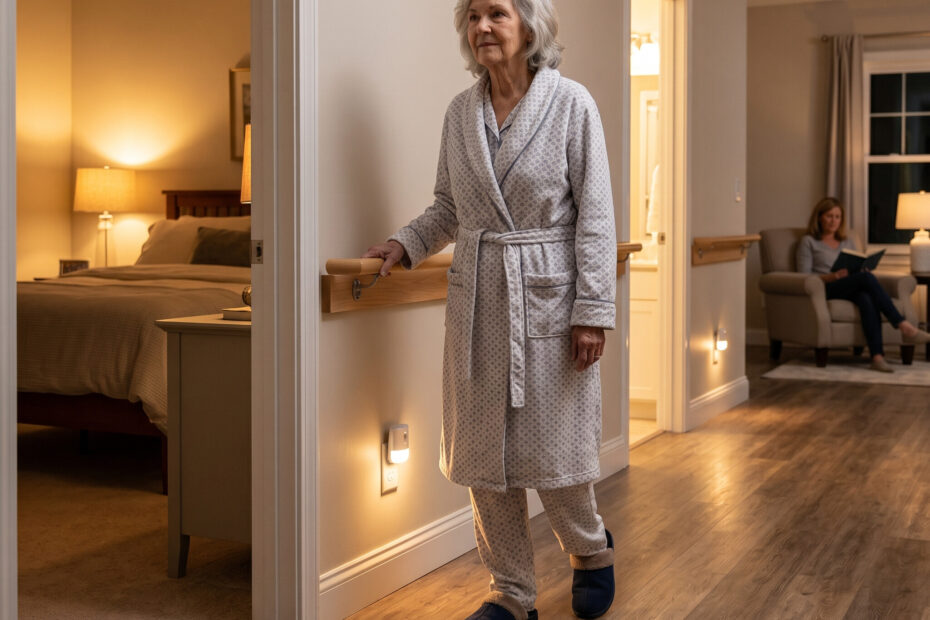
Install motion-activated night lights in the bedroom, hallway, and bathroom so there’s no fumbling for switches.
Place a lamp or touch light within arm’s reach of the bed so you can turn it on before you even stand up.
Illuminated switch plates at every doorway help too, and LED strip lights along baseboards can define your walking path without the harshness of overhead lighting.
The goal is simple – eliminate every stretch of darkness between your bed and the bathroom.
2. Sit Before You Stand
Rushing from horizontal to upright is one of the most common causes of nighttime dizziness. Train yourself to follow this simple sequence every time you wake up:
- Wake up slowly. Don’t jerk upright at an alarm or noise.
- Sit at the edge of the bed for 30–60 seconds. Let your blood pressure stabilize.
- Plant both feet flat on the floor before you push yourself to standing.
- Stand slowly, using the nightstand or bed rail for support if needed.
- Pause again after standing. If you feel dizzy, sit back down.
This takes less than two minutes and dramatically reduces your risk of a dizzy-spell fall.
3. Secure Your Sleep Environment
Take a daylight tour of your bedroom and the path to your bathroom and then imagine navigating it half-asleep at 3 a.m.
Loose rugs are among the most common tripping hazards; secure them with non-slip backing or remove them entirely.
Route electrical cords along walls and away from walking paths and make sure furniture placement leaves a clear, wide path from bed to door.
If your bed sits low to the ground, a bed rail or riser can make standing significantly easier.
And if a pet sleeps on the floor near your walking path, consider gating them out of the bedroom at night – a dog underfoot in the dark is a real fall risk.
4. Review Your Medications
Certain medications significantly increase nighttime fall risk, including sleep aids, sedatives, blood pressure medications, diuretics, antihistamines, and some antidepressants.
Talk with your doctor or pharmacist about timing your doses to minimize nighttime risk – diuretics taken earlier in the day, for example, may reduce how often you need to get up at night.
Never stop or change medications without consulting your healthcare provider first, but don’t hesitate to raise the conversation.
5. Keep Essentials Within Reach
Reduce the number of nighttime trips you need to take by keeping key items at your bedside: a phone or medical alert device, a glass of water, any medications you take overnight, and your reading glasses if you need them to navigate safely.
Fewer unnecessary trips means fewer opportunities for a fall.
6. Wear the Right Footwear
Many nighttime falls happen in bare feet or slippery socks.
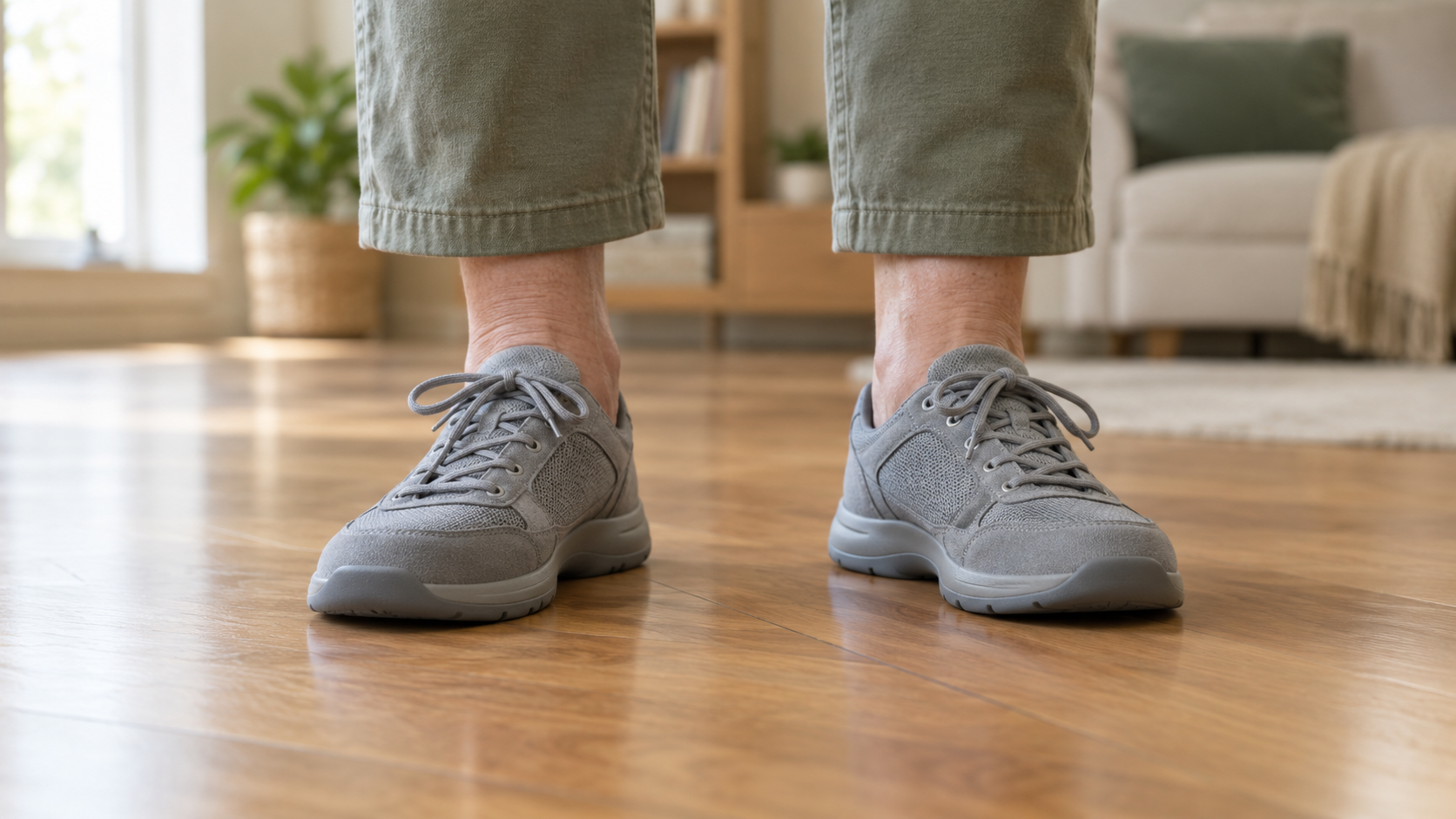
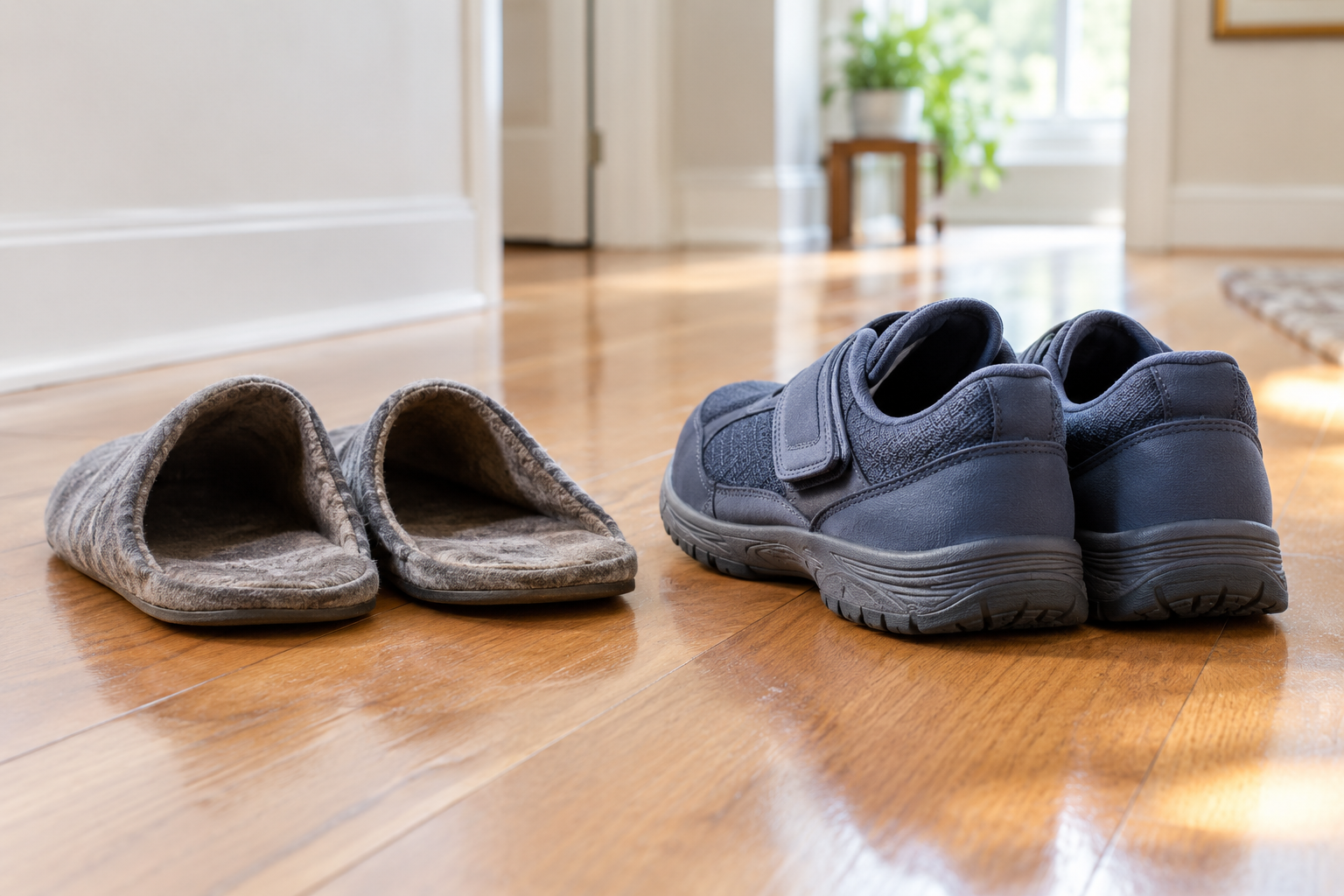
Keep a pair of non-slip slippers right beside the bed and slip them on before you stand. Look for ones with rubber or grip soles, a low wide heel, and a snug fit.
Floppy slippers are their own hazard.
And avoid walking on hardwood or tile floors in socks alone; even so-called “grip” socks can be less effective than a proper soled shoe.
7. Strengthen Your Balance
Long-term fall prevention means building the strength and balance that protect you every time you stand.
Consistent lower-body and balance training (the kind offered in Senior Stride Academy’s programs) can reduce fall risk by 30–40% (according to CDC research).
The most important areas to develop are leg and hip strength (the muscles that lift you from lying or sitting), ankle stability (which helps you catch yourself if you stumble), core strength (your body’s stabilizing foundation), and reaction time (so your reflexes can respond quickly when balance shifts).
Even 15–20 minutes of targeted exercise daily, done consistently, produces measurable results within weeks.
For a step-by-step plan, our Strong & Steady 21-Day Balance Program walks you through gentle, progressive exercises designed by a physical therapist to help prevent falls.
8. Consider Assistive Devices
There’s no shame in using tools designed to keep you safe.
Bed rails attach to the bed frame and give you something solid to hold as you sit and stand.
Grab bars near the toilet and in the shower are well-known, but consider one in the hallway as well if the path is long.
If you already use a walker or cane outside the house, use it at night too – the risk doesn’t go away indoors.
A medical alert system, worn as a wristband or pendant, ensures you can call for help immediately if a fall does happen.
Talk with your doctor or physical therapist about which options make sense for your situation.
9. Talk to Your Doctor About Your Fall Risk
If you’ve already had a nighttime fall (or a near-miss) bring it up with your physician.
A dedicated fall risk assessment can reveal contributing factors you may not have connected, and it can open the door to physical therapy referrals, medication adjustments, vision or hearing evaluations, and a home safety assessment from an occupational therapist.
Falls are not an inevitable part of aging. They are a medical issue with medical solutions.
A Note on Bathroom Urgency
Nocturia – needing to urinate multiple times at night – is one of the biggest drivers of nighttime falls.
If you’re making more than one or two bathroom trips per night, speak with your doctor.
There are often treatable underlying causes, from fluid intake timing to bladder overactivity to medication side effects.
Reducing those trips is one of the most direct ways to reduce fall risk.
Getting up multiple times each night increases the risk of falls, but it also makes it more challenging to get a good night’s sleep.
As a home health physical therapist, I see a lot of patients that are tired and sluggish during the day from getting up frequently at night.
Correcting (or at least reducing) nocturia can make a big difference with daytime sluggishness.
Final Thoughts
Nighttime falls are common, dangerous and largely preventable. Start with the basics:
✓ Light your path
✓ Sit before you stand
✓ Secure your environment
✓ Review your medications
✓ Build your balance
Small changes compound quickly. With a few easy changes, the bedroom you sleep in tonight can be meaningfully safer by tomorrow morning.