Walking through the grocery store, it’s common to see people bending forward or leaning excessively on their carts as they shop.
As a physical therapist, I recognize the tell-tale sign of spinal stenosis immediately.
It’s one of the most common reasons I see older adults stop walking, and it’s frustrating because the pain often has nothing to do with how strong or fit you are.
It’s about position.
The good news is that the right exercise machine can let you work your heart and legs without triggering those symptoms. The wrong one can make every workout miserable.
In this guide, I’ll explain why stenosis changes which equipment works, the machines I recommend most, what to be careful with (including an honest look at inversion tables), and how to get started safely.
This post contains affiliate links. If you buy through them, I may earn a small commission at no extra cost to you. This article is for education only. Talk with your doctor or a physical therapist before starting a new exercise program.
The Short Answer
- Machines that let you sit or lean slightly forward usually feel best. That position opens up space around the nerves in your lower back.
- My top picks: a recumbent cross trainer like the Teeter FreeStep, a recumbent bike, or a treadmill with handrails set to a slight incline so you can lean forward a little.
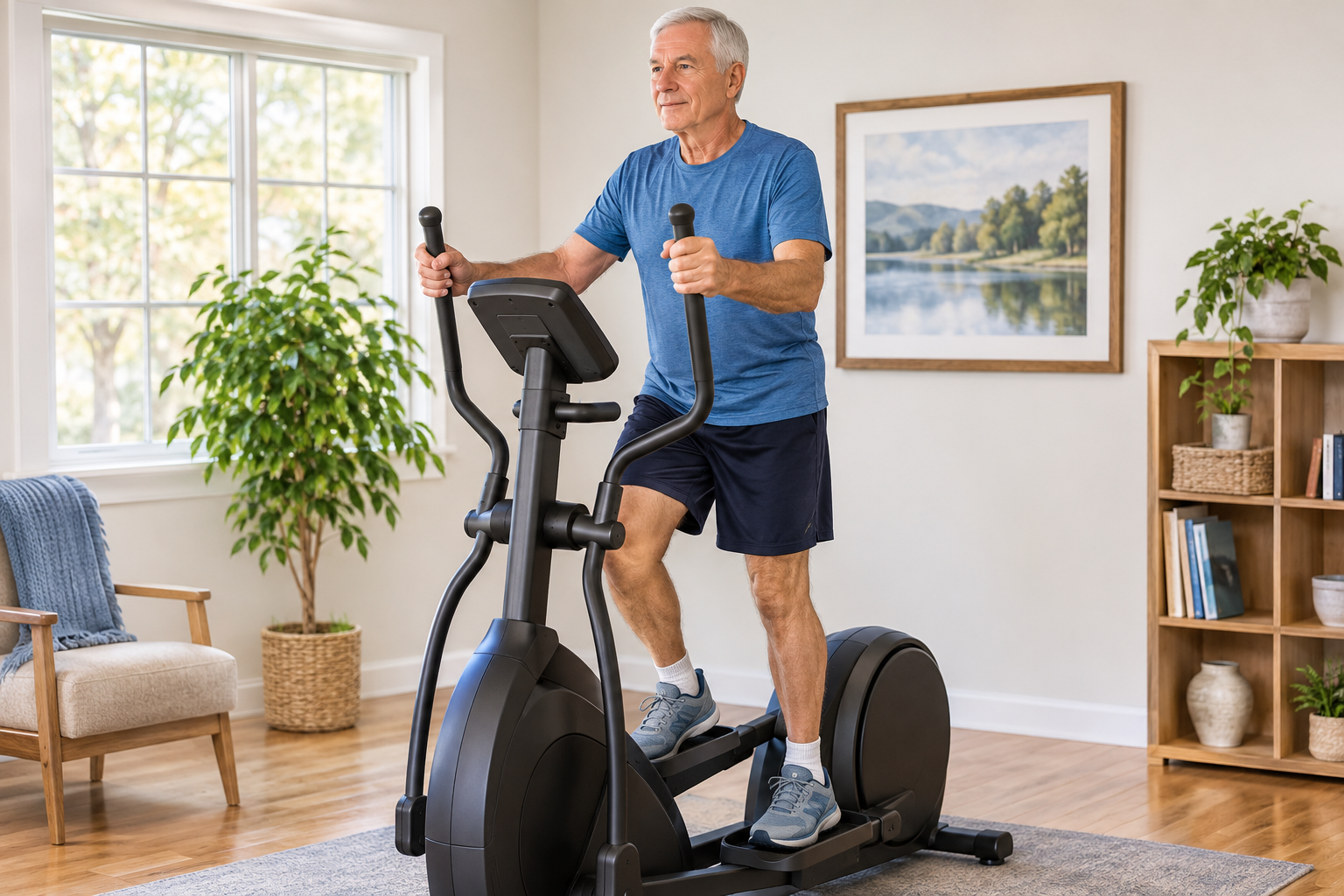
- Be careful with machines that arch your back or keep you very upright for long stretches, like a steep elliptical ramp or walking long distances without support.
- Inversion tables have weak evidence for stenosis specifically. Some people find them helpful, but they aren’t safe for everyone and they aren’t a replacement for exercise.
- Start short and use the pain rules. If leg symptoms build, sit down and lean forward, then keep going when they settle.
Why Spinal Stenosis Changes Which Equipment Works
Lumbar spinal stenosis means the spaces your nerves travel through in your lower back have narrowed, usually from arthritis, thickened ligaments and bulging discs that build up with age.
Here’s the key thing: those spaces get smaller when you arch your back (extension) and bigger when you bend forward (flexion).
Standing tall and walking puts your lower back in a slightly arched position, which squeezes the nerves.
After a few minutes, many people get aching, heaviness, tingling or weakness in their buttocks and legs. Doctors call this neurogenic claudication.
When you sit down or lean forward, the space opens back up and the symptoms usually ease within a minute or two.
That’s why so many of my patients tell me they can:
- Ride a stationary bike for 30 minutes but can’t walk 10
- Walk the whole grocery store leaning on a cart (the “shopping cart sign”)
- Go uphill more easily than downhill, because walking uphill tilts you forward
As a home health physical therapist, a top goal of mine is improving my patients’ posture while walking.
This means giving cues and education to help them stand up taller, relaxing the shoulders, putting less pressure through their assistive devices, etc.
But in some cases, like spinal stenosis, the anatomical changes in the spine make this impossible – and trying to force it just ends up making the pain worse.
In these cases, it’s all about finding safe and comfortable ways to exercise within the comfortable flexed posture zone.
So when choosing equipment, the question isn’t just “is it low impact?” It’s “does it let me stay in a slightly forward-bent position?”
This is also how physical therapists approach it.
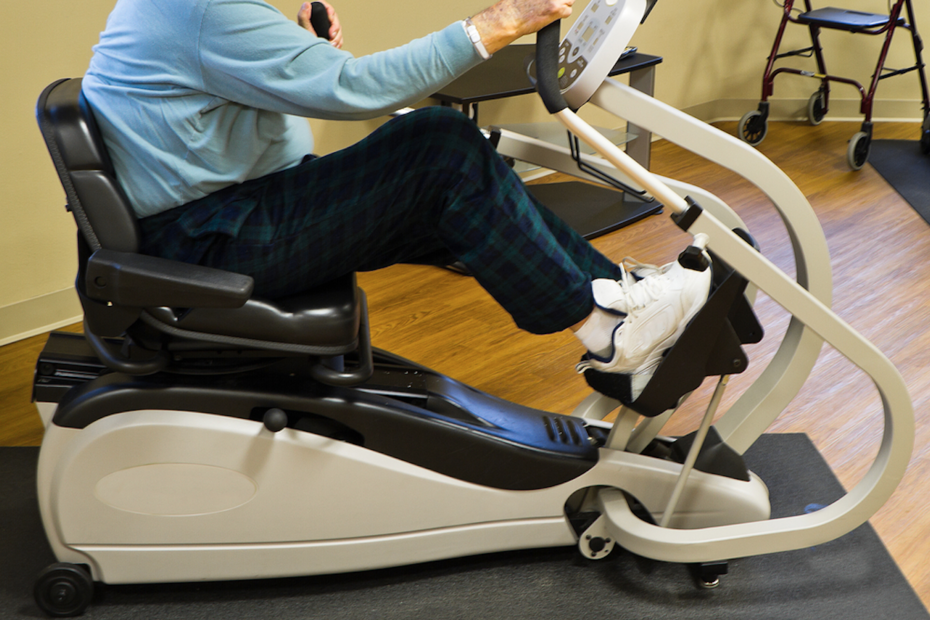
For example, Mass General Brigham’s rehab guidelines for spinal stenosis list a NuStep-style recumbent stepper, a stationary or recumbent bike, and treadmill walking with a slight incline as cardio options.
And in research comparing cycling and supported treadmill walking for stenosis, both helped about equally (Pua et al., 2007).
The Best Exercise Equipment for Spinal Stenosis
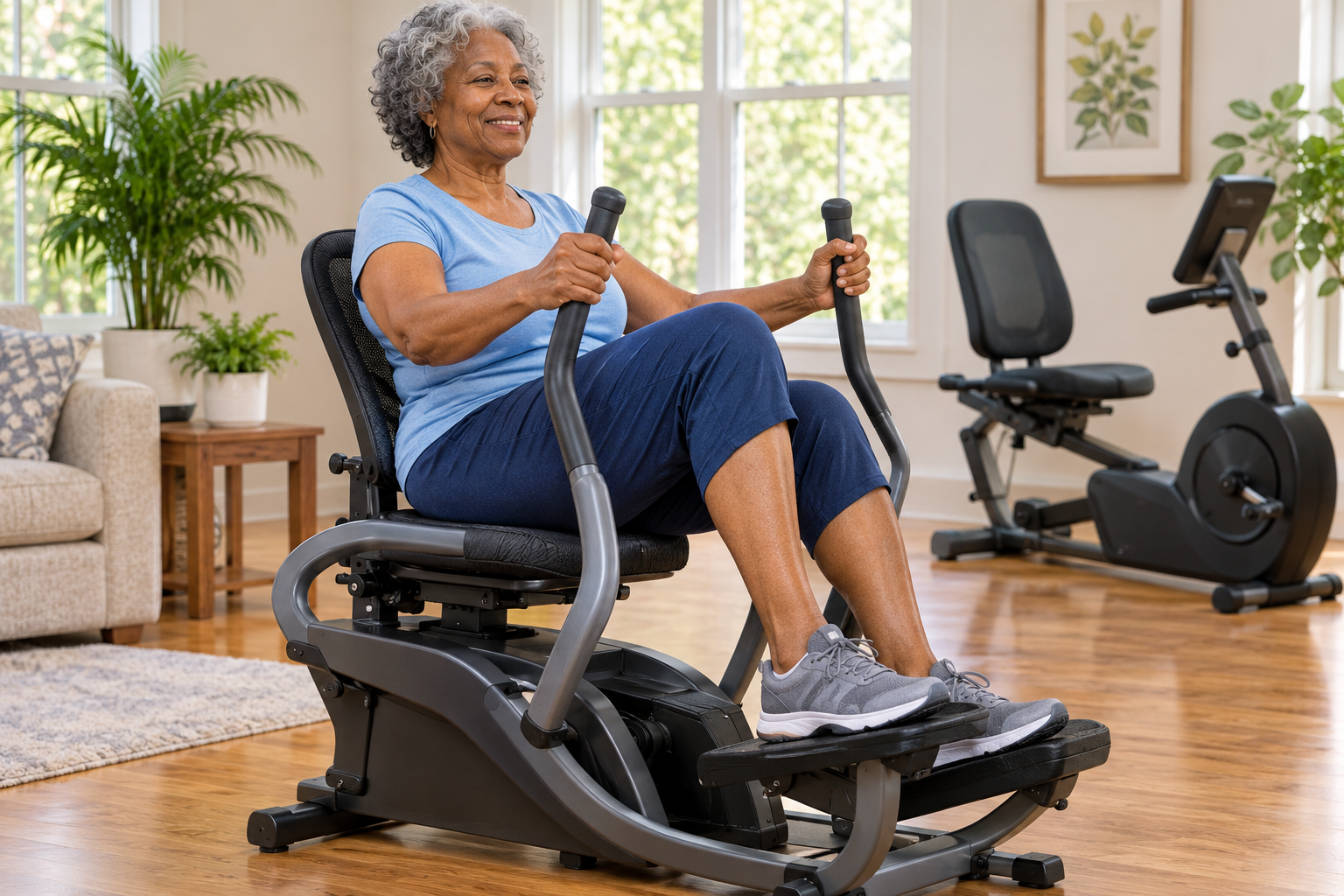
1. Recumbent cross trainers: Best overall
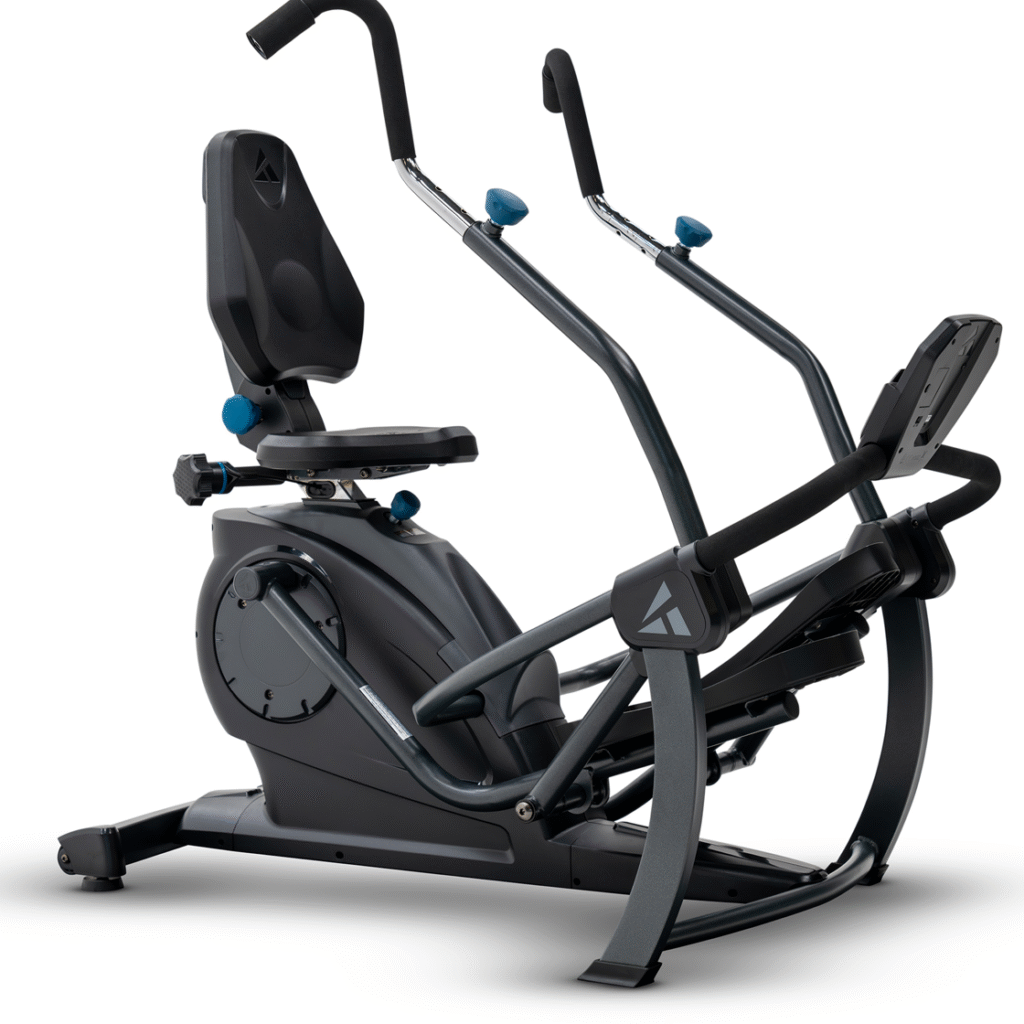
This is the machine I recommend most for stenosis (as well as plenty of other conditions).
You sit with back support and a slight forward lean is easy to find, so the nerves in your lower back stay comfortable.
And because your arms push and pull while your legs step, you get a full-body workout and a better cardio session than legs alone.
It’s also easy to get on and off, and there’s no balance risk, which matters if stenosis has made your legs feel weak or unsteady.
Teeter makes affordable home versions of the NuStep that many PT clinics use for stenosis:
- Teeter FreeStep LT1: The one I recommend most often. Adjustable seat height and recline, 13 resistance levels and a 300 lb capacity. See the Teeter FreeStep LT1.
- Teeter FreeStep LT3: More padding and adjustability if you’ll use it daily or sit longer. See the Teeter FreeStep LT3.
- Teeter FreeStep LT7: The most comfortable seat, a Step Lock for getting on and off, and a 350 lb capacity. See the Teeter FreeStep LT7.
Setup tip: Bring the seat back upright or one notch reclined and let yourself lean slightly forward into the handles. Avoid reclining so far that you’re arching your lower back.
2. Recumbent bike: effective, affordable

A recumbent bike also puts you in a seated, slightly flexed position with full back support.
Many of my stenosis patients can ride one much longer than they can walk, making them great options for cardiovascular workouts.
There are tons of recumbent bikes to choose from, varying greatly in price and features.
Here are a couple of my favorite budget-friendly options for seniors:
- Sole R92: Step-through frame, a 15-position mesh seat with back support and 20 resistance levels. See the Sole R92.
- Horizon 5.0 R: A budget-friendly step-through recumbent with an extra-large seat and lumbar support. See the Horizon 5.0 R.
Setup tip: If the backrest pushes you into an arch, a small cushion behind your upper back (not your lower back) can help you sit slightly forward.
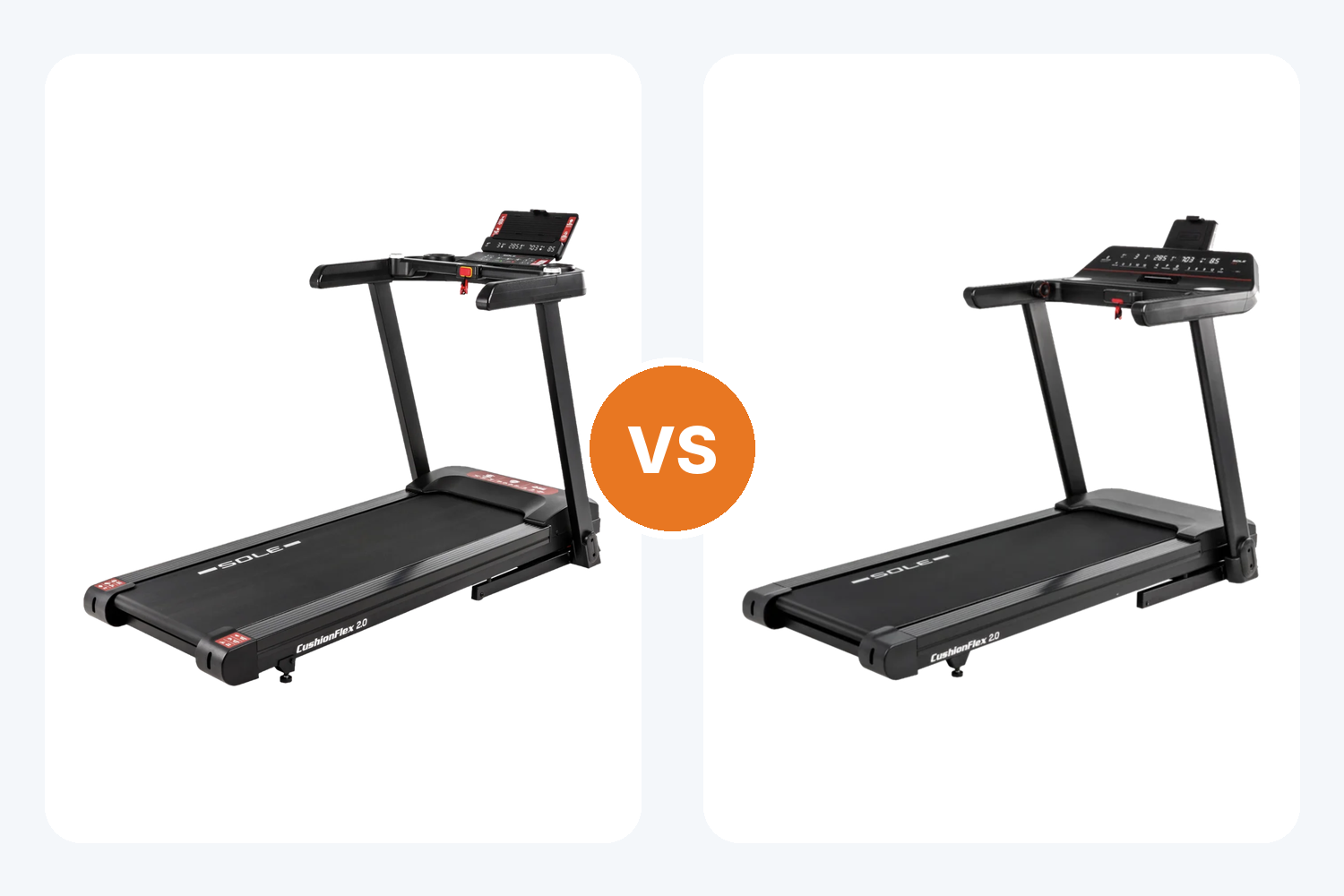
3. Treadmill with handrails: Best for keeping your walking
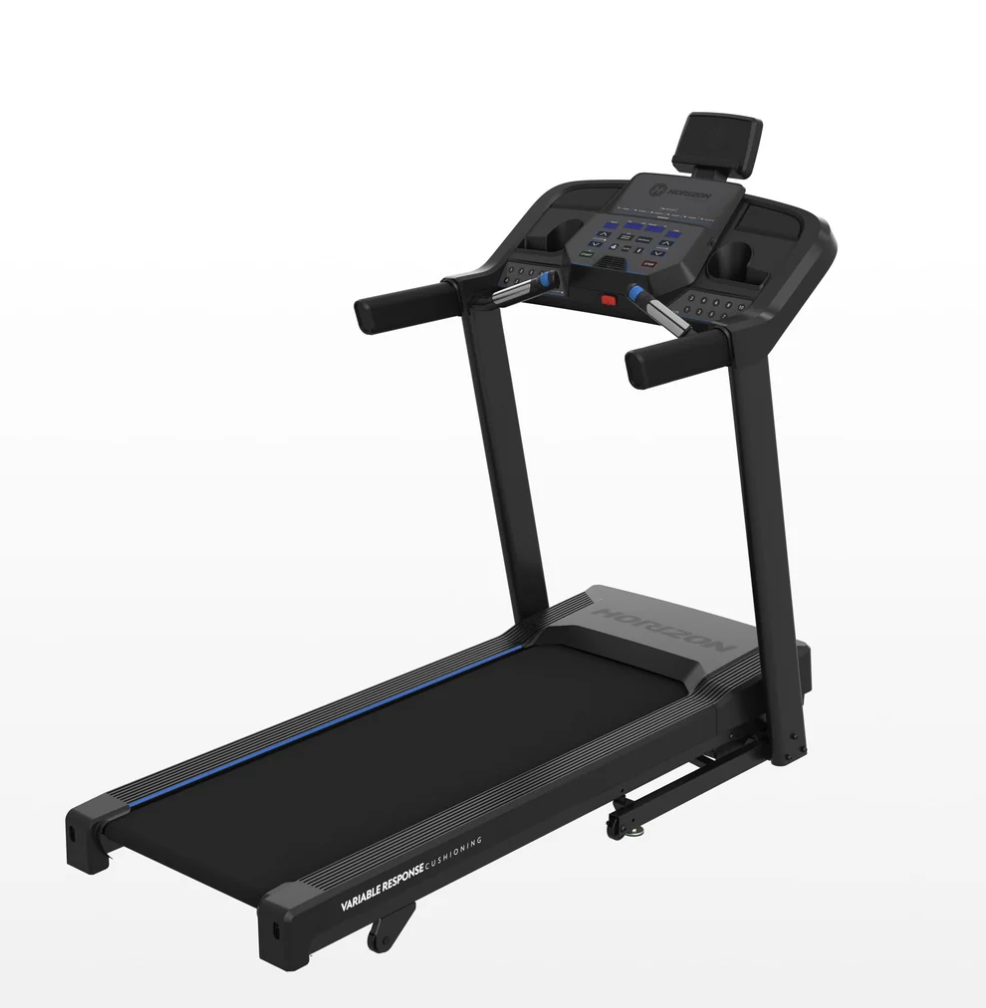
If your goal is to walk farther in daily life, a treadmill lets you practice walking with a little help. Two things make it work well with stenosis:
- A slight incline (1% to 3%) tips you forward a little, much like walking uphill.
- Long, sturdy handrails let you lean on them lightly, like a shopping cart, when symptoms start.
Look for a low step-up, long handrails and speed controls on the rails so you can slow down without letting go.
Here are a couple of nice options:
- Horizon T101: Low step-up and speed and incline dials on the handrails. See the Horizon T101.
- Horizon 7.0 AT: A heavier, more stable frame with QuickDial controls if you’ll lean on the rails a lot. See the Horizon 7.0 AT.
More info: Treadmill safety features checklist
Use With Caution (or Skip)
Inversion tables: an honest look
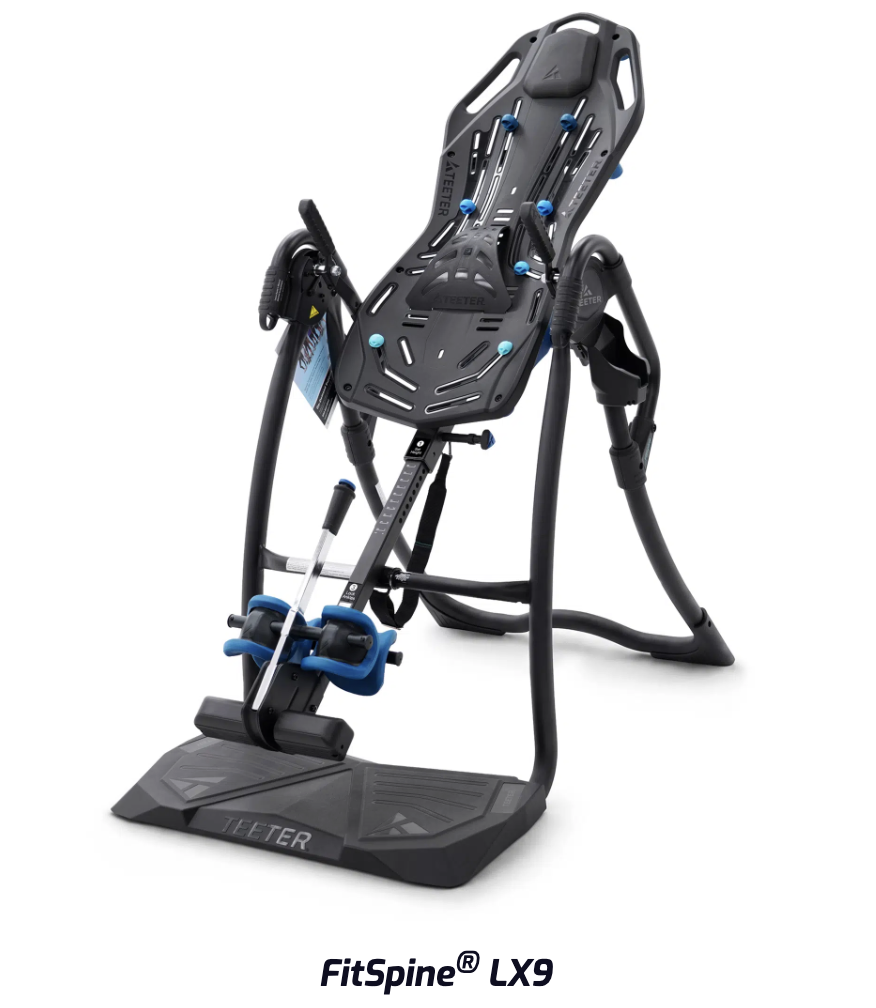
Inversion tables come up a lot with back pain, and I get asked about them for stenosis all the time.
The idea is that hanging at an angle gently stretches the spine and takes pressure off the nerves.
Here’s what I tell patients:
- The evidence is thin. Research on traction for low back pain and sciatica, including inversion, is mostly low quality, and there’s very little studying stenosis specifically. Some people feel short-term relief; many don’t notice much.
- Relief usually doesn’t last on its own. Any space you gain while inverted goes away once you’re upright again. That’s why I see inversion as an add-on, not a replacement for exercise.
- It isn’t safe for everyone. Hanging upside down raises the pressure in your head and eyes. Skip it if you have high blood pressure, glaucoma or other eye conditions, heart disease, a history of stroke, significant osteoporosis or a recent spine surgery, and check with your doctor first if you take blood thinners or have any other health condition. Teeter publishes a full list of conditions that rule it out.
If your doctor okays it and you want to try one, start at a very gentle angle (20 to 30 degrees, not fully upside down) for a minute or two, and have someone nearby the first few times.
Teeter makes the inversion tables I’d trust most, with a long safety record and an adjustable angle strap.
More info: Are inversion tables safe for seniors?
Ellipticals
An elliptical keeps you standing and fairly upright, and a high ramp or incline can push your lower back into more of an arch.
Some people with mild stenosis do fine, especially if they lean lightly on the stationary handles and keep the ramp low.
If your legs start tingling or getting heavy after a few minutes, a seated machine is the better choice.
Rowing machines
Rowing bends you forward at the start of each stroke, but you lean back at the end, and getting up from a low rowing seat is hard for many older adults.
I’d only use one if you already row comfortably and your PT agrees.
Walking pads
Most under-desk walking pads have no handrails at all, so there’s nothing to lean on when symptoms start and nothing to catch yourself with if your legs feel weak.
I don’t recommend them for anyone with stenosis.
Long walks without a rest plan
Walking is still good for you with stenosis, but long walks with nowhere to sit can set you up for a bad day.
Plan routes with benches, or use a walker or rollator with a seat so you can sit and lean forward whenever you need to.
How to Get Started Safely
Start short and build slowly
| Week | Time per session | Sessions per week | Resistance |
|---|---|---|---|
| 1–2 | 5–10 minutes | 3–4 | Low |
| 3–4 | 10–15 minutes | 4–5 | Low |
| 5–6 | 15–20 minutes | 4–5 | Low to moderate |
| 7+ | 20–30 minutes | Most days | Moderate, if comfortable |
Use the pain rules
- Back pain: Mild aching is okay. Keep it around 3 to 4 out of 10 or less, and it should settle by the next morning.
- Leg symptoms: If tingling, heaviness or weakness starts in your legs, slow down, sit or lean forward and let it settle. Once it eases, you can continue. If it keeps coming back faster, you’ve done enough for today.
- Next morning: You should feel about the same as usual. If you’re clearly worse, go back to the previous week’s time.
Add a few flexion exercises
Gentle exercises that bend your lower back forward often help stenosis symptoms and pair well with any of these machines.
A couple I use often with my patients:
- Knee-to-chest: Lying on your back, gently pull one or both knees toward your chest and hold 20 to 30 seconds.
- Seated forward bend: Sitting in a chair, slowly bend forward and let your hands slide down toward your shins, then sit back up.
A physical therapist can tailor these to you and add the core and hip strengthening that helps most people with stenosis.
When to call your doctor right away
Stop exercising and get medical help if you notice:
- New weakness in a leg or foot, like your foot slapping or dragging
- Numbness in your groin, inner thighs or buttocks (“saddle” numbness)
- New trouble controlling your bladder or bowels. This needs emergency care.
- Leg symptoms that don’t ease when you sit and lean forward
- Pain that wakes you at night or comes with fever or unexplained weight loss
Final Thoughts
Spinal stenosis doesn’t mean you have to stop exercising.
It means choosing equipment that works with your back instead of against it.
For most of my patients, that’s a seated machine like the FreeStep or a recumbent bike, plus a treadmill with handrails if they want to keep building their walking.
Start short, sit and lean forward when your legs complain, and build a little at a time.
Frequently Asked Questions
What is the best exercise machine for spinal stenosis?
For most people, a seated machine that lets you lean slightly forward works best. I recommend a recumbent cross trainer like the Teeter FreeStep most often, followed by a recumbent bike. A treadmill with handrails and a slight incline is a good choice if you want to work on walking.
Is a recumbent bike good for spinal stenosis?
Yes. The seated, slightly forward position opens space around the nerves in your lower back, so many people can ride much longer than they can walk. Research has found cycling works about as well as supported treadmill walking for stenosis.
Is walking on a treadmill good for spinal stenosis?
It can be, especially with a slight incline and handrails to lean on lightly. Start with short sessions and sit down to rest if leg symptoms build.
Do inversion tables help spinal stenosis?
The evidence is limited. Some people feel short-term relief, but there’s little research on stenosis specifically, and inversion isn’t safe for people with high blood pressure, glaucoma, heart disease and several other conditions. Check with your doctor first and use it as an add-on to exercise, not a replacement.
Is an elliptical bad for spinal stenosis?
Not necessarily, but it keeps you upright, which bothers many people with stenosis. If you use one, keep the ramp low, lean lightly on the handles and switch to a seated machine if leg symptoms start.
What exercises should I avoid with spinal stenosis?
Be careful with exercises that arch your lower back, like back bends or lying on your stomach and pushing up, as well as long periods of standing or walking without a chance to sit. Everyone is different, so a physical therapist can help you find what works for you.