Caring for an aging parent often involves difficult decisions about safety, independence, and quality of life.
Many seniors can live independently for years with minimal assistance, but there may come a point when occasional check-ins are no longer enough.
Recognizing the signs that an elderly parent needs 24-hour supervision can help families prevent injuries, medical emergencies, wandering incidents, and serious health complications before they occur.
And needing continuous supervision doesn’t always mean a senior has completely lost independence.
In many cases, it simply means they require consistent monitoring and support to remain safe, healthy, and comfortable.
Understanding when this level of care becomes necessary allows families to plan ahead instead of reacting during a crisis.
What Does 24-Hour Supervision Mean?
24-hour supervision means a senior should not be left alone for extended periods due to safety, medical, cognitive, or mobility concerns.
This level of care may involve:
- A family caregiver rotating shifts
- Professional in-home caregivers
- Live-in care services
- Assisted living with enhanced supervision
- Memory care communities
- Skilled nursing facilities
The appropriate option depends on the senior’s medical condition, cognitive function, mobility, and overall risk level.
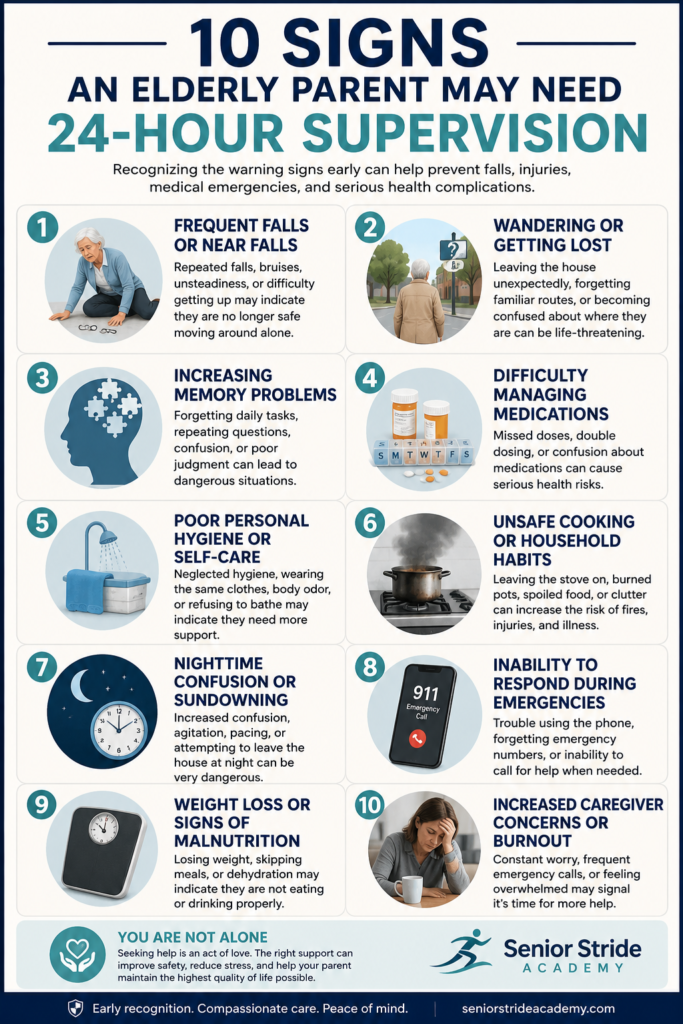
Signs an Elderly Parent May Need 24-Hour Supervision
Frequent Falls or Near Falls
One of the clearest warning signs is repeated falling or difficulty remaining steady while walking.
Seniors who fall frequently are at increased risk for fractures, head injuries, hospitalization, and loss of independence.
Warning signs may include:
- Bruises with unclear explanations
- Difficulty getting up from chairs or bed
- Holding onto furniture while walking
- Fear of walking alone
- Recent emergency room visits due to falls
- Unsteadiness even while using a walker or cane
If a parent is falling or losing balance regularly or can no longer safely move around the home alone, continuous supervision may become necessary.
As a physical therapist, I’m always interested in hearing about near-falls as well.
Mostly because a near-fall usually indicates an underlying concern that can increase the risk of a fall happening in the near future.
Wandering or Getting Lost
Wandering is a major safety concern for seniors with dementia or cognitive decline.
Even seniors who have lived in the same home for decades may suddenly become disoriented.
Signs include:
- Leaving the house unexpectedly
- Forgetting familiar routes
- Confusion about time or location
- Trying to “go home” while already at home
- Becoming lost while driving or walking
Wandering can quickly become life-threatening, especially during extreme weather or nighttime hours.
Increasing Memory Problems
Forgetfulness alone does not always require constant supervision, but worsening cognitive decline can create dangerous situations.
Concerning signs include:
- Forgetting to turn off the stove
- Missing medications repeatedly
- Confusion about basic tasks
- Difficulty recognizing family members
- Repeating questions constantly
- Poor judgment or impulsive behavior
When memory problems interfere with daily safety, supervision may be necessary around the clock.
Difficulty Managing Medications
Medication mistakes are extremely common among older adults and can lead to serious complications.
Watch for signs such as:
- Missed doses
- Double dosing
- Confusion about medication schedules
- Expired medications piling up
- Hospitalizations related to medication errors
If a parent cannot safely manage medications independently, they may require full-time monitoring.
Poor Personal Hygiene or Self-Care
A noticeable decline in hygiene can indicate physical limitations, depression, cognitive decline, or inability to manage daily living tasks.
Possible warning signs include:
- Wearing the same clothes repeatedly
- Strong body odor
- Unwashed hair
- Neglected oral hygiene
- Soiled clothing or bedding
- Refusing to bathe
These changes often signal that independent living is becoming unsafe.
Unsafe Cooking or Household Habits
Some seniors begin struggling with everyday household tasks without realizing the risks involved.
Examples include:
- Burned pots or pans
- Leaving appliances running
- Forgetting food in the oven
- Hoarding spoiled food
- Difficulty using household equipment safely
These situations can increase the risk of fires, injuries, and health hazards.
Nighttime Confusion or Sundowning
Some seniors become significantly more confused in the evening or overnight hours (aka “sundowning“). This is especially common with dementia and it can make nighttime routines more challenging.
Signs may include:
- Pacing at night
- Agitation after dark
- Attempting to leave the house overnight
- Confusion about where they are
- Sleep disruptions that increase fall risk
Nighttime supervision may become critical for safety, especially if there have been nighttime falls.
Inability to Respond During Emergencies
A senior living alone should be able to respond appropriately during emergencies such as falls, fires, medical events, or severe weather.
Warning signs include:
- Inability to use a phone properly
- Forgetting emergency numbers
- Panic during stressful situations
- Delayed responses after falls
- Inability to call for help
If a parent cannot reliably handle emergencies, they may not be safe alone.
Weight Loss or Signs of Malnutrition
Unexpected weight loss may indicate a senior is struggling to prepare meals, remember to eat, or maintain proper nutrition.
Possible signs include:
- Empty refrigerator or pantry
- Spoiled food
- Significant weight changes
- Dehydration
- Weakness or fatigue
Malnutrition can rapidly worsen overall health and increase fall risk.
Increased Caregiver Concerns or Burnout
Family members often notice problems long before a formal diagnosis occurs. If caregivers constantly worry about leaving a parent alone, those concerns should not be ignored.
You may notice:
- Daily emergency calls
- Frequent accidents or close calls
- Constant check-ins
- Sleep disruption from caregiving stress
- Fear of what may happen when no one is present
Caregiver exhaustion can also signal the need for more structured support.

When to Seek Immediate Help
Some situations suggest an elderly parent may no longer be safe alone even temporarily. Families should seek immediate medical evaluation or emergency assistance if a senior:
- Wanders outside and becomes lost
- Falls repeatedly within a short period
- Shows sudden severe confusion or hallucinations
- Forgets critical medications repeatedly
- Becomes unable to recognize familiar people or surroundings
- Shows signs of dehydration, malnutrition, or medication overdose
- Has a medical emergency with no reliable way to call for help
- Expresses suicidal thoughts or severe depression
- Is found outside alone at night or in dangerous weather conditions
These situations can quickly become life-threatening and often indicate the need for continuous supervision or a higher level of care.
If safety concerns are escalating rapidly, contact a healthcare provider, geriatric specialist, or emergency services immediately.
Medical Conditions That May Require Continuous Monitoring
Some health conditions make independent living especially risky.
Examples include:
| Condition | Potential Safety Concern |
|---|---|
| Dementia or Alzheimer’s disease | Wandering, confusion, unsafe decisions |
| Parkinson’s disease | Falls and mobility problems |
| Stroke recovery | Physical limitations and cognitive changes |
| Diabetes | Blood sugar emergencies |
| Heart conditions | Sudden medical episodes |
| Seizure disorders | Injury risk during episodes |
A physician can help determine whether supervision is medically necessary.
How to Talk to an Elderly Parent About Increased Supervision
Conversations about supervision can be emotional and difficult because many seniors fear losing independence or becoming a burden.
Helpful approaches include:
- Focus on safety rather than control
- Involve them in decisions whenever possible
- Use specific examples instead of general criticism
- Avoid arguing or blaming
- Introduce help gradually when possible
- Emphasize maintaining independence safely
Keep in mind the goal is to preserve dignity, while reducing preventable risks.
For more tips, read our full guide on how to talk to parents about fall risk.
Options for 24-Hour Supervision
Families have several care options depending on a senior’s medical needs, cognitive condition, budget, and desire to remain at home.
The right solution often depends on how much supervision is needed and whether the senior can still participate safely in daily activities.
In-Home Care
Professional caregivers provide supervision inside the senior’s home.
This may include companionship, mobility assistance, meal preparation, medication reminders, and overnight monitoring.
In-home care is a great option for seniors who need assistance with daily activities, but this option is often costly.
Prices vary depending on area and services provided, but they usually operate with an hourly rate and a minimum number of hours required per shift/week.
Family Caregiving Rotations
Some families provide 24-hour supervision by rotating caregiving responsibilities between relatives.
This approach may work well temporarily or when a senior only needs moderate supervision.
Benefits may include:
- Familiar surroundings
- Emotional comfort for the senior
- Lower financial costs
- Greater family involvement
However, caregiving rotations can quickly become physically and emotionally exhausting, especially if a parent has dementia, mobility limitations, or nighttime supervision needs.
Live-In Caregivers
A live-in caregiver stays in the home to provide more consistent assistance and supervision throughout the day and night.
This option may be appropriate for seniors who:
- Wander at night
- Require help with mobility
- Need frequent reminders or supervision
- Are unsafe living alone but want to remain at home
Live-in care can provide peace of mind while helping seniors maintain routines in a familiar environment (but again, it can be very costly).
Technology-Based Supervision Services
Some seniors may not yet need full-time hands-on caregiving, but still benefit from additional monitoring and support.
Technology-based supervision services can help bridge the gap between independence and full-time care.
For example, Envoy at Home provides remote monitoring and support services designed to help seniors remain safely independent at home longer.
Through the use of motion sensors and sophisticated software, Envoy at Home can provide an accurate picture of a senior’s movements throughout the day (and alert family members when something is a bit off).
These types of services may be especially helpful for seniors who:
- Live alone
- Have mild cognitive decline
- Need extra oversight between caregiver visits
- Are at increased fall risk
- Have family members living far away
Technology-assisted supervision can sometimes delay the need for more intensive care while improving family peace of mind.
Assisted Living Communities
Assisted living facilities provide housing, meals, supervision, and assistance with daily activities in a community setting.
Staff members are available throughout the day, and many communities offer medication management and mobility support.
Assisted living may be appropriate for seniors who:
- Need daily supervision
- Struggle with household management
- Feel isolated living alone
- Require help with routine tasks
Some facilities also offer enhanced supervision or specialized memory care units.
Memory Care Communities
Memory care communities are specifically designed for seniors with Alzheimer’s disease or other forms of severe dementia.
These communities provide:
- Secure environments to reduce wandering risk
- Structured routines
- Specialized dementia-trained staff
- 24-hour supervision
- Cognitive support programs
Memory care is often necessary when cognitive decline creates major safety concerns.
Choosing the Right Level of Care
The best care solution depends on balancing safety, independence, medical needs, finances, and quality of life.
In many cases, families begin with smaller interventions before transitioning to more comprehensive supervision if conditions worsen over time.
Early planning allows families to explore options carefully rather than making rushed decisions during a crisis.
Final Thoughts
Recognizing the signs that an elderly parent needs 24-hour supervision is never easy, but delaying help can increase the risk of serious injuries and emotional stress for both seniors and caregivers.
The goal of increased supervision is not to take away independence – it’s to create a safer environment that allows seniors to maintain the highest possible quality of life.
Identifying concerns early gives families more time to explore care options, make thoughtful decisions, and avoid crisis situations.