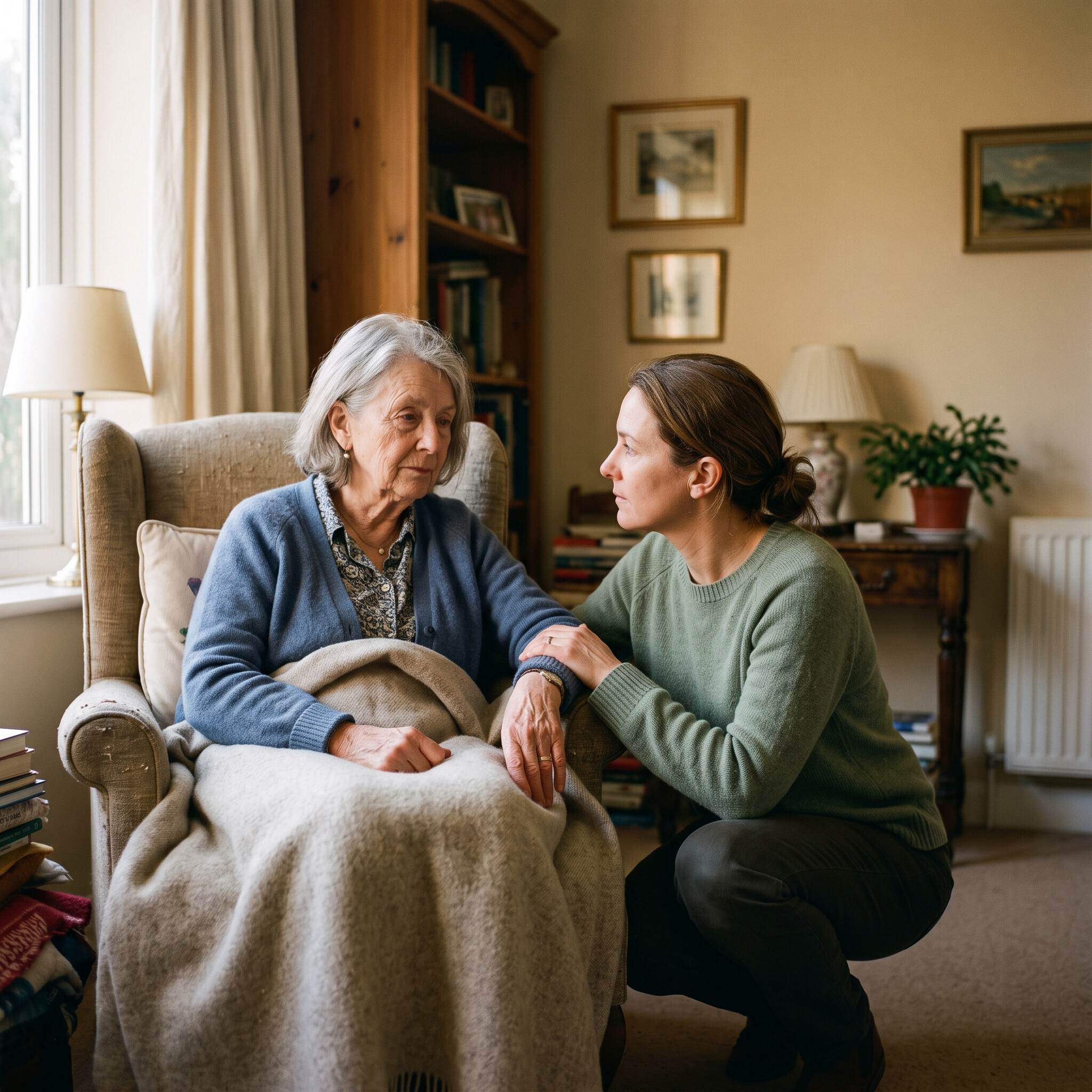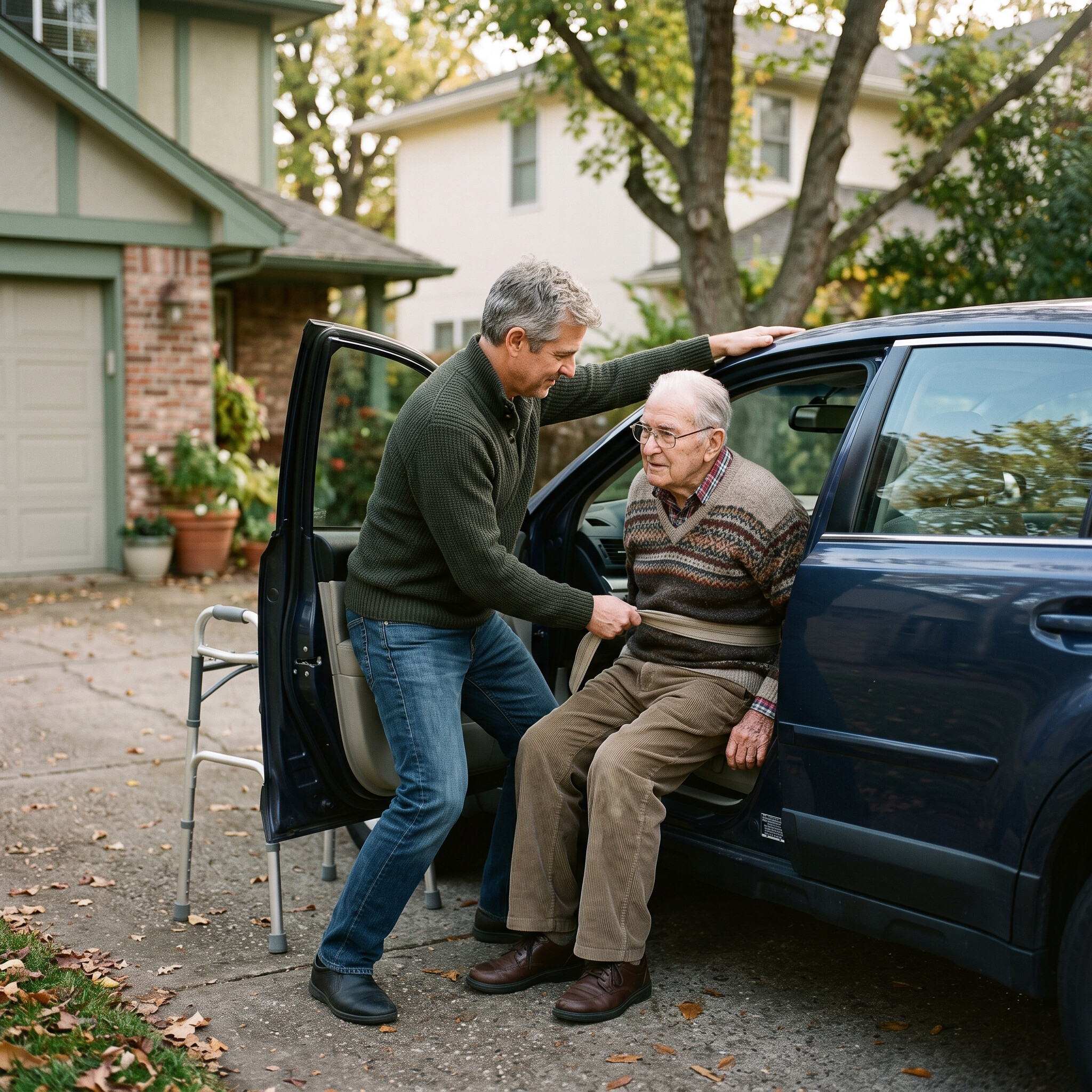
As parents age, families often face a difficult question: how do you keep an older adult safe without taking away their independence?
Most seniors want to maintain control over their daily lives for as long as possible, and in many cases, staying independent helps preserve confidence, dignity, and emotional well-being.
At the same time, adult children may notice warning signs that raise concerns about safety.
Falls, memory lapses, medication mistakes, wandering, poor judgment, or difficulty managing household tasks can all create risks.
The challenge is finding the right balance between offering support and respecting autonomy.
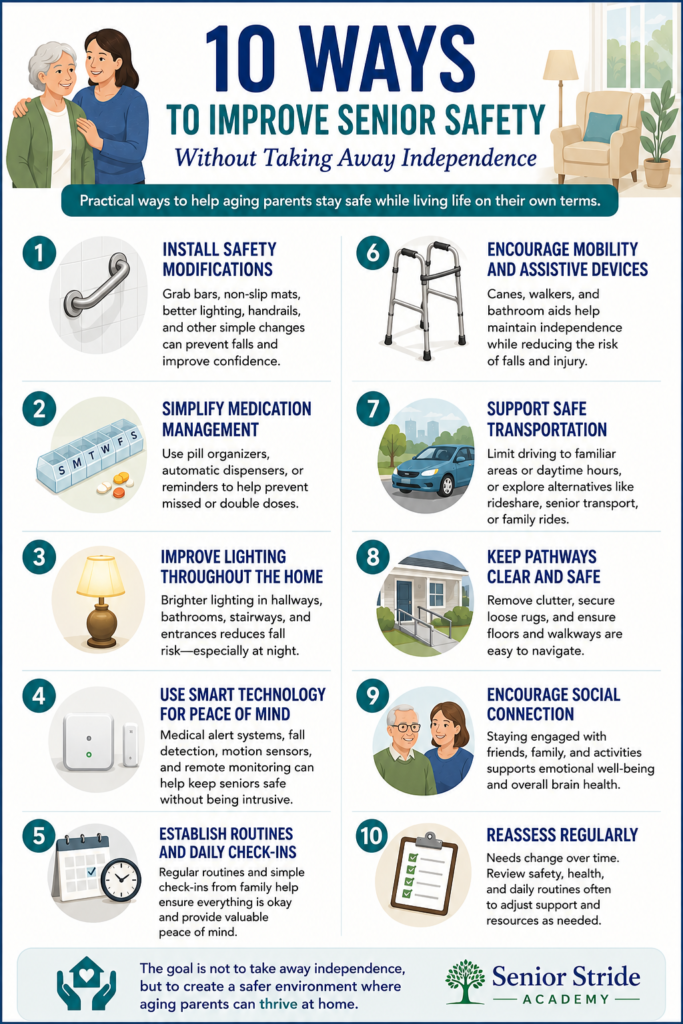
The goal is not to take independence away – the goal is to create a safer environment that allows aging parents to continue living with as much freedom and confidence as possible.
Why Independence Matters to Seniors
Independence is closely tied to identity.
Many older adults fear becoming a burden or losing control over their lives more than they fear aging itself.
Allowing seniors to stay involved in decisions about their care can help:
- Preserve self-esteem
- Reduce depression and anxiety
- Encourage physical activity and engagement
- Maintain cognitive function
- Improve cooperation with caregivers
- Strengthen family relationships
When independence is removed too quickly, seniors may become withdrawn, resistant, or emotionally distressed.
Even small choices – like what to wear, when to eat, where to go, or how to spend the day – can help maintain a sense of purpose.
Recognizing When Safety Concerns Are Increasing
Balancing safety and independence starts with understanding the difference between manageable risk and serious danger.
Occasional forgetfulness or slowing down is normal with aging. However, certain patterns may indicate a need for additional support.
| Warning Sign | Why It Matters |
|---|---|
| Frequent falls or near falls | Increased injury risk |
| Missed medications | Can lead to serious health complications |
| Wandering or getting lost | Safety concern, especially with dementia |
| Unpaid bills or financial confusion | May indicate cognitive decline |
| Poor hygiene or spoiled food | Difficulty managing daily tasks |
| Unsafe driving behaviors | Risk to self and others |
| Leaving the stove on | Fire hazard |
| Increased isolation | Can worsen physical and mental health |
One isolated incident may not require major intervention – but a pattern of repeated problems usually signals the need for changes.
Start With the Least Restrictive Solutions
Families sometimes jump immediately to major decisions like taking away car keys or moving a parent into assisted living.
In many cases though, smaller adjustments can improve safety while preserving independence.
Instead of asking, “How do we stop this behavior?” ask:
“How can we make this activity safer?”
Examples include:
| Concern | Less Restrictive Solution |
|---|---|
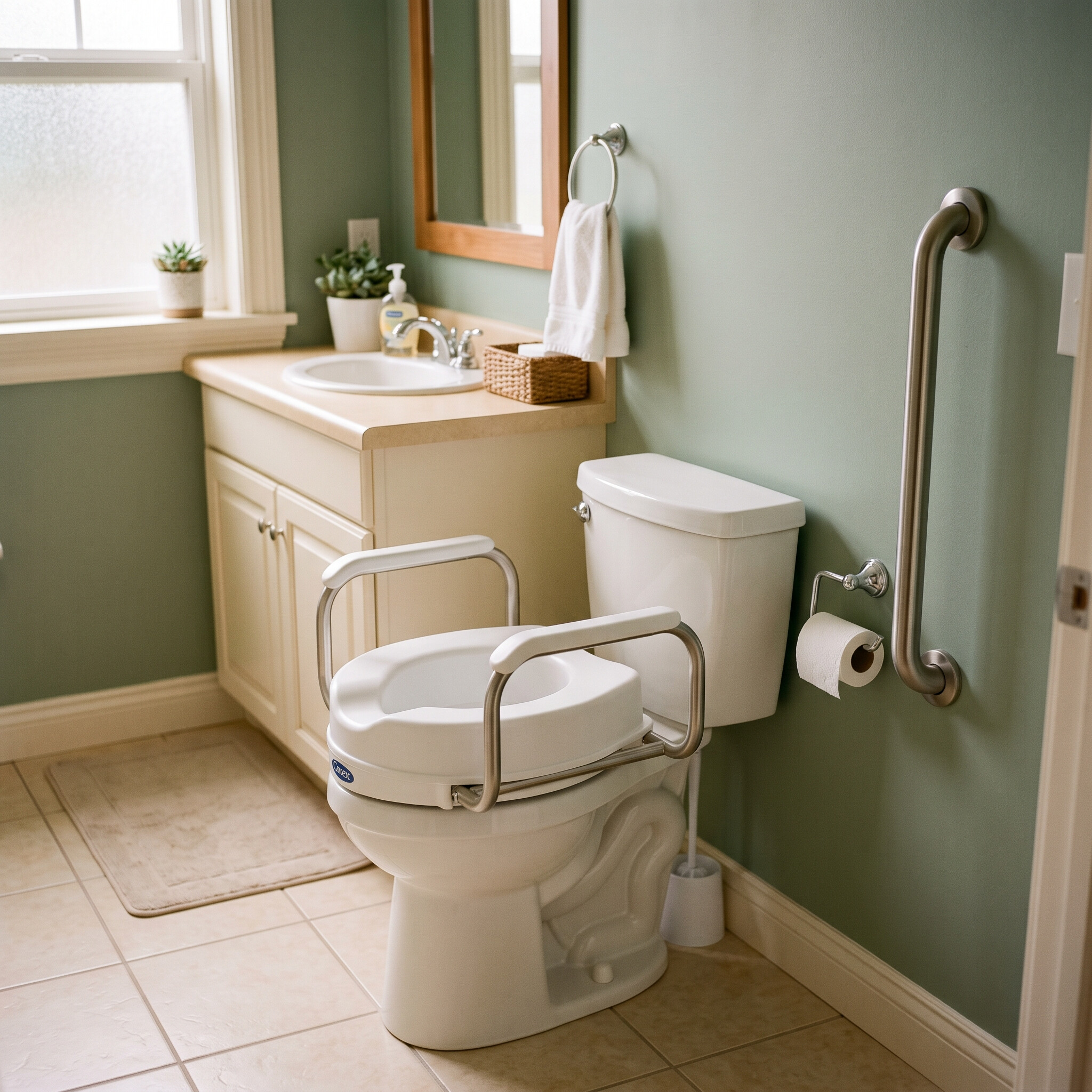
| Fall risk | Install grab bars, improve lighting, remove rugs |
| Medication mistakes | Use pill organizers or automatic dispensers |
| Cooking concerns | Use automatic stove shut-off devices |
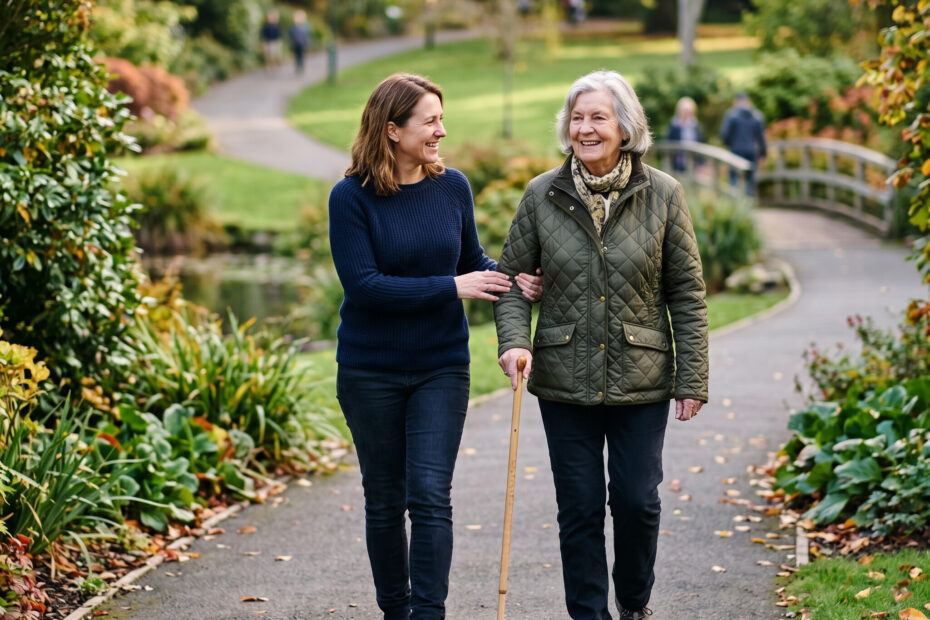
| Mobility problems | Introduce a cane or walker |
| Driving concerns | Limit driving to daytime or nearby locations |
| Memory issues | Use reminders, calendars, and smart home alerts |
These changes allow seniors to continue participating in daily life while reducing danger.
Include Aging Parents in Decisions
One of the biggest mistakes families make is making decisions without involving the older adult. Even when safety concerns are legitimate, excluding parents from discussions often creates conflict and resistance.
Whenever possible:
- Discuss concerns early rather than waiting for a crisis
- Use collaborative language
- Ask for their opinions and preferences
- Focus on shared goals
- Offer choices instead of ultimatums
For example, instead of saying:
“You can’t live alone anymore.”
Try:
“We want to help you stay independent safely. What changes would make things easier for you?”
This approach preserves dignity and encourages cooperation.
Avoid Power Struggles
Conversations about aging can quickly become emotional.
Parents may feel embarrassed, defensive, or fearful of losing control. Adult children may feel frustrated or anxious about safety risks.
After all, discussing fall risk with parents can be quite challenging, but arguments rarely lead to productive solutions.
Helpful communication strategies include:
Listening Before Offering Solutions
Allow parents to express their concerns, fears, and frustrations. Sometimes resistance comes from feeling unheard rather than disagreeing with the issue itself.
Focus on Specific Examples
Avoid vague statements like “You’re not safe anymore.”
Instead, mention concrete situations:
- “You fell twice this month.”
- “The stove was left on yesterday.”
- “You missed several medications this week.”
Specific examples feel less accusatory and easier to discuss rationally.
Respect Their Perspective
Aging parents may value independence differently than younger family members. Even if you disagree, acknowledging their feelings can reduce defensiveness.
Keep the Goal Positive
Frame changes as ways to maintain independence longer rather than restrict freedom.
For example:
“Using a walker may help you continue getting around on your own.”
Know When More Supervision Is Necessary
There comes a point where serious safety risks outweigh the benefits of complete independence.
And in these cases, more attention (or even 24 hr supervision) is necessary for the safety of the senior.
Signs that an aging parent may need more supervision can be subtle and hard to spot at first.
Families should pay close attention if an aging parent:
- Repeatedly falls (or shows an increased fear of falling)
- Wanders or becomes disoriented
- Forgets medications consistently
- Cannot prepare meals safely
- Shows signs of self-neglect
- Experiences worsening dementia symptoms
- Becomes vulnerable to scams or exploitation
At that stage, additional support may include:
| Level of Support | Examples |
|---|---|
| Occasional help | Grocery shopping, transportation |
| In-home assistance | Caregivers, home health aides |
| Increased supervision | Family rotation or daily check-ins |
| Assisted living | Structured support with independence |
| Memory care | Specialized dementia supervision |
The transition should ideally happen gradually whenever possible.
Technology Can Support Independence
Modern technology can help older adults remain independent longer while giving families peace of mind.
Useful tools may include:
- Medical alert systems
- Fall detection devices
- Smart medication reminders
- Video doorbells
- GPS trackers for dementia patients
- Motion sensors
- Voice assistants
- Automatic lighting systems
Technology works best when introduced as a supportive tool rather than a form of surveillance.
How envoy at Home Can Help Seniors Stay Independent

Services like envoy at Home can help families balance safety and independence without making seniors feel constantly supervised.
Envoy at Home is a remote monitoring system designed for older adults who live alone or spend significant time alone at home.
But instead of using cameras or requiring seniors to wear emergency devices, the system uses discreet motion and contact sensors placed throughout the home to monitor daily activity patterns.
The platform can alert family members to potential concerns such as unusual inactivity, nighttime wandering, missed routines, or possible falls.
It also provides insight into gradual behavioral changes that may suggest worsening mobility, cognitive decline, or increasing care needs over time.
One of the biggest benefits is that seniors can often maintain more independence while families still gain peace of mind.
Because there are no cameras, microphones, or wearable devices, many older adults find the system less intrusive and easier to accept than traditional monitoring methods.
For families trying to avoid unnecessary restrictions or delay a move to assisted living, tools like envoy at Home can serve as a middle ground between complete independence and full-time supervision.
Encourage Independence Where It Is Safe
Even when seniors need help in some areas, they should still be encouraged to do tasks they can manage safely.
Maintaining involvement in daily activities helps preserve physical and cognitive abilities.
Examples include:
- Folding laundry
- Preparing simple meals
- Watering plants
- Choosing clothing
- Participating in hobbies
- Managing parts of their routine
Doing everything for an aging parent may unintentionally accelerate dependence.
Understand That Balance Changes Over Time
Safety and independence are not static. What works today may not work six months from now.
Families should regularly reassess:
- Physical mobility
- Cognitive function
- Medication management
- Driving ability
- Home safety
- Social support
- Daily functioning
Ongoing communication makes future transitions less abrupt and less emotionally overwhelming.
When in doubt, a physical therapy assessment can help determine how safe a senior is performing various tasks at home.
When Families Disagree About Care Decisions
It’s common for siblings or relatives to disagree about how much independence an aging parent should have.
One family member may prioritize safety, while another focuses more on autonomy.
To reduce conflict:
- Share observations objectively
- Involve healthcare professionals when needed
- Keep discussions focused on the parent’s needs
- Avoid blame or guilt
- Create a care plan everyone understands
Outside guidance from doctors, physical therapists, or geriatric care managers can help families make more balanced decisions.
Final Thoughts
Balancing safety and independence for aging parents is rarely simple.
Most families will need to adjust support gradually as needs change over time.
The most effective approach is usually one that combines compassion, communication, and practical safety measures.
By involving seniors in decisions and focusing on preserving dignity whenever possible, families can help aging parents remain both safer and more independent for longer.
FAQ
How do you know when an elderly parent is no longer safe living alone?
Warning signs may include frequent falls, wandering, medication mistakes, unpaid bills, poor hygiene, spoiled food, unsafe driving, or increasing confusion. A pattern of repeated safety concerns usually indicates a need for additional support or supervision.
How can you talk to aging parents about safety concerns?
Start conversations early and focus on collaboration rather than control. Use specific examples instead of general accusations, listen to their concerns, and emphasize that the goal is helping them remain independent safely for as long as possible.
What are alternatives to assisted living?
Alternatives may include:
- Family check-ins
- In-home caregivers
- Adult day programs
- Meal delivery services
- Medical alert systems
- Remote monitoring technology
- Transportation services
- Home safety modifications
Many seniors can remain at home safely with the right support system in place.
Can seniors with dementia remain independent?
Some seniors with early-stage dementia can continue living semi-independently with additional support and supervision. However, increasing memory problems, wandering, medication mistakes, or unsafe decision-making may eventually require more structured care.
When should families consider more supervision for aging parents?
More supervision may be necessary if an older adult repeatedly falls, wanders, forgets medications, neglects personal care, experiences worsening cognitive decline, or struggles to manage daily activities safely. The goal should be increasing support gradually whenever possible.