Caring for an aging parent often involves difficult decisions about safety, independence, and quality of life.
Many seniors can live independently for years, but there usually comes a point when additional supervision becomes necessary to protect their health and well-being.
The challenge for families is recognizing the difference between normal aging and signs that a parent may no longer be completely safe on their own.
And in many cases, the warning signs appear gradually – but small incidents that seem isolated at first can eventually develop into serious safety concerns.
Knowing what to watch for can help families step in early, prevent emergencies, and support aging parents in a respectful and compassionate way.
Why Increased Supervision May Become Necessary
Needing more supervision doesn’t always mean a senior must move into a nursing home or lose independence entirely.
A lot of times, additional support may simply involve periodic check-ins, help with medications, transportation assistance, or in-home care.
The goal is not to take away independence – the goal is to reduce risk while helping seniors remain as safe and confident as possible.
For more info, check out our full guide on how to supervise seniors living alone.
Common Signs an Elderly Parent Needs More Supervision
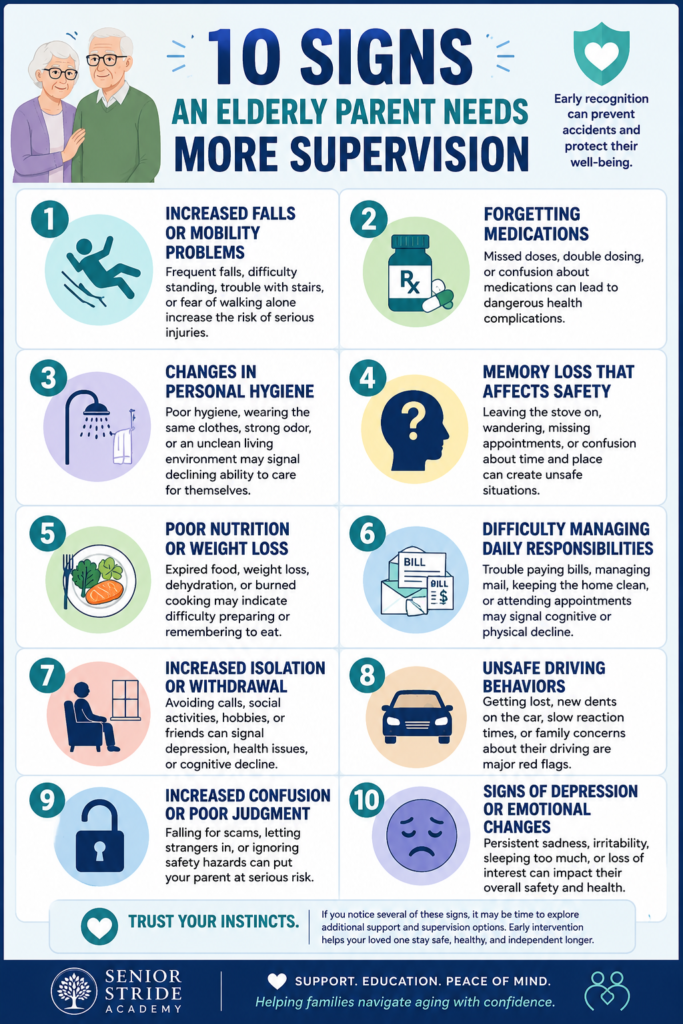
1. Increased Falls or Mobility Problems
Frequent falls are one of the clearest indicators that a senior may no longer be safe alone for extended periods.
Even minor falls can lead to serious injuries such as hip fractures, head trauma, or long recovery periods.
And seniors who fall once are also at much higher risk of falling again.
The warning signs for mobility problems can be more subtle and hard to spot.
Signs of declining mobility often include things like difficulty standing from chairs, holding onto furniture while walking, trouble using stairs, and fear of walking alone after previous falls.
If one or more of these signs are present, it’s a parent may require more supervision.
2. Forgetting Medications
Medication mistakes can quickly become dangerous for older adults, especially those taking multiple prescriptions.
Signs may include:
- Missed or doubled doses
- Confusion about medication schedules
- Pills scattered around the home
- Frequent pharmacy refill problems
Medication mismanagement can lead to all kinds of unwanted problems, including dizziness, confusion, dehydration, hospitalization, or worsening chronic conditions.
3. Changes in Personal Hygiene
A decline in hygiene often signals that daily tasks are becoming physically or cognitively overwhelming.
Families may notice repeated clothing, body odor, unwashed hair, or a generally unclean living environment.
These changes may stem from mobility limitations, depression, memory issues, or fear of falling while bathing.
4. Memory Loss That Affects Safety
Occasional forgetfulness can be part of normal aging. However, memory problems that create unsafe situations should never be ignored.
| Memory-Related Behaviors | Potential Risk |
|---|---|
| Leaving the stove on | Fire hazard |
| Wandering outside | Getting lost or injured |
| Missing appointments repeatedly | Declining executive function |
| Confusion about time or place | Possible cognitive decline |
When memory problems begin interfering with daily safety, more supervision is often necessary.
5. Poor Nutrition or Weight Loss
Seniors who live alone sometimes struggle to shop, cook, or remember to eat regularly.
Expired food in the refrigerator, noticeable weight loss, dehydration, or burned cookware may indicate a parent is no longer managing meals safely and consistently.
Poor nutrition can weaken muscles, increase fall risk, and worsen overall health.
Poor hydration can also be an issue (and often is with seniors!) and be a sign that an elderly parent is struggling to take proper care of themselves.
6. Difficulty Managing Daily Responsibilities
As aging progresses, even routine tasks may become difficult.
Look for problems with:
- Paying bills
- Grocery shopping
- Managing appointments
- Housekeeping
- Driving safely
Stacks of unopened mail, missed payments, or confusion about finances may indicate declining cognitive or physical ability.

7. Increased Isolation or Withdrawal
Social withdrawal is sometimes overlooked, but it can signal deeper problems.
A senior who suddenly stops answering calls, attending activities, or participating in hobbies may be struggling with depression, mobility limitations, hearing loss, or cognitive decline.
Isolation can also increase the risk of accidents going unnoticed for long periods.
8. Unsafe Driving Behaviors
Driving problems are often one of the first major signs that additional supervision is needed.
Warning signs may include getting lost on familiar routes, new dents on the car, slow reaction times, or confusion while driving.
Family members may also begin expressing concern about riding with them.
Loss of safe driving ability often signals broader declines in vision, cognition, reaction time, or physical coordination.
9. Increased Confusion or Poor Judgment
Some seniors begin making decisions that place themselves at risk.
Examples include letting strangers into the home, falling for scams, wearing inappropriate clothing for weather conditions, or forgetting important medical restrictions.
Poor judgment can become dangerous quickly without regular supervision.
10. Signs of Depression or Emotional Changes
Mental health changes can affect safety just as much as physical decline.
Watch for ongoing sadness, increased irritability, sleeping excessively, appetite changes, or loss of interest in favorite activities.
Depression in seniors can lead to self-neglect, poor nutrition, medication noncompliance, and reduced physical activity.
When Families Should Take Action
Families should not wait for a major crisis before increasing supervision. Often, smaller warning signs appear months or years before a serious emergency occurs.
It may be time to intervene when:
- Multiple warning signs are present
- Falls are becoming more common
- Memory issues affect daily safety
- A parent can no longer manage basic daily tasks independently
- Doctors recommend additional support
Early intervention usually provides more options and allows seniors to participate in decisions about their future care.
FYI, every fall should be taken seriously – here’s what to look for after every fall (even is they say they’re fine).
Ways to Increase Supervision (Without Removing Independence)
Additional supervision does not have to mean giving up autonomy completely. Many families use gradual support strategies first.
In-Home Caregivers
Professional caregivers can assist with bathing, meal preparation, medication reminders, mobility support, and companionship.
And even a few hours of daily help can significantly improve safety.
Getting bathed and dressed are the most challenging tasks for a lot of seniors and having a paid caregiver available to at least help with these tasks can go a long way.
Family Check-In Systems
Family members who live nearby can make a big difference too.
Families may create simple routines involving daily phone calls, meal visits, or transportation assistance to help monitor safety and well-being.
Elderly parents often enjoy the social aspect of having family members visit often.
Care Options by Need Level
| Level of Concern | Possible Support Option |
|---|---|
| Mild forgetfulness | Daily family check-ins |
| Fall risk | In-home caregiver |
| Medication mistakes | Medication management |
| Frequent confusion | Assisted living evaluation |
Medical Alert Systems
Emergency alert devices allow seniors to call for help after falls or medical emergencies, providing reassurance for both seniors and family members.
And these days, medical alert systems come in all varieties with all kinds of features.
Assisted Living Communities
For seniors with increasing daily care needs, assisted living may offer a safer balance of independence and supervision through medication management, meal services, emergency response systems, and social opportunities.
This may not be the first option to consider, but it can be the safest move for seniors that require more supervision.
How to Talk to an Elderly Parent About Supervision
Conversations about increased supervision can be emotional for both seniors and their families.
Many older adults fear losing independence, becoming a burden, or being forced to give up their home. Because of this, even well-intentioned conversations may trigger defensiveness or resistance.
Approaching the discussion with empathy and patience can make a major difference.
Start the Conversation Early
It is usually easier to discuss supervision before a serious emergency occurs.
Waiting until after a major fall or dangerous incident can make conversations feel rushed and emotionally charged.
Bringing up concerns early allows seniors to participate in decisions while they still feel more in control of their situation.
For example, instead of saying:
“You can’t live alone anymore.”
try:
“I’ve noticed a few things lately that make me concerned about your safety. I’d like us to talk about ways to make things easier and safer for you.”
This approach feels less confrontational and more collaborative.
Focus on Safety Rather Than Control
Many seniors interpret supervision as punishment or loss of freedom.
Families should frame conversations around maintaining safety and preserving independence as long as possible.
It can help to explain that additional support is often what allows seniors to remain at home longer.
Instead of emphasizing limitations, focus on goals such as:
- Preventing falls
- Making daily tasks easier
- Reducing stress
- Providing backup during emergencies
- Helping them stay independent longer
The tone of the conversation matters just as much as the words themselves.
Use Specific Examples
General statements like “You’re not safe anymore” can feel insulting or exaggerated. Specific observations are often easier for seniors to understand and accept.
Examples might include:
- “You mentioned feeling dizzy several times this month.”
- “I noticed you almost fell getting out of the shower.”
- “The stove was left on twice recently.”
- “You seemed confused about your medications last week.”
Using calm, factual examples helps keep the conversation grounded and less emotional.
Involve Them in Decisions
Seniors are more likely to accept help when they feel included in the process.
Whenever possible, ask for their opinions and preferences instead of presenting decisions as final.
Questions like these may help:
- “What kind of help would feel most comfortable to you?”
- “Would you prefer family visits or a professional caregiver?”
- “What worries you most about getting extra help?”
Giving seniors choices can help preserve dignity and reduce feelings of helplessness.
Expect Resistance at First
It is common for older adults to deny problems or minimize concerns initially. Some may feel embarrassed, frightened, or angry.
Families should avoid arguing, criticizing, or trying to “win” the conversation. Pushing too hard often increases resistance.
Instead:
- Stay calm
- Listen carefully
- Validate emotions
- Revisit the conversation later if needed
Sometimes acceptance develops gradually over multiple discussions rather than one single conversation.
Avoid Taking Away Independence Too Quickly
Sudden major changes can feel overwhelming and in many cases, gradual increases in support work better than drastic changes overnight.
Starting with smaller interventions may feel less threatening, such as:
- Weekly housekeeping help
- Grocery delivery
- Medication reminders
- Transportation assistance
- Short caregiver visits
As needs change over time, support can be adjusted gradually and some point, a parent may need 24 hour supervision and that’s ok.
Final Thoughts
Recognizing the signs that an elderly parent needs more supervision can help families prevent serious injuries, medical emergencies, and avoidable crises.
Often, the need for supervision develops gradually through small warning signs rather than one dramatic event.
Paying attention to these changes in mobility, memory, hygiene, nutrition, judgment, and daily functioning can help families act early while preserving as much independence as possible.
The right level of supervision can improve both safety and quality of life, allowing seniors to remain supported, connected, and as independent as their abilities safely allow.
FAQ
Does needing more supervision mean a senior must move into a nursing home?
No. Many seniors simply need additional support at home, such as caregiver visits, medication reminders, or family check-ins.
What is the biggest sign a senior should not live completely alone?
Frequent falls, unsafe memory problems, and inability to manage daily tasks are among the most serious warning signs.
How do you know if memory loss is becoming dangerous?
Memory loss becomes dangerous when it affects safety, such as forgetting medications, leaving appliances on, wandering, or getting lost.
Can supervision reduce fall risk?
Yes. Additional supervision can help seniors move more safely, remember assistive devices, manage medications properly, and respond quickly after falls.
Should families wait for a serious accident before intervening?
No. Early intervention is usually safer and allows seniors more involvement in care decisions.