
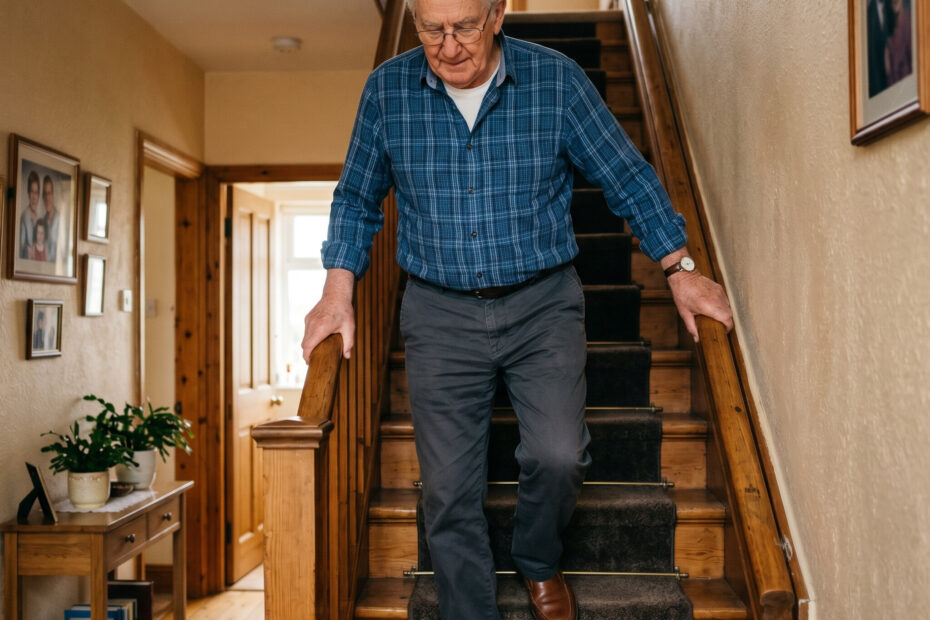
As we age, changes in mobility can happen gradually.
A senior who once moved confidently may begin walking more slowly, struggling with stairs, or avoiding activities they once enjoyed. While some physical changes are a normal part of aging, noticeable declines in mobility should never be ignored.
Reduced mobility can increase the risk of falls, loss of independence, hospitalization, and difficulty performing everyday tasks.
So, the earlier these warning signs are recognized, the sooner steps can be taken to improve strength, balance, and safety.
In this guide, we’ll cover the most common warning signs of declining mobility in seniors. We’ll also talk about what may cause them and when it may be time to seek medical or rehabilitation support.
What Is Mobility?
Mobility refers to a person’s ability to move safely and independently. This includes:
- Walking
- Standing up from a chair
- Climbing stairs
- Maintaining balance
- Changing positions
- Moving around the home and community
Good mobility relies on strength, balance, coordination, flexibility, endurance, vision, and brain function all working together.
When one or more of these systems begin to decline, mobility problems often follow.
Why Mobility Declines With Age
Aging naturally affects the body in several ways:
- Muscle mass decreases with age (sarcopenia)
- Joint stiffness becomes more common
- Reaction times slow down
- Balance systems become less efficient
- Chronic medical conditions may develop
- Physical activity often decreases
That said, severe mobility decline is not simply “old age.”
As a physical therapist, I would have to say the biggest contributor to mobility decline is lack of activity – in other words, if you don’t use it, you lose it.
Unfortunately, the above affects of age make it more challenging to move and exercise, so a lot of seniors start moving a lot less.
And the less we move, the weaker and stiffer we get – and the cycle continues.
The good news though, is that in many cases, mobility problems can improve with exercise, therapy, medical treatment, or lifestyle changes.
Common Warning Signs of Declining Mobility in Seniors
Walking More Slowly
One of the earliest signs of declining mobility is a noticeable reduction in walking speed.
A senior may begin:
- Taking smaller steps
- Moving cautiously
- Needing more time to cross a room
- Falling behind others during walks
Slow walking speed is associated with increased fall risk, weakness, reduced endurance, and declining overall health.
Difficulty Standing Up From a Chair
Standing from a seated position requires leg strength, balance, and coordination.
Warning signs include:
- Using the arms heavily to push up
- Rocking multiple times before standing
- Needing assistance to get up
- Appearing unsteady immediately after standing
This often points to weakness in the hips, legs, and core – all of which are essential muscle groups for mobility and stability with activity.
Fortunately, there are plenty of ways to help – check out our full guide on how to help a senior stand up more easily.
Increased Loss of Balance
Balance problems are one of the clearest indicators of declining mobility and they can present themselves in subtle ways.
A senior may display emerging balance issues in many ways:
- Sway while standing
- Frequently grab furniture or walls
- Lose balance during turns
- Struggle on uneven surfaces
- Feel dizzy or unstable while walking
Even mild balance deficits can significantly increase fall risk.
If balance is a real concern, check out our full balance program you can do from home.
Reduced Physical Activity
Sometimes mobility decline appears as avoidance behavior rather than obvious physical difficulty.
A senior may stop:
- Taking walks
- Going shopping
- Attending social events
- Using stairs
- Participating in hobbies
This reduction in activity can create a cycle where inactivity leads to further weakness and worsening mobility.
Trouble Climbing Stairs
Stairs require strength, coordination, balance, and endurance. If you notice your parents having a hard time with getting up/down steps, it’s often a sign of progressive weakness.
Warning signs include:
- Holding tightly to railings
- Taking stairs one step at a time
- Becoming winded quickly
- Avoiding stairs altogether
- Complaining of leg fatigue or instability
Difficulty with stairs often signals declining lower body strength.
FYI, as a physical therapist, I use stairs as an exercise with my patients all the time – the front step up is a powerful quad/glute builder.
Frequent Tripping or Stumbling
Occasional stumbles can happen to anyone, but repeated tripping should be taken seriously.
Common causes include:
- Poor foot clearance
- Weakness
- Reduced coordination
- Slower reaction times
- Balance deficits
Many falls are preceded by weeks or months of increased stumbling, but if you notice a fast deficit, it could mean something more serious is going on and should be investigated by a medical provider.
Changes in Posture
Mobility decline often affects posture and body positioning as well.
You may notice:
- Forward leaning while walking
- Rounded shoulders
- Shuffling gait
- Looking down constantly while walking
- Difficulty standing upright
- Walking with decreased arm swing
Poor posture can reduce balance and walking efficiency and increase fall risk.
Increased Fatigue During Daily Activities
Seniors with declining mobility often tire more easily during routine tasks.
Activities that may become exhausting include:
- Walking through a grocery store
- Showering
- Household chores
- Getting dressed
- Cooking meals
Reduced endurance can limit independence and increase sedentary behavior.
Needing Support While Walking
A senior may begin relying more heavily on:
- Furniture
- Walls
- Railings
- Another person’s arm
Some individuals may suddenly need a cane or walker after previously walking independently.
This can indicate worsening balance, weakness, pain, or reduced confidence while walking.
When a caregiver starts needing to physically assist during walking, it’s a big sign that mobility is declining.
Fear of Falling
Fear of falling is extremely common in older adults and can become debilitating.
A senior may:
- Move very cautiously
- Refuse to walk outdoors
- Avoid stairs
- Limit activity unnecessarily
- Become anxious during movement
Ironically, avoiding movement often causes further weakness and increases fall risk over time.
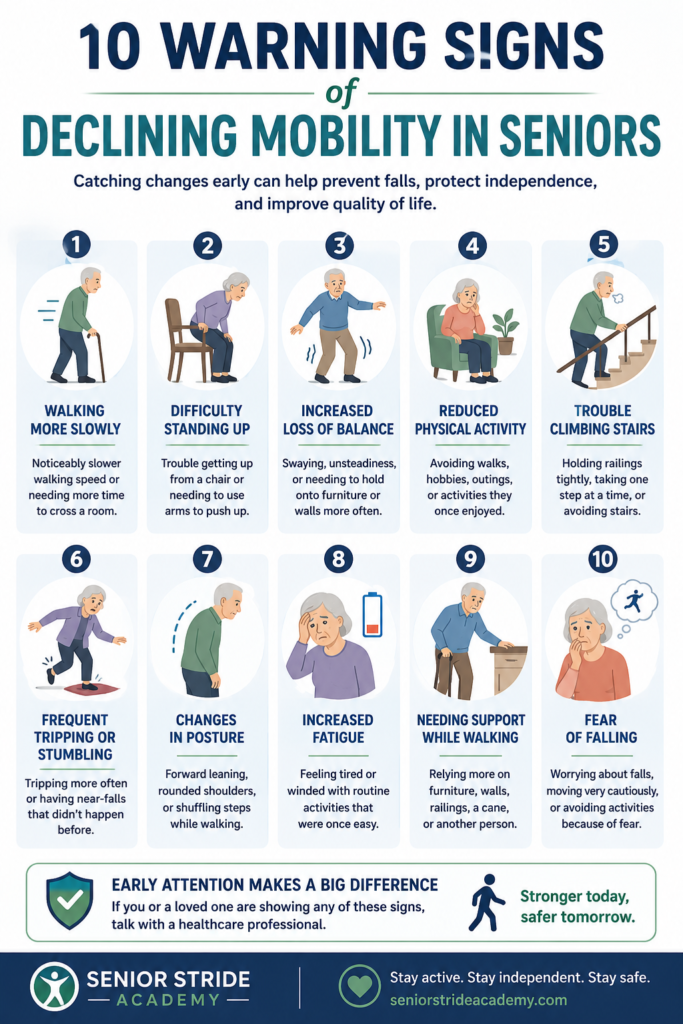
Early recognition of mobility changes may help reduce fall risk and maintain independence.
When Mobility Changes Become Serious
Certain symptoms should prompt medical evaluation as soon as possible.
Seek medical attention if a senior experiences:
- Sudden inability to walk
- Repeated falls
- Sudden weakness
- New confusion
- Significant dizziness
- Dragging a foot
- Severe pain with movement
- Rapid decline in function
These may indicate serious medical conditions that require immediate treatment.
How Seniors Can Maintain Mobility Longer
The good news is that mobility can often improve or be maintained well into older age.
Staying active, addressing medical issues early, and creating a safer environment can all help seniors remain independent longer.
Stay Physically Active
Regular movement is one of the most important ways to preserve mobility.
Walking, light exercise, and staying engaged in daily activities help maintain strength, balance, flexibility, and endurance.
Even small amounts of consistent activity are better than long periods of inactivity.
Like I tell my patients, when in doubt, a solid walking program goes a long way.
Focus on Strength and Balance
Exercises that target the legs and core can improve walking ability and reduce fall risk.
Activities such as sit-to-stands, heel raises, step-ups, and balance exercises help seniors move more confidently and safely.
Being stronger makes everyday activities easier and safer.
Consider Physical Therapy
A physical therapist (PT) can evaluate gait, balance, strength, and overall mobility.
They can also design an individualized exercise program to improve safety, independence, and confidence with movement.
If mobility or balance deficits are starting to affect day to day life, a PT assessment is a good idea.
Improve Home Safety
A safer home environment can make movement easier and reduce fall risk.
Simple modifications like improving lighting, installing grab bars, removing loose rugs, and adding stair railings may help seniors stay mobile longer.
Manage Underlying Health Conditions
Conditions such as arthritis, dizziness, neuropathy, or medication side effects can significantly affect mobility.
Proper medical management may improve walking ability, balance, and overall physical function.significantly improve mobility.
Final Thoughts
Mobility decline in seniors often develops gradually, making early warning signs easy to overlook.
Slower walking, balance problems, increased fatigue, and difficulty with daily movement are not just inconveniences – they may signal rising fall risk and loss of independence.
Recognizing these signs early allows seniors and caregivers to take action before mobility problems become severe.
Exercise, physical therapy, medical management, and home safety changes can often help older adults remain active, independent, and safer for longer.
Paying attention to small changes today may help prevent major mobility problems tomorrow.
FAQ
Is slowing down normal with age?
Some slowing is common with aging, but significant difficulty walking, standing, or balancing should not be ignored. Many mobility problems can improve with proper treatment and exercise.
What is the biggest predictor of falls in seniors?
Previous falls, muscle weakness, and balance problems are among the strongest predictors of future falls.
Can mobility improve in elderly adults?
Yes! Many seniors improve mobility through exercise, physical therapy, strength training, and treatment of underlying medical conditions.
When should a senior use a walker or cane?
Assistive devices may help when balance becomes unsafe or walking stability declines. A medical professional or physical therapist can recommend the most appropriate device.
What type of exercise is best for mobility in seniors?
Exercises that improve leg strength, balance, flexibility, and endurance are most effective for maintaining mobility and reducing fall risk.