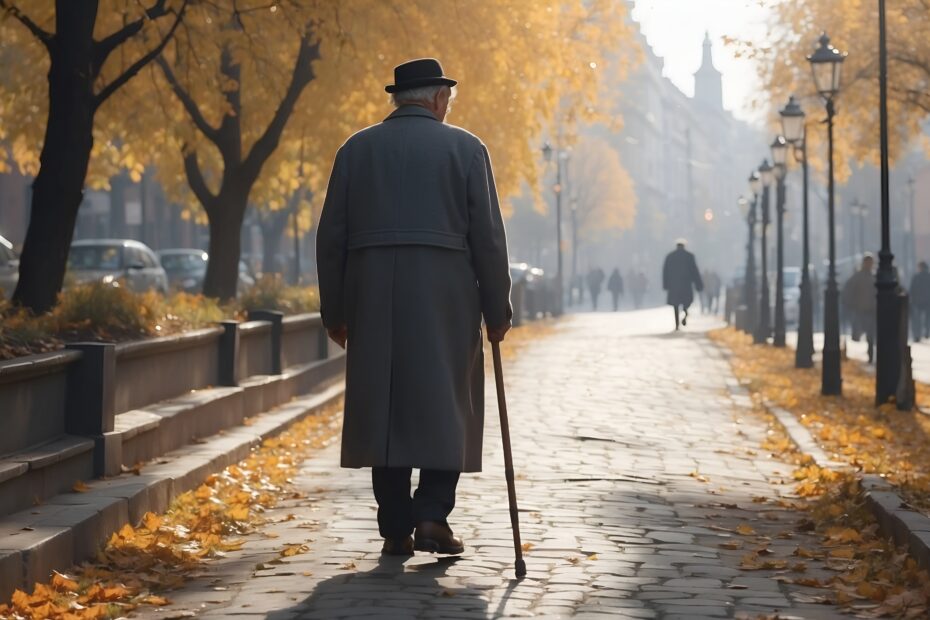
It’s common for walking speed to change with age, but slow walking in older adults is not always “just getting older.”
In many cases, it reflects underlying changes in strength, balance, mobility, energy levels, or overall health.
Elderly people often walk slowly due to muscle weakness, balance problems, joint pain, fear of falling, reduced endurance, or neurological changes that affect movement and coordination.
In some cases, slow walking may also signal an underlying medical condition that should be evaluated.
Understanding why walking speed changes can help seniors and caregivers take steps to improve safety, mobility, and independence.
Is Walking Slower a Normal Part of Aging?
Some slowing of walking speed can occur naturally with age.
As the body changes over time, older adults may begin taking shorter steps, moving more cautiously, or walking at a slower pace than they did in earlier years.
Several age-related changes can contribute to this, including:
- Gradual muscle loss
- Reduced joint flexibility
- Mild balance changes
- Slower reaction time
- Decreased endurance
Because of these changes, many seniors naturally adapt by slowing down slightly to feel more stable and conserve energy.
However, there’s an important difference between normal age-related slowing and walking changes that may indicate an underlying problem.
For starters, walking speed should not decline suddenly or dramatically.
Significant slowing – especially when accompanied by weakness, shuffling, dizziness, pain, or frequent falls – is not considered a normal part of aging and may signal an issue that needs attention.
This is important because many seniors assume slowing down is “just old age” and ignore it.
This can lead to seniors being less active and unfortunately, reduced activity often leads to even more weakness, stiffness, and loss of mobility over time.
Walking speed is actually considered an important indicator of overall health in older adults. Research has shown that slower walking speed may be associated with:
- Increased fall risk
- Reduced independence
- Higher risk of hospitalization
- Declining physical function
That doesn’t mean slow walking always indicates something serious, but it does mean it’s worth paying attention to – especially if walking ability is changing noticeably.
The encouraging news is that many of the factors contributing to slow walking can improve with the right approach.
Strength training, balance exercises, regular activity, and addressing underlying medical issues can often help seniors walk more confidently and efficiently again.
For example, improving balance and lower body strength can make walking feel safer and less effortful (thus naturally increasing speed).
What’s a Normal Walking Speed for Seniors?
As a physical therapist, it’s important to try and differentiate between normal slowing down that occurs naturally with age and a slowing down that is due to increased weakness, fear of falling, etc.
And one of the best ways to do this is to measure gait speed (walking speed) and compare this against the norms.
Walking speed can vary from person to person, but most healthy older adults walk at a pace of about 0.8 to 1.2 meters per second (m/s), which is roughly 2.5 to 4 feet per second or about 1.7 to 2.7 miles per hour.
In general:
- Brisk walking speed: about 1.3–1.8 m/s (3–4 mph)
- Typical comfortable walking speed for many seniors: about 0.8–1.2 m/s (2–3 mph)
- Very slow walking speed: less than 0.6 m/s (under 2 mph)
Healthcare providers sometimes refer to walking speed as a “vital sign” for older adults because it can provide valuable insight into overall strength, balance, endurance, and physical function.
As a physical therapist, I aim to get my patients comfortable walking at a pace of at least 1.0 m/s because research has shown that walking slower than this puts patients at a higher risk for functional decline.
Again, walking speed can vary greatly in the elderly and past medical history plays a big role as well.
Common Reasons Elderly People Walk Slower
Several physical, neurological, and balance-related factors can contribute to slow walking in seniors.
| Cause | How It Affects Walking |
|---|---|
| Muscle Weakness | Reduces leg strength and makes walking slower and less stable |
| Balance Problems | Causes cautious walking and shorter steps |
| Fear of Falling | Leads to slower, more careful movement |
| Arthritis and Joint Pain | Makes walking uncomfortable and limits mobility |
| Reduced Endurance | Causes fatigue during walking or activity |
| Neurological Conditions | Can affect coordination, gait, and reaction time |
| Dizziness or Blood Pressure Changes | Makes seniors feel unsteady while walking |
| Medication Side Effects | May impact balance, alertness, or coordination |
Muscle Weakness
One of the biggest reasons seniors walk more slowly is reduced muscle strength, especially in the legs and core.
As muscles weaken:
- Push-off strength decreases
- Steps become shorter
- Balance reactions slow down
This often leads to a more cautious walking pattern.
In other words, strengthening exercises can help improve overall balance.
Balance Problems
Many older adults slow down because they feel less stable while walking.
Even mild balance changes can cause seniors to:
- Walk more cautiously
- Take smaller steps
- Avoid walking quickly
This is often the body’s way of trying to prevent a fall.
But unfortunately, walking slower and taking smaller steps usually just increases a senior’s fall risk.
For a step-by-step balance plan, our Strong & Steady 21-Day Balance Program walks you through gentle, progressive exercises designed by a physical therapist to help prevent falls.
Fear of Falling
After a fall – or even a near-fall – many seniors naturally become more careful while walking.
This fear can lead to:
- Slower walking speed
- Reduced activity
- Increased stiffness and weakness over time
- Increased difficulty turning while walking
Unfortunately, moving less can actually worsen mobility and balance.
Joint Pain and Arthritis
Pain in the hips, knees, feet, or back can significantly affect walking speed.
Conditions such as arthritis often cause:
- Stiffness
- Reduced stride length
- Difficulty walking longer distances
Many seniors unconsciously slow down to avoid discomfort, but in these cases, walking more slowly might actually be the safer move.
Reduced Endurance
Walking requires energy and cardiovascular endurance. Seniors with reduced stamina may slow their pace simply because they tire more easily.
This may be related to:
- Deconditioning
- Heart or lung conditions
- Reduced physical activity
Neurological Changes
The brain and nervous system play a major role in walking as well.
Conditions such as:
- Parkinson’s disease
- Stroke
- Neuropathy
- Dementia
can affect coordination, reaction time, and gait mechanics.
In some cases, slow walking may occur alongside shuffling, freezing, or difficulty turning.
In these cases, physical therapy is often beneficial to address the specific causes of gait abnormality.
Dizziness or Blood Pressure Changes
Some seniors slow down because they feel unsteady or lightheaded while walking.
Dizziness when standing or moving can make walking feel unsafe and may lead to a more cautious gait.
For more information on these conditions, check out our full guide on dizziness with standing.
Medication Side Effects
Certain medications can affect:
- Balance
- Alertness
- Blood pressure
- Coordination
This may contribute to slower walking or instability, especially if the walking speed seemed to slow down drastically in a short time.
Why Slow Walking Matters
Walking speed isn’t just about mobility – it’s closely connected to overall health and independence.
Research has shown that slower walking speed in older adults is associated with:
- Increased fall risk
- Reduced strength and endurance
- Greater difficulty with daily activities
- Higher risk of hospitalization
That doesn’t mean slow walking always indicates something serious, but it’s worth paying attention to—especially if the change is sudden or progressing quickly.
When Should Slow Walking Be Evaluated?
It’s a good idea to speak with a healthcare provider if slow walking is accompanied by:
- Frequent falls or near-falls
- Sudden weakness
- Shuffling gait
- Dizziness
- Difficulty standing up
- Changes in memory or coordination
- Experiencing legs buckle or “giving out”
A physical therapist can also help identify movement limitations and recommend exercises to improve strength, balance, and walking mechanics.
How Seniors Can Improve Walking Speed Safely
Improving walking speed is often less about “walking faster” and more about improving the systems that support safe movement.
Strength Training
Improving leg and core strength can make walking feel more stable and efficient.
Helpful exercises often include:
- Sit-to-stands
- Step-ups
- Leg strengthening exercises
- Balance exercises
Balance Training
Improving balance can increase confidence and reduce cautious walking patterns, but you have to make sure you’re exercising within your comfort zone.
The last thing you want is to have a fall while working on balance exercises.
Here are some easy and effective balance exercises seniors can do from home.
Staying Physically Active
Avoiding movement often leads to further weakness and slower walking over time.
Regular activity helps maintain:
- Joint mobility
- Muscle strength
- Endurance
- Coordination
If nothing else, a simple daily walking program can help maintain fitness and function.
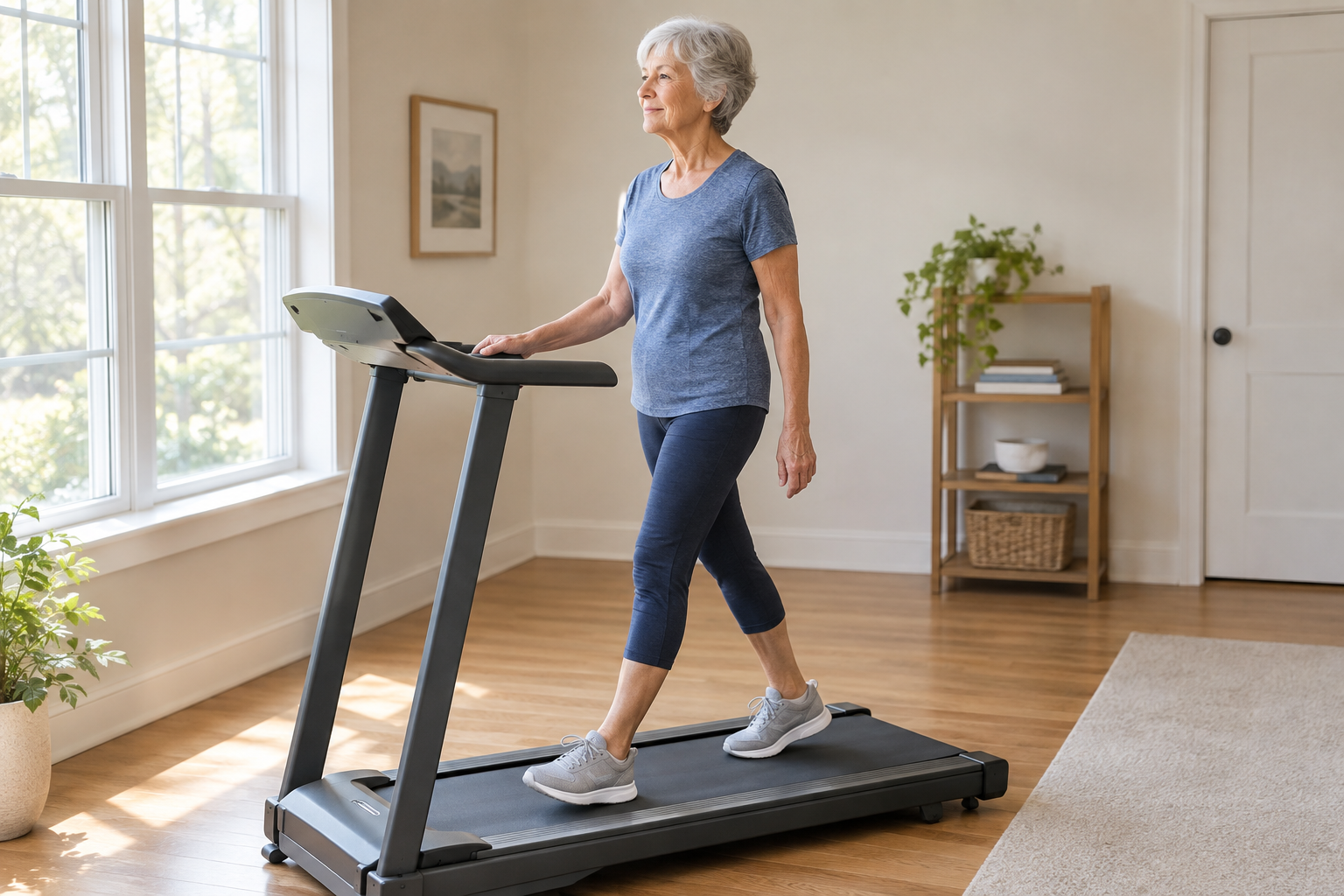
A treadmill can help here too. One advantage of a treadmill over walking outdoors is that you can set an exact pace and hold it. If your target is 1.0 m/s, that’s about 2.2 mph on the display, and the belt keeps you honest in a way that walking around the block doesn’t.
It also takes weather, uneven sidewalks, and “I’ll go later” out of the equation.
If you’re walking independently and haven’t had a recent fall, see my guide to choosing a Sole treadmill for walking.
If your balance is shaky or you use a cane indoors, skip the treadmill and look at seated options instead.
Addressing Underlying Medical Issues
Treating dizziness, arthritis, medication side effects, or neurological conditions can often improve walking ability significantly.
If you believe a medical condition may be contributing to a decrease in walking speed, consult your primary health care provider for a guided treatment plan.
Final Thoughts
Walking more slowly with age can be common, but it shouldn’t automatically be dismissed as “just getting older.”
In many cases, slower walking is the result of treatable factors such as muscle weakness, balance problems, reduced endurance, pain, dizziness, or fear of falling.
Paying attention to changes in walking speed can provide important insight into overall health and mobility.
When addressed early, many seniors are able to improve strength, confidence, balance, and independence through regular activity, targeted exercise, and proper medical care.
Keep in mind though, the most important thing is not how fast someone walks – it’s whether they can move safely, confidently, and continue participating in daily life.
If walking speed has noticeably changed, or if slow walking is accompanied by dizziness, falls, weakness, or difficulty with mobility, it may be worth discussing with a healthcare provider or physical therapist.
Small improvements in strength, balance, and movement can make a meaningful difference in long-term safety and quality of life.
FAQ: Slow Walking in Seniors
Why do elderly people walk slower as they age?
Older adults often walk slower due to muscle weakness, balance changes, joint pain, reduced endurance, or fear of falling.
Is slow walking a sign of dementia?
Not always. However, neurological conditions – including dementia – can sometimes affect walking speed and coordination.
Can physical therapy help improve walking speed?
Yes! As a PT myself, I’m more than a little biased, but physical therapy can help improve strength, balance, mobility, and confidence while walking.
What causes a shuffling gait in seniors?
Shuffling walking can be related to a lot of things, including Parkinson’s disease, balance problems, weakness, or fear of falling.
When should slow walking be evaluated?
Slow walking should be evaluated if it develops suddenly, worsens over time, or occurs alongside falls, dizziness, weakness, or neurological symptoms.

I AM 85 YEARS OLD . I WALKED FOR 15 YEARS AT THE YMCA ,BUT FEEL A SLOWING IN MY WALKING SPEED(MY WALKING TIME IS 30 MINUTES A DAY ,5 DAYS A WEEK,AND CONTINUES AT THIS PACE.
RON MULLIN
That’s great Ron, glad to hear you’re keeping the walking up. Walking is one of the best exercises and a great way to stay mobile as we age.