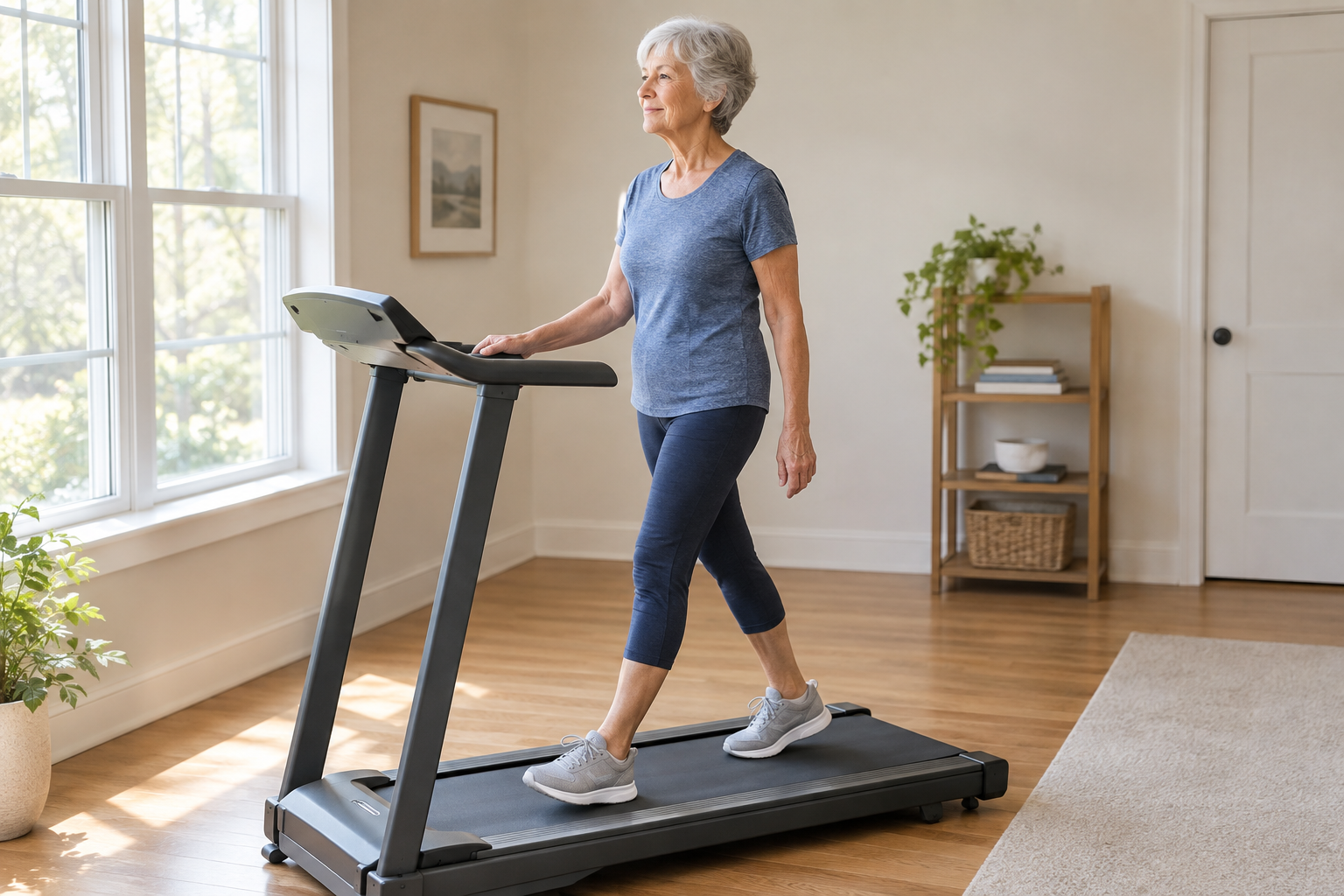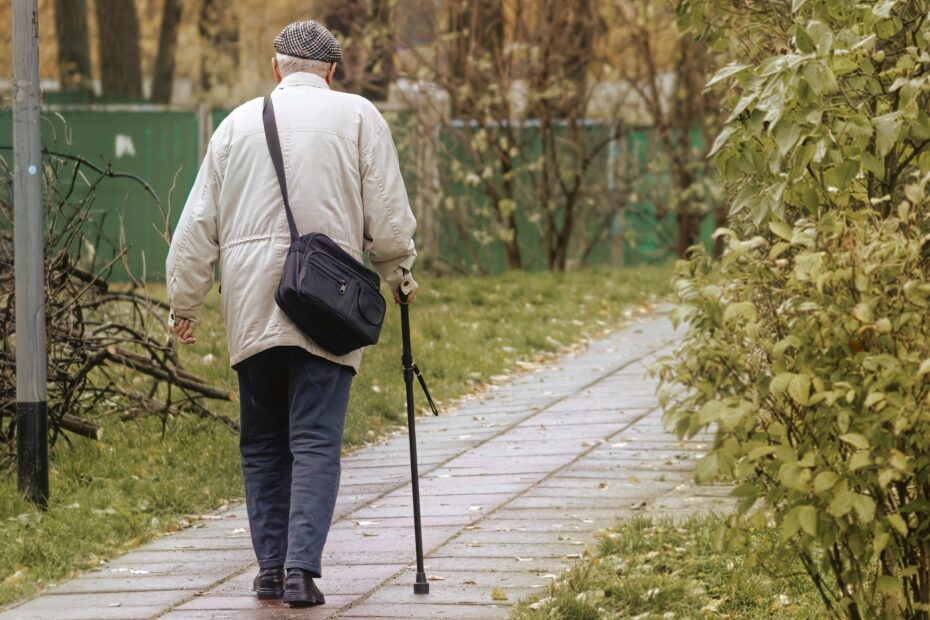
A shuffling gait is a walking pattern in which a person takes short, dragging steps and may appear to “shuffle” their feet instead of lifting them normally.
This type of walking is fairly common in older adults and can develop gradually over time.
Shuffling gait in seniors can be caused by muscle weakness, balance problems, fear of falling, arthritis, neurological conditions such as Parkinson’s disease, medication side effects, or reduced mobility.
In some cases, it may signal an underlying medical condition that should be evaluated.
Understanding what causes a shuffling gait can help seniors and caregivers recognize when changes in walking may need attention.
What Is a Shuffling Gait?
As a home health physical therapist, I work with seniors everyday that walk with what I would call a shuffling gait pattern.
This basically describes when the feet aren’t clearing the floor properly with each step and it’s a problem because it significantly increases fall risk.
More specifically, a shuffling gait is characterized by:
- Short, slow steps
- Reduced foot clearance
- Feet that appear to drag or shuffle along the floor
- Difficulty lifting the feet normally while walking
- Reduced arm swing
- Trouble turning or changing direction
Seniors often also appear stooped forward or walk with hesitation when walking with a shuffling pattern.
In mild cases, shuffling may simply reflect cautious walking. In other cases though, it may point to balance, strength, or neurological problems.
Is a Shuffling Gait Normal With Aging?
Some changes in walking speed and stride length can occur naturally with age. After all, older adults often walk more cautiously due to reduced strength, balance changes, or fear of falling.
However, a true shuffling gait is not considered a normal part of aging.
When shuffling walking develops – especially if it worsens over time or appears suddenly – it’s important to look for underlying causes.
Common Causes of Shuffling Gait in Seniors
Several different factors can contribute to shuffling walking in older adults (and often, it’s a combination of several of the causes mentioned below):
| Cause | How It Affects Walking |
|---|---|
| Muscle Weakness | Reduces foot clearance and step length |
| Balance Problems | Causes cautious, shortened steps |
| Fear of Falling | Leads to slower, more guarded walking |
| Arthritis | Creates stiffness and discomfort while walking |
| Parkinson’s Disease | Causes classic short, shuffling gait patterns |
| Stroke or Neurological Conditions | Impairs coordination and movement control |
| Medication Side Effects | May contribute to dizziness or slowed movement |
| Blood Pressure Changes | Can cause instability and cautious walking |
Muscle Weakness
Poor foot clearance while walking can sometimes be explained by weakness in the legs and core muscles, making it harder to lift the feet properly during walking.
As strength declines, seniors may:
- Take shorter steps
- Walk more slowly
- Drag their feet slightly for stability
Weakness in the hip flexors can contribute to shuffling, but a weak push off (calf muscles) can be an issue as well.
Balance Problems
Balance deficits often cause seniors to adopt a more cautious walking pattern.
Shuffling may develop because:
- Smaller steps feel safer
- Seniors are trying to avoid falling
- Confidence while walking decreases
Ironically, taking shorter, shuffling steps may feel safer, but in reality, walking like this actually increases a senior’s fall risk.
This is why physical therapists always try to correct a shuffling pattern when it’s noticeable.
FYI, a shuffling pattern is just one of many signs of poor balance in seniors (for more info on the rest, check out our guide).
If you think balance issues are the real problem, check out our Strong & Steady 21-Day Balance Program that walks you through gentle, progressive exercises designed by a physical therapist to help prevent falls.
Fear of Falling
Fear of falling is one of the most overlooked causes of gait changes in seniors.
After a fall – or even a near-fall – many older adults subconsciously shorten their steps and shuffle to feel more secure.
Unfortunately, this can sometimes increase instability rather than improve it.
A backward fall can be especially traumatic, increasing the fear of falling with all other activities.
Arthritis and Joint Stiffness
Pain or stiffness in the hips, knees, ankles, or feet can alter walking mechanics.
Arthritis may cause:
- Reduced step length
- Slower walking speed
- Difficulty lifting the feet normally
Many seniors compensate by shuffling to minimize discomfort.
Parkinson’s Disease
Parkinson’s disease is one of the most recognized neurological causes of shuffling gait.
Common walking changes with Parkinson’s include:
- Short, shuffling steps
- Stooped posture
- Reduced arm swing
- Difficulty initiating movement
- “Freezing” episodes during walking
Not every shuffling gait is caused by Parkinson’s disease, but it’s an important condition to rule out if symptoms are progressing.
Especially if you notice the “freezing” episodes – this and festination (quick short steps to catch up) are common features of a true “Parkinsonian” gait pattern.
Stroke or Neurological Conditions
Conditions affecting the brain or nervous system can interfere with coordination and movement control. as well.
Examples include:
- Stroke
- Neuropathy
- Dementia
- Normal pressure hydrocephalus
These conditions may affect balance, reaction time, and foot movement while walking, making it harder to pick the feet up fully during ambulation.
Medication Side Effects
Certain medications can contribute to dizziness and other effects like:
- Slowed movement
- Reduced coordination
- Weakness or fatigue
Any of these side effects can lead to a more cautious or shuffling walking pattern in seniors.
Shuffling and slow walking are often an issue of push-off strength as much as balance. Strong & Steady: Complete pairs the balance and strength programs, which is what this particular problem usually needs.
Dizziness or Blood Pressure Changes
Some seniors shuffle because they feel unsteady when standing or walking.
Conditions such as orthostatic hypotension can make walking feel unsafe, leading to shorter, slower steps.
Common Symptoms That May Accompany a Shuffling Gait
A shuffling gait may occur alongside:
- Slow walking speed
- Balance problems
- Stooped posture
- Frequent tripping
- Difficulty turning
- Freezing while walking
- Reduced confidence with mobility
- Falls or near-falls
If these symptoms are worsening, medical evaluation may be important.
Why a Shuffling Gait Matters
Shuffling walking can significantly increase fall risk because the feet are not clearing the floor properly during movement.
Even small obstacles or uneven surfaces can become tripping hazards.
In addition, a shuffling gait may reduce:
- Mobility
- Independence
- Confidence while walking
- Ability to participate in daily activities
That’s why changes in walking pattern should not be ignored.
When Should a Shuffling Gait Be Evaluated?
It’s important to seek medical evaluation if shuffling walking:
- Appears suddenly
- Is getting progressively worse
- Occurs alongside falls or dizziness
- Is accompanied by weakness or tremors
- Causes difficulty with daily mobility
A healthcare provider or physical therapist can help determine the underlying cause and recommend appropriate treatment.
How to Improve a Shuffling Gait in Seniors
Treatment depends on the underlying cause, but several strategies can often help improve walking ability.
Strength and Balance Training
Exercises that improve leg strength, posture, and balance can help seniors walk more confidently and safely.
Helpful exercises may include:
- Sit-to-stands
- Step training
- Balance exercises
- Walking practice
A physical therapy evaluation is a great idea, but you can always try to start with some easy and effective balance exercises from home as well.
Staying Physically Active
Reduced activity often leads to worsening weakness and mobility loss.
Regular movement helps maintain:
- Strength
- Flexibility
- Coordination
- Endurance
Addressing Medical Conditions
Treating underlying conditions such as Parkinson’s disease, arthritis, dizziness, or medication side effects may improve gait mechanics significantly.
If a medical condition is to blame for the shuffling, treatment should start with a consultation with your health care provider and will likely involve a formal physical therapy treatment plan.
Using Proper Footwear or Assistive Devices
Supportive footwear and properly fitted walkers or canes can improve stability and confidence while walking.
And feeling safer while walking can help a senior improve the quality of their gait.
Final Thoughts
A shuffling gait in seniors is not always caused by a serious condition, but it should not automatically be dismissed as a normal part of aging either.
Changes in walking pattern often reflect underlying issues involving strength, balance, mobility, or neurological function.
And identifying these problems early can help reduce fall risk and improve overall independence.
The good news is that many causes of shuffling gait can improve with proper treatment, exercise, and mobility training.
And even small improvements in strength, balance, and confidence can make walking safer and more comfortable over time.
FAQ: Shuffling Gait in Seniors
What causes elderly people to shuffle when they walk?
Shuffling walking in seniors may be caused by muscle weakness, balance problems, arthritis, fear of falling, Parkinson’s disease, or neurological conditions.
Is shuffling gait a sign of Parkinson’s disease?
It can be. Parkinson’s disease commonly causes short, shuffling steps and difficulty initiating movement, but other conditions can also cause shuffling gait.
Can physical therapy help a shuffling gait?
Yes! Physical therapy can help improve strength, balance, posture, and walking mechanics.
Why is shuffling gait dangerous?
Shuffling increases fall risk because the feet may not clear the ground properly during walking.
Is a shuffling gait a normal part of aging?
No. While walking speed may slow slightly with age, a true shuffling gait is not considered a normal part of aging.